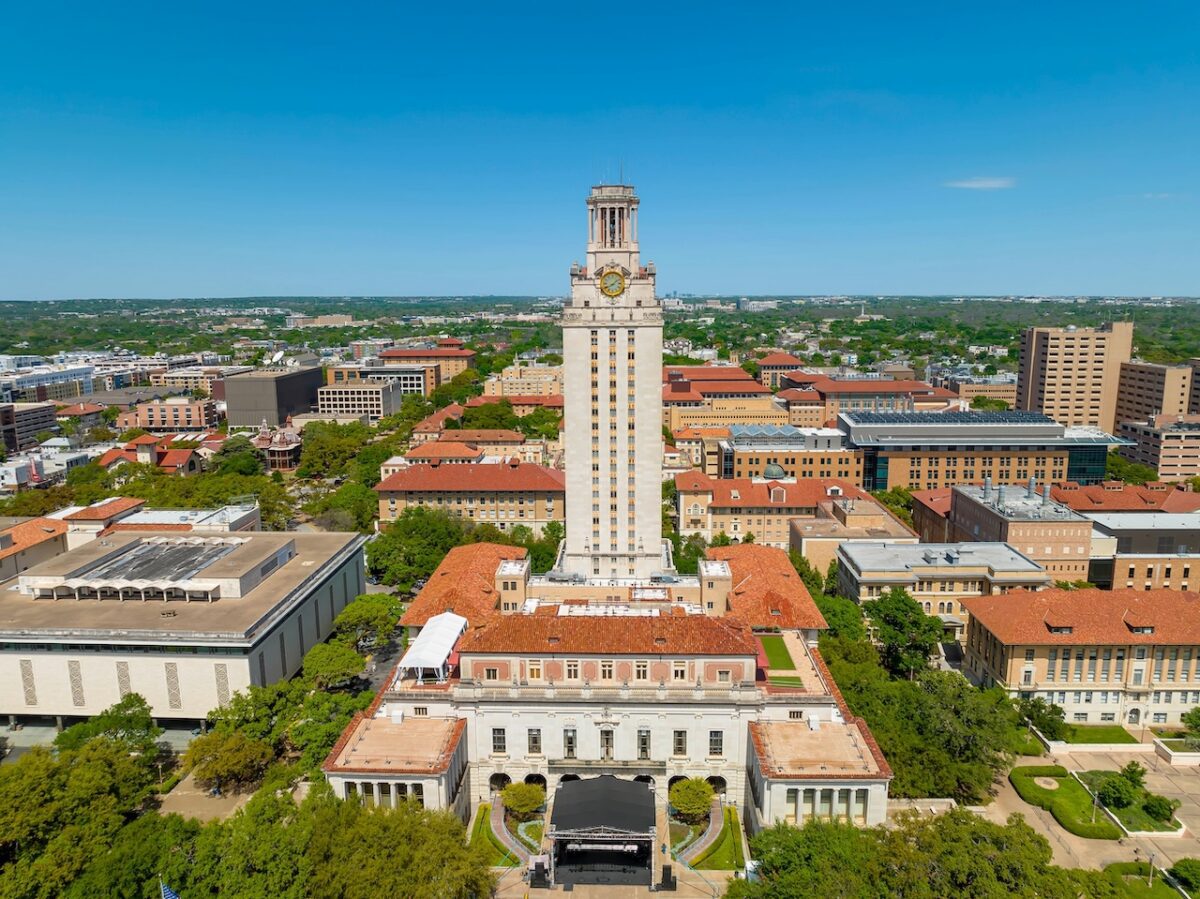
The news comes at the same time the university is consolidating its race, ethnic, and gender studies programs into one new department. (Photo via Shutterstock)
A new rule requires professors to “carefully consider” their teaching material and “exclude unrelated controversial or contested matters.”
The University of Texas System’s Board of Regents voted unanimously to implement a new rule that limits “controversial” course content in classrooms.
The new rule is meant to allow students to graduate without studying “unnecessarily controversial subjects,” “foster welcoming class environments,” and “omit controversies that are not relevant to the course.”
It also requires faculty to include the topics they plan to teach in their syllabi and follow that plan throughout the course, echoing similar restrictions recently implemented at Texas A&M University and Texas Tech University.
If courses include controversial subject matter, instructors are directed to take a “broad and balanced approach” to classroom discussions under the new rule. As a result, they are prohibited from attempting “to coerce, indoctrinate, harass, or belittle students, especially in addressing controversial subjects and areas where people of good faith can hold differing convictions,” the policy reads.
However, the policy doesn’t define what topics are considered “controversial” or detail what a “broad and balanced approach” is.
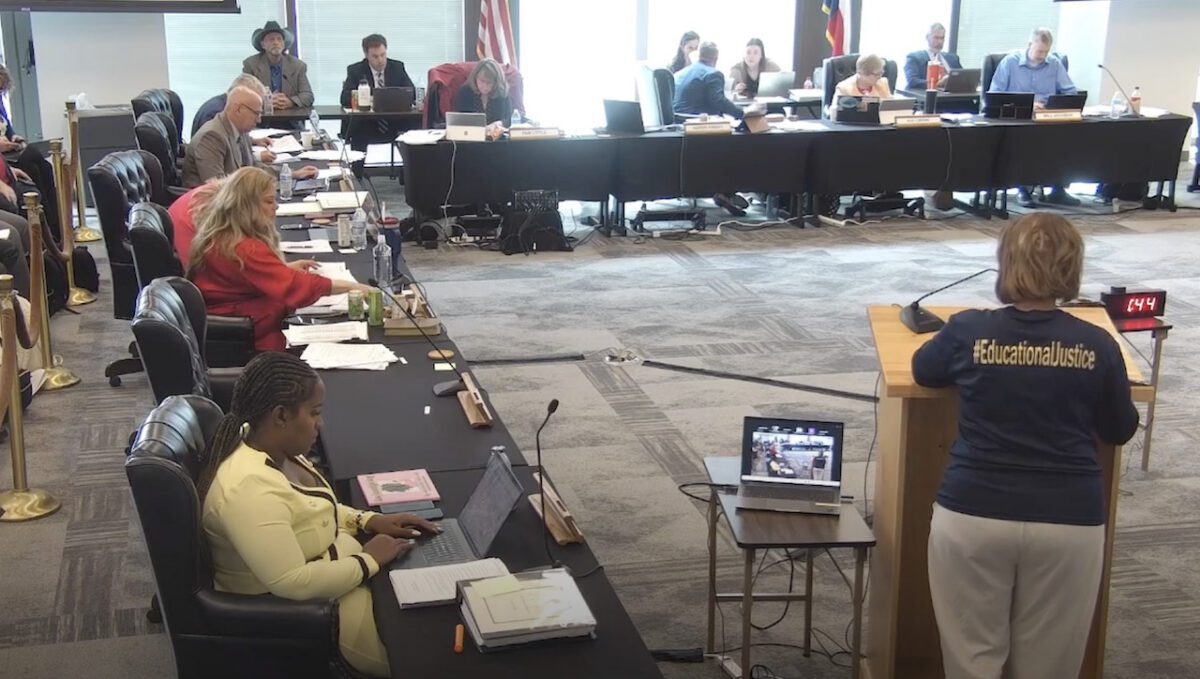
During public comment at the board’s meeting, faculty criticized the new standards saying they are intentionally vague and will encourage self-censorship.
“Without clear guidance, ordinary and necessary teaching practices, things like challenging student assumptions, presenting uncomfortable historical evidence, or evaluating student work critically could be reinterpreted as violations,” faculty member Alex Karner said during the meeting. “That ambiguity discourages open inquiry rather than supporting it.”
Brian Evans, president of the Texas AAUP-AFT, said the new rule undermines professors, who are the experts in their fields.
“Unlike many of our state leaders, instructors trust our students to navigate both differences of opinion and background with intelligence and care,” Evans said in a statement. “Learning controversial issues yields creative thinkers. Parents and students paying thousands of dollars for tuition want their course content developed by subject matter experts, not by megadonors and politicians.”
Decision-making power at Texas universities shifted from faculty to political boards appointed by Republican Gov. Greg Abbott with the passing of Senate Bill 37 last year.
The new rule is the latest in a string of attacks on higher education and free speech in Texas sparked by Republican lawmakers.
State Rep. Brian Harrison set off a firestorm of censorship across Texas universities last year when he urged Texas A&M to fire a professor for discussing LBTQ+ topics in class—despite there being no state or federal law that prohibits the discussion of gender identity in classrooms.
The news also comes at the same time the university is consolidating its race, ethnic, and gender studies programs into one new department.
“The consolidation of race, ethnic, and gender study programs at UT-Austin is another outrageous example of Republican political interference in higher education,” US Rep. Lloyd Doggett (D-Austin) said in a social media post. “Texas students and faculty should be moving forward, not watching decades of academic progress getting rolled back.”
UT-Austin was also one of nine universities offered preferential access to federal funding from President Donald Trump in exchange for agreeing to his political agenda last year. Although UT didn’t formally sign the agreement, it was one of the only campuses that didn’t publicly denounce the offer.
Author

Support Our Cause
Thank you for taking the time to read our work. Before you go, we hope you'll consider supporting our values-driven journalism, which has always strived to make clear what's really at stake for Texans and our future.
Since day one, our goal here at COURIER Texas has always been to empower people across the state with fact-based news and information. We believe that when people are armed with knowledge about what's happening in their local, state, and federal governments—including who is working on their behalf and who is actively trying to block efforts aimed at improving the daily lives of Texas families—they will be inspired to become civically engaged.