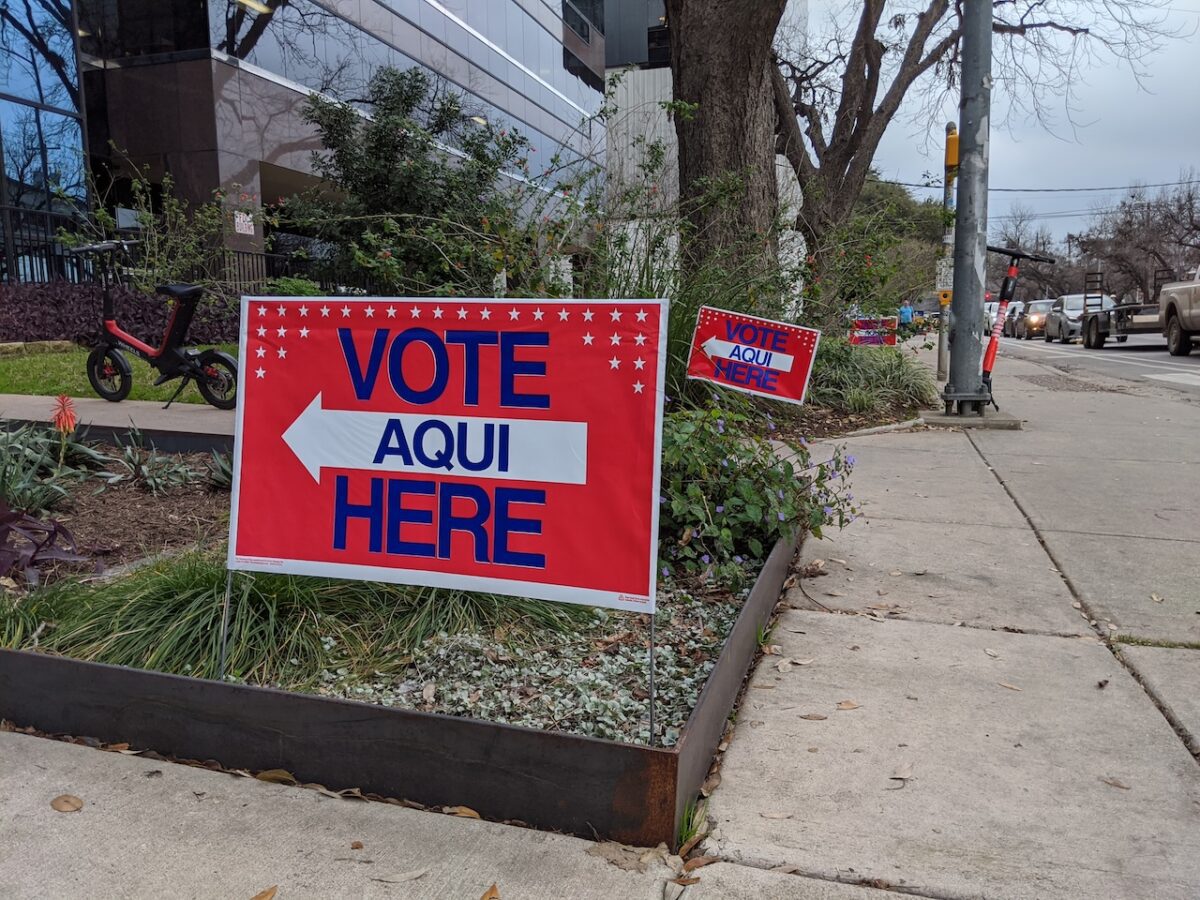
Runoff elections for several races will take place on May 26 in Texas. (Photo via Shutterstock)
In Texas, a candidate must receive more than 50% of the vote to win an election, otherwise the top two vote-getters face a rematch in a runoff election, which will be held on May 26.
Texas voters will need to head back to the polls in May after candidates in several statewide and local races failed to receive the 50% majority of the vote required to advance to the general elections during March 3’s primary election.
Here’s what to know:
- You can only vote in runoff elections for the party you aligned with during the primary—so if you used a Democrat ballot on March 3, you have to vote Democrat again in May.
- You don’t need to have voted in the primary in order to vote in the runoff election. So if you missed your chance and didn’t vote on March 3, you can still vote in the runoff election.
- If you weren’t registered to vote in time for the primary election, you can still register to vote ahead of the May runoff—the deadline is April 27.
- Early voting will begin on May 18 and runs through May 22. Election Day is May 26.
- The results of March 3’s primary election and May 26’s runoff election determines who will be the Democratic and Republican candidates in the general midterm election on Nov. 3.
- Regardless of how you vote in the primaries, voters can choose candidates of either party—or a combination of candidates from multiple parties—in the November general election.
Who’s headed to a runoff election
Neither Republican incumbent Sen. John Cornyn nor Attorney General Ken Paxton got a majority of the votes in their race and are headed to a runoff to become the Republican nominee for US Senate. Cornyn received around 26,000 more votes than Paxton, clinching 41% of the vote to Paxton’s 40%.
US Rep. Wesley Hunt (R-Houston) received 13% of the vote
Whoever wins will face Democrat James Talarico in the general election on Nov. 3.
Last week, President Donald Trump teased that he would endorse one of the two candidates—something he refused to do ahead of March 3—and said he expects whoever he does not endorse to drop out immediately.
After reports claimed that Trump is expected to endorse Cornyn, Paxton said he would only consider dropping out of the race if the Senate agrees to lift the filibuster and pass the SAVE America Act, which would have far-reaching implications for voters across the country.
Meanwhile, both Republican and Democratic candidates are headed to runoffs in the race for Attorney General.
Dallas state Sen. Nathan Johnson and Houston lawyer Joe Jaworski will face off on the Democratic side. Johnson received 48% of the vote to Jaworski’s 26%, while Anthony Box received 25%.
On the Republican side, state Sen. Mayes Middleton and US Rep. Chip Roy are set for a rematch on the Republican side, with Middleton receiving 39% of the vote and Roy receiving 31%.
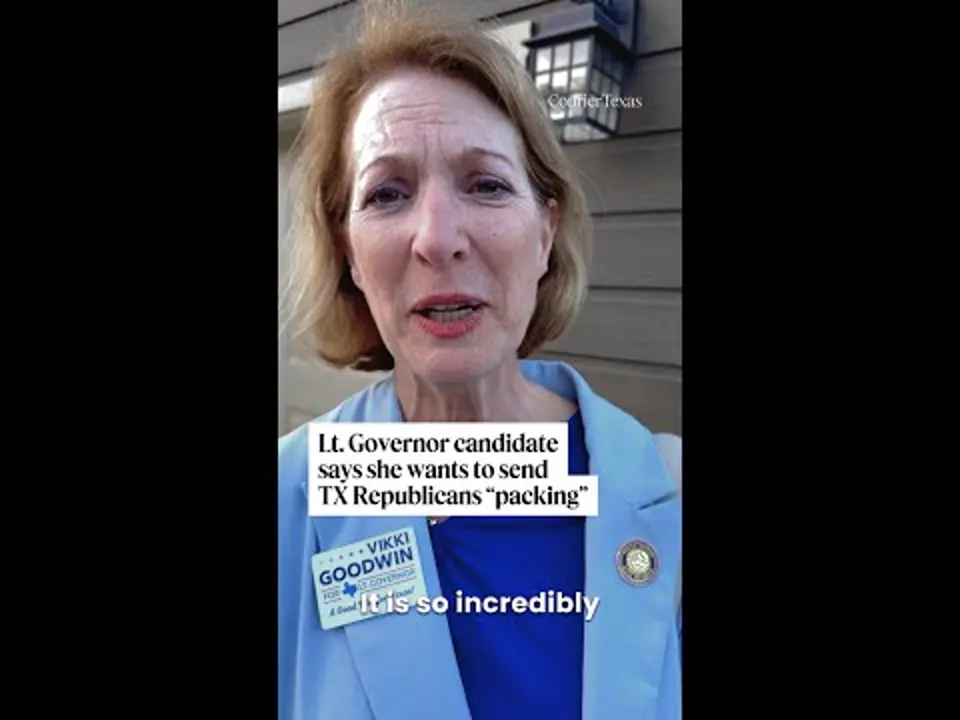
The Democratic race for Lieutenant Governor is also headed to a runoff election between state Rep. Vikki Goodwin (D-Austin) and union leader Marcos Vélez.
In Dallas, US Rep. Julie Johnson—the first LGBTQ+ member of Congress elected from the South—will face her predecessor, former Rep. Colin Allred, in a Democratic primary runoff to represent Congressional District 33.
Johnson replaced Allred in 2024 after he ran for US Senate against incumbent Republican Sen. Ted Cruz. After losing that race, he initially announced he would run for US Senate again, but dropped out after US Rep. Jasmine Crockett entered the race against Talarico.
The district, which was redrawn under the GOP’s newly redistricted voting map became law, represents parts of downtown Dallas, Arlington, Fort Worth, and Irving.
In Houston, Democratic Reps. Al Green and Christian Menefee are also advancing to a runoff for Congressional District 18.
Author

Support Our Cause
Thank you for taking the time to read our work. Before you go, we hope you'll consider supporting our values-driven journalism, which has always strived to make clear what's really at stake for Texans and our future.
Since day one, our goal here at COURIER Texas has always been to empower people across the state with fact-based news and information. We believe that when people are armed with knowledge about what's happening in their local, state, and federal governments—including who is working on their behalf and who is actively trying to block efforts aimed at improving the daily lives of Texas families—they will be inspired to become civically engaged.