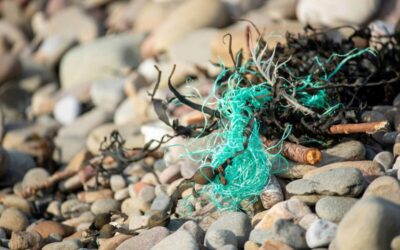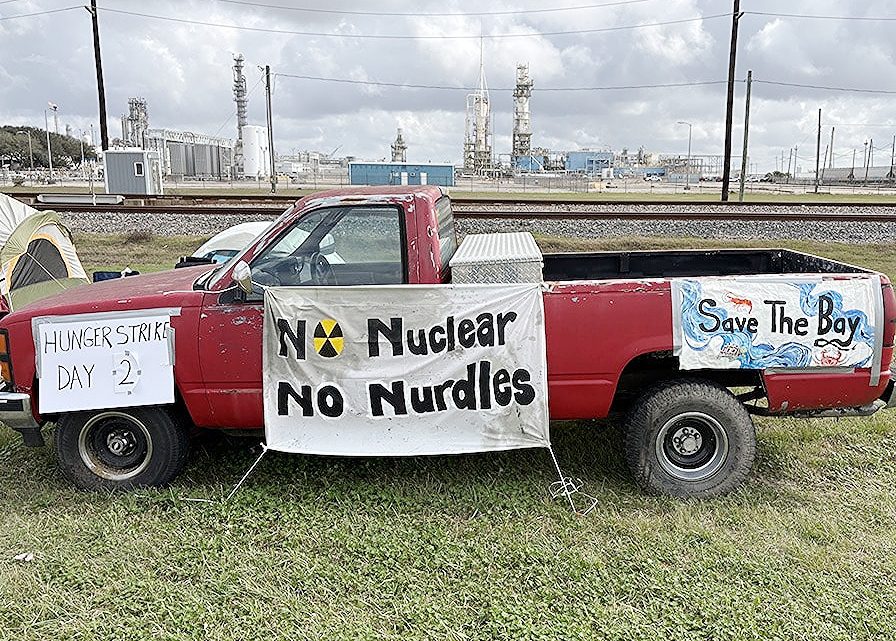
Activist Diane Wilson is camping out 24 hours a day in a ditch in front of Dow’s Seadrift complex during her hunger strike against the company. (Diane Wilson)
A Texas environmental activist is in the second week of a hunger strike to protest Dow Chemical’s application to relax rules on discharging plastics into the state’s coastal waterways.
Diane Wilson, a shrimper and director of the San Antonio Bay Estuarine Waterkeepers, said she and other activists have spent years collecting samples of evidence of Dow and other producers’ plastic emissions in Texas canals and waterways. She argued Dow is now trying to legitimize what it has already been doing illegally.
“We are fighting their wastewater permit. We’re trying to get zero discharge of plastic,” Wilson explained. “They are basically asking the state of Texas to legalize plastic pollution for them.”
Wilson began her hunger strike March 1 and vows to continue it until Dow withdraws its request. In January, the company requested release from the Texas Commission on Environmental Quality’s requirement to only discharge trace plastic particles from its Seadrift plant.
Wilson, 78, has been a legal thorn in the side of Dow and other chemical companies who operate on the Texas coast. In 2019, Wilson and the Waterkeepers won a $50 million settlement after suing Formosa Plastics for its pollution in Lavaca Matagorda Bay. She stressed protecting Texas bays and estuaries is a family tradition.
“My family has been here 130 years and I have an immense love for this bay and this community,” Wilson emphasized. “There’s a time you have to draw the line and say, ‘No more.’ And so that’s what I’ve drawn. I’ve drawn a line in the sand.”
Wilson added her Waterkeeper group has filed an “intent to sue” Dow for its alleged large-scale discharges of plastic pellets but the Texas Attorney General filed a different suit against Dow, which must be settled before the Waterkeepers can proceed. Dow’s application to change its discharge permit is currently in a 60-day public comment period.
Related: New study finds that air pollution could be threatening the success of IVF treatment