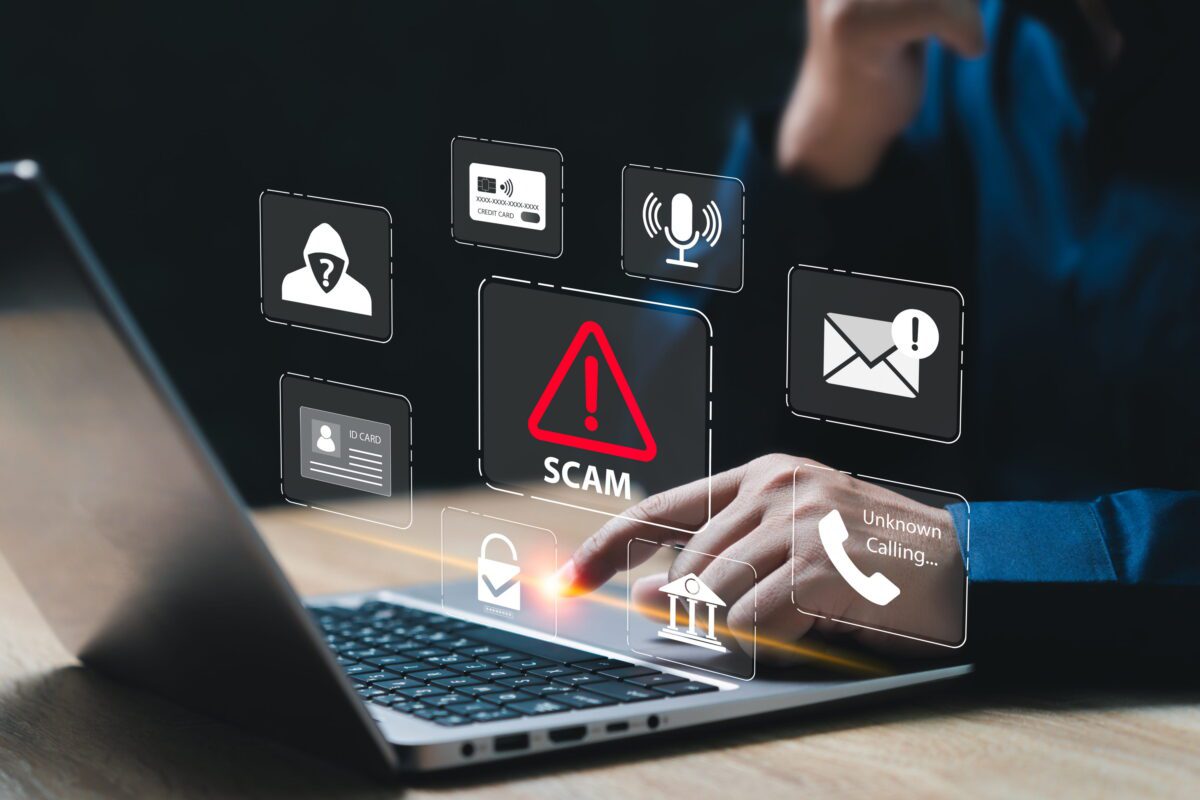
The Global Anti-Scam Alliance found that 81% of all scam attempts in the US occurred on platforms with a direct message function. (NongAsimo/Adobe Stock)
“Better Business Bureau cites Facebook as a source of 57% of social media scams, with Instagram comprising 22% and WhatsApp [at] 8%,” he said. “All three of those platforms are owned by the same company.”
The report cited population increase, a large elderly population and rural communities without access to support services as reasons for the increase in online scam victims in Texas.
Nationwide, it’s estimated Americans will lose $119 billion to online scams and fraud.
Kelsey Souter, a pollster with Upswing Research, said Americans say they want platforms to be held accountable and for the government to be more involved in intervention.
“Seventy-nine-percent of Americans, according to Pew, say that online scams and attacks are a major problem for Americans,” she said, “and that ranks right in there with all of these other tech harms like targeting kids – addictive features – so again, very strong numbers showing support for action on scams.”
The report also shows that a third of Americans feel less confident spotting scams today than they did a year ago.
Legislation such as the Scam Act and the My SAFE Platforms Act have been introduced to Congress this session to address online concerns.
Related: Hey Texans: Here’s how to avoid getting scammed this holiday season