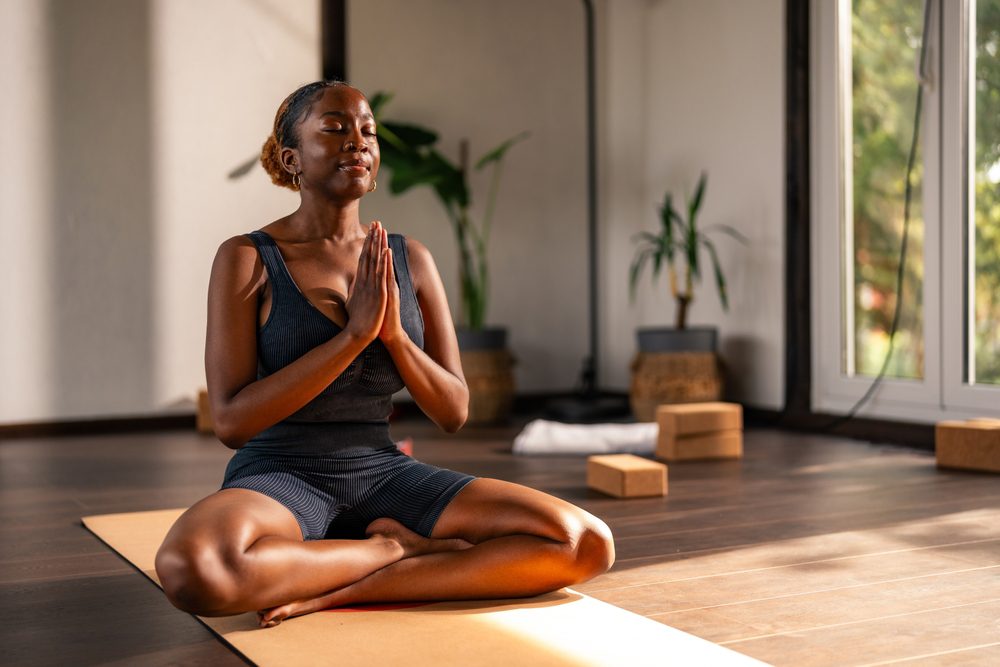
Try identifying aspects of exercise you enjoy, whether it's the quiet of a good yoga session, the tranquility of swimming laps in a pool by yourself, or finding community in a free Zumba class. (f.t.Photographer/Shutterstock)
Walking into the gym Jan. 1 offers a unique view of chaos: it’s crowded with folks of all ages who are all ready to finally lose those stubborn pounds. Or maybe they’re trying to work off the multiple libations consumed on New Year’s Eve as they commit to Dry January. They might even be forcing themselves to take the high-energy spin class their friend can’t stop raving about.
The problem with this, says life coach and fitness instructor Meg Ellis, is that resolutions revolving around restriction and punishment almost always come crashing down.
“From the fitness instructor standpoint, it’s really great,” she said. “Your classes are going to be packed in January, and then by that third week of January, people really start to fall off. It’s really quite sad because you do see everybody so excited and so motivated and inspired to change.”
Ellis, who splits her time between Houston and New York City, is a conscious life coach and neural linguistic program practitioner who coaches clients on how to make lasting changes in their lives, whether spiritually, physically, or mentally.
Instead of trying to push yourself through a crash diet or start an exercise program which doesn’t bring you joy, Ellis recommends five ways to get healthier that’ll not only last throughout the year, but can be maintained for life.
Choose health from a place of self-love instead of shame
Studies show the most popular resolutions revolve around trying to fix something about ourselves, with exercising more, eating healthier, and losing weight all landing in the top 10. But when we focus on things we hate or feel shame about, we end up putting more pressure and stress on ourselves around achieving that change.
With added stress comes burnout, inflammation, and the urge to binge eat as a way to cope with not living up to unrealistic expectations. When resolutions come from a lens of punishment, the body automatically goes into self-defense mode, Ellis said. When approached from a place of love, the body feels safe, and will naturally move towards balance.
“I think we should all preface…whatever change you are wanting to make in your life in any of these facets…by saying this: ‘I am not doing this to fix anything about myself. I am doing this because I love myself,’” she said.
Make health about reflection instead of restriction
Listing things you’re not allowed to do or indulge in can also lead to burnout, as you’re setting yourself up to feel deprived of things you enjoy, like a glass of wine at the end of a long day or a piece of pizza at a work happy hour.
Instead, focus on things you can add into your life that’ll improve it, like setting five minutes aside everyday to stretch, putting your phone on ‘do not disturb’ before bed, or drinking a glass of water as soon as you wake up. Don’t forget to reflect on why you’re making these changes in the first place.
Move your body in ways that you enjoy
Regular exercise has many benefits: combating disease, bettering your mood, and even improving sleep. So why do so many of us view it as a punishment akin to running the mile in gym class? With a capitalistic society that preys on insecurities to make money, self-hatred is a natural response.
“You’re not at war with your body. You are one with your body,” Ellis said. “So what does your body want to do? Again, pay attention to it. ‘This movement did not feel good. It was not enjoyable. But my body did like this about it. So what else can I do?’”
Try identifying aspects of exercise you enjoy, whether it’s the quiet of a good yoga session, the tranquility of swimming laps in a pool by yourself, or finding community in a free Zumba class.
Treat relaxation, sleep, and stress reduction as a non-negotiable health habit
Living in a society bolstered by “hustle culture” it’s hard to acknowledge rest as valuable. But without allowing for “power in the pause,” as Ellis puts it, burnout starts to build until your body can’t take it anymore, and forces you into resting. Oftentimes, this looks like irritability, headaches, anxiety, and digestive issues.
Sleep and relaxation not only help your body recover, but they also set you up for a stronger immune system, and even a reduced risk of heart disease and diabetes. Sleep, in particular, encourages a metabolic reset, and helps improve focus, produces more energy, and helps balance metabolism.
Redefine what consistency means to you
Instead of setting unrealistic goals, think of ones that strike a balance between being something you can reasonably achieve, and something that pushes you out of your comfort zone. Not accomplishing goals can be discouraging, so make sure you take it slow when starting a new routine. If things don’t go perfectly, give yourself grace for when you fall off the wagon.
“It’s about trusting yourself to come back. It’s okay that you checked in with your body for a week straight and then forgot to do it for two weeks,” Ellis said. “But it’s always about remembering to come back. It’s actually a very brave and courageous thing to come back the longer that you’ve been off.”
Meg Ellis is a Certified Conscious Life Coach, Certified NLP Practitioner, Certified Enneagram Coach, and Somatic Healing Practitioner, and was voted Outsmart Magazine’s Best Life Coach in 2023 and 2024. She also produces the Create Your Fate podcast, owns the FateCreator app, and co-owns Create Your Fate Retreats.