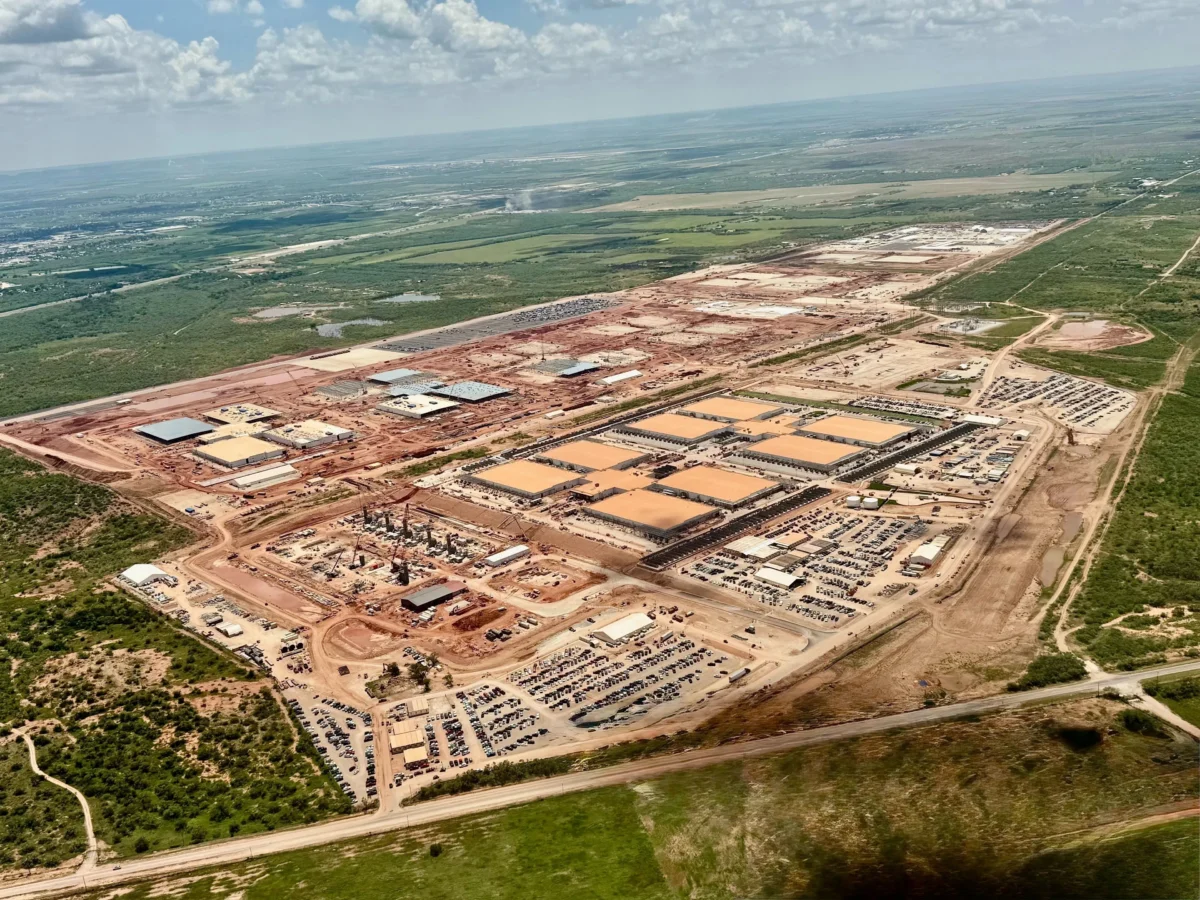
Stargate’s flagship data center campus in Abilene, Texas.
State regulators will require large tech facilities to report resource consumption as lawmakers plan for rising demand
Texas lawmakers are pressing for clearer insight into how much water the state’s fast‑growing data center sector is using, saying the information is essential as Texas faces mounting demands from cities, industry, and agriculture.
The Public Utility Commission of Texas (PUC) is preparing to launch a statewide survey this spring that will require large commercial operators, including AI facilities and cryptocurrency mines, to report both their water and energy consumption.
The directive stems from a budget rider authored by Democratic State Representative Armando Walle of Harris County.
“The reason we included this rider in the state budget was to fill the gaps in data collection planning as it relates to water use, commercial water use in Texas,” Walle said in an interview with Courier Texas. “We understand there are a lot of data centers, AI centers that are coming to many parts of the state of Texas, but we have to understand one, their energy use, but two, also their water use.”
The Texas Water Development Board has sent out surveys in recent years, but response rates have been poor, Walle said. That prompted lawmakers to shift responsibility to the PUC, which has broader regulatory reach.
“We included this rider in the budget so that the PUC sends out a survey asking these large commercial use entities what is their water use and what is their energy use,” he said.
Walle said the data is essential for long‑term planning in Texas’ largest population centers. He noted that the state needs clearer insight into water demands in major urban regions such as Houston, Harris County, the Bexar and Travis County areas, and the DFW Metroplex to guide future decisions.
Texas lawmakers approved billions of dollars for water infrastructure last session, Walle said, but he noted that the state still lacks the data needed to plan responsibly.
“We’re behind in water infrastructure,” he said. “When there’s droughts, when there’s industry needs, when there’s agriculture needs, when there’s people needs, we have to have this data to be able to make informed decisions.”
The survey will be distributed this spring, and facilities will have six weeks to respond. The PUC will then share the results with the Texas Water Development Board and the Texas Commission on Environmental Quality. A final report is expected at the end of 2026.