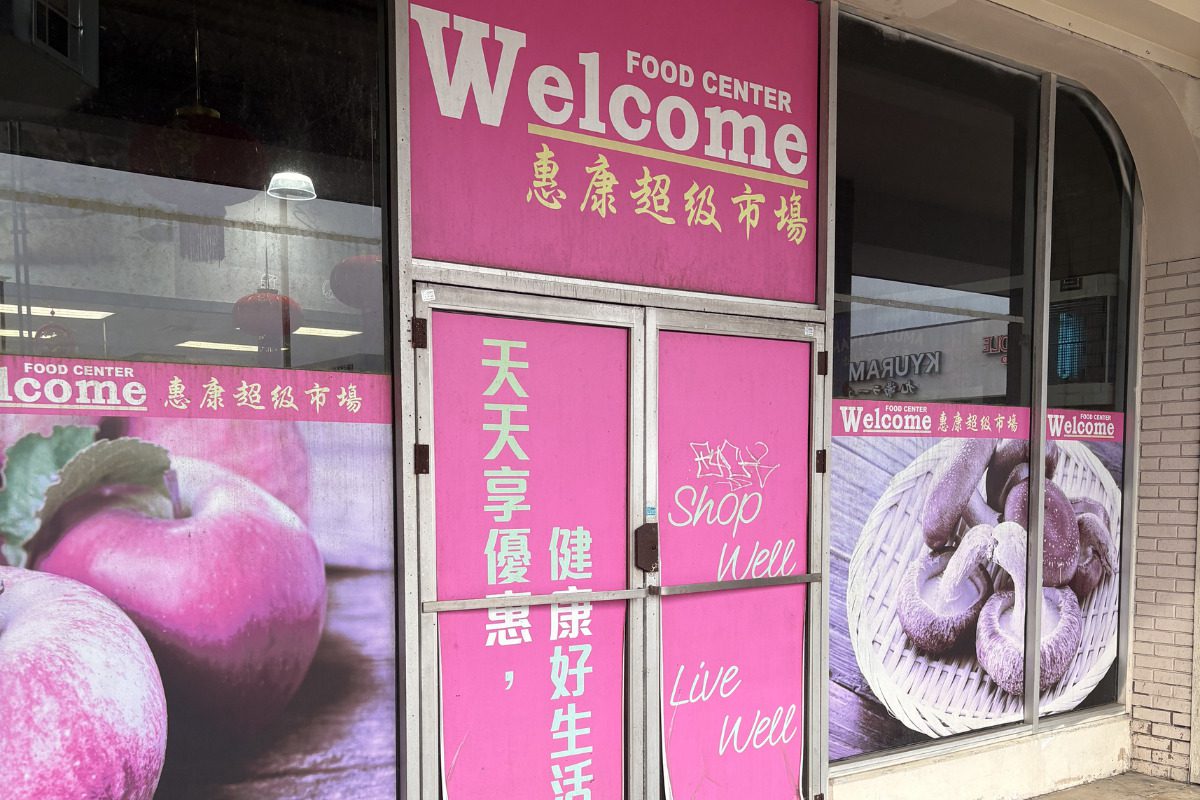
Many know this community as Chinatown—but what it's called depends on the generation of the person speaking about it. (Sierra Rozen/COURIER HTX)
In Houston’s Asiatown community, a sign outside of grocery store Welcome Food Center encourages patrons to “shop small, eat happy.” The front doors sport signs that spell out “shop well, live well” in Chinese and English letters.
Many know this community as Chinatown—but what it’s called depends on the generation of the person speaking about it. The name debate speaks to an evolution of representation—a community that was once predominately Chinese now represents several Asian cultures.
Right now, Asian communities across the world celebrate the cyclical nature of life during the 15-day celebration of Lunar New Year, a festival signifying the arrival of spring. But in Asiatown, a harmonious melting pot of varying perspectives and traditions, this ethos is honored year round.
In this neighborhood, you’ll find the Hong Kong City Mall, a center that boasts over 100 restaurants and businesses. Nearby there’s an H-Mart, the largest Asian grocery store chain in the country, spotlighted in Michelle Zauner’s memoir about her Korean heritage, “Crying in H-Mart.”
Rice University’s Kinder Institute for Urban Research’s 2026 Asian American Community Study shows how in just under 50 years, Asian representation in Houston has grown from 50,000 to more than 655,000, which makes up about 9% of the total population. The study is a multiyear project dedicated to mapping the effect of this increase, with Asiatown being a relevant component of this growth.
An opportunity to reconnect with one’s heritage is easy to do in cities like Houston, which has nearly 90 different nations represented. Asiatown is just one area for people to do this.
How a railroad changed everything
The first Chinese immigrants, about 250 men, came to Houston from California in 1870 to work on both the Houston and Texas Central Railroads. They’d initially immigrated to the US, escaping famine and war in China, hoping to send money back home and potentially reunite their families. However, the Chinese Exclusion Act, the first significant US law banning immigration, effectively barred Chinese immigrants from entering the US from 1882-1943.
By 1951, a major shift occurred in Houston, according to Dr. Melody Li, who leads the Mapping Houston’s Old Chinatown research project. The On Leong Chinese Merchants Association, a mutual aid society for Chinese men, moved into a new building in East Downtown. The Chinese immigrants, who initially worked on the railroad and lived in temporary mobile work camps, followed suit.
“ The early immigrants who came here were mostly railroad workers. A lot of them were bachelors,” Li said. “The On Leong Chinese Merchants Association gave them apartments to stay and have some place where they can hang out, play together, and things like that.” This community of railroad workers initially launched the first iteration of Asiatown, said Li.
The passing of the 1965 Immigration and Nationality Act eliminated the limit on Asian immigration set in the 1880s and welcomed Chinese families back to Houston.
By the 1970s, grocery stores, restaurants, businesses, import companies, and a Chinese Baptist Church occupied East Downtown, culminating in a community for people to eat, drink, shop, and bond over shared experiences.
At the same time, Vietnamese immigrants came to Houston seeking asylum following the Vietnam War. Many were drawn to Houston due to its proximity to the coast, which helped those with fishing and shrimping skills secure work.
But it wasn’t just the Chinese and Vietnamese who came; the city saw an influx of Korean and Filipino immigrants, too. By 1983, it was estimated that about 10,000 Koreans lived in Houston, while the city saw a large increase in Filipinos in the ‘80s, also attributed to the inclusive legislation.
When the construction of the George R. Brown Convention Center and the building of Interstate 45 was announced in the ‘80s, community leaders were hopeful that these attractions would bring in more tourist attention. Unfortunately, the project deterred families. Rent became more expensive and the crime rate rose. This ultimately pushed businesses from East Downtown to Bellaire Boulevard, a safer, more affordable area.
A new landscape
This move caused the formation of a new Asiatown, which started with three shopping centers. Diho Square was one of them, opened in 1983 by Kenneth Li and T. D. Wong.
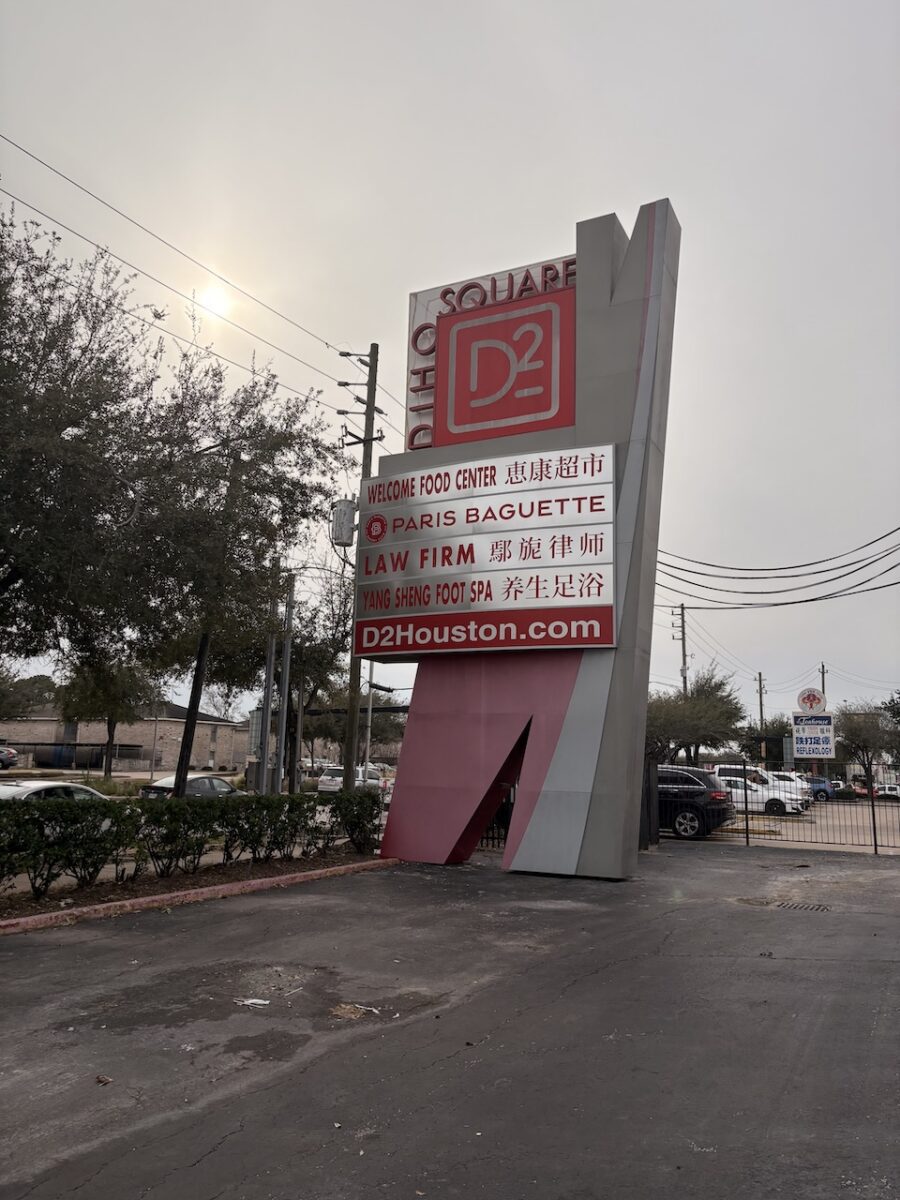
D-Square rebranded in 2020. (Sierra Rozen/COURIER HTX)
Current co-owner Beatrice Wong, daughter of T.D., said that a desire for a taste of home at an affordable price is what initially drove the success of the new Asiatown. The ability to easily import products from Asia, especially China, was a huge factor in how successful the businesses were, she said.
In 2020, the center underwent a rebrand, inspired by the newly opened Bellaire Food Street, which featured a range of Asian cuisines. Diho Square became D-Square; storefronts got a fresh look, and a diverse group of tenants became the priority.
As more Asian businesses flocked to Bellaire Boulevard, inspired by the success, the culture of the area started to shift from mainly Chinese to a mix of different Asian identities, with Korean, Japanese, Vietnamese, and Thai influence contributing significantly to the community.
By the early 2000s, a Gulf Coast-Asian culture exploded onto the scene in the form of Viet-Cajun, with restaurants selling the cuisine popping up all over Houston. In Vietnamese culture, family and community are prioritized; the same can be said for Cajun culture. It’s no wonder that the two identities blended together. Viet-Cajun crawfish boils, a staple in the cuisine, are an excellent example of how the cultures blended into one community.
Today, Houston is home to about 143,000 Vietnamese residents, the second largest population in the country.
Areas like D-Square offer Japanese ramen, Korean barbecue, Chinese pressure point massages, and a Vietnamese-inspired meeting space, all in one place. Wong said tenant applications for D-Square change with the trends. Right now, it’s all K-pop culture, and a lot of Korean influence on businesses.
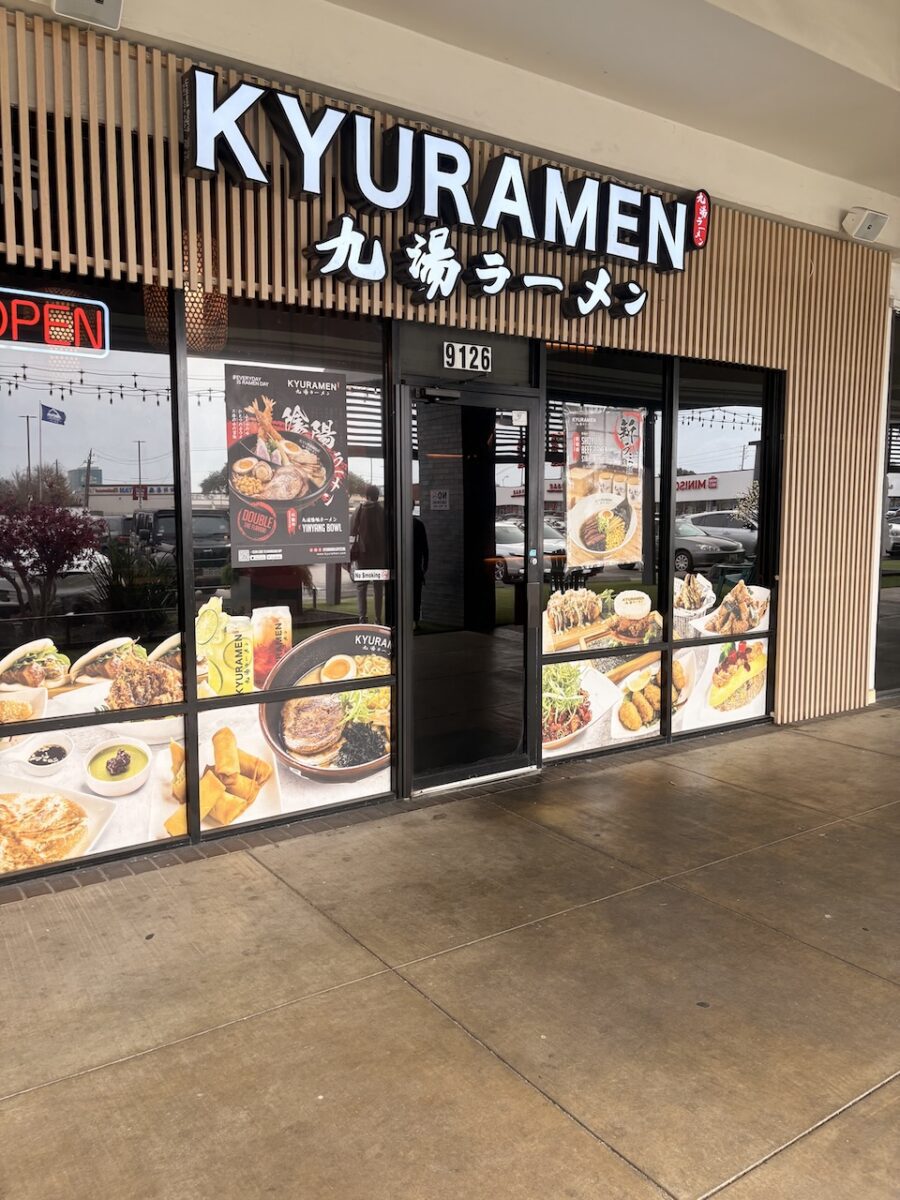
An example of one of the businesses in D-Square, featuring Japanese ramen. (Sierra Rozen/COURIER HTX)
The popularity of these enclaves led to the launch of Houston Asiatown Tours in 2021. The tours give visitors a chance to explore all the area has to offer, but also provide social media exposure and foot traffic for the businesses chosen as tour stops. The tours get especially busy around Lunar New Year, when Asians and non-Asians alike flock together for a chance to experience a taste of what Asiatown has to offer.
“ At the end of the day, we want an immersive, authentic Asia experience, so that way when you miss home or when you wanna travel or when you want a genuine experience, that’s what Chinatown or Asiatown should offer,” Wong said.