Punching In is a bimonthly series about the people who make Houston work, highlighting interesting jobs, industries, and careers across the city.
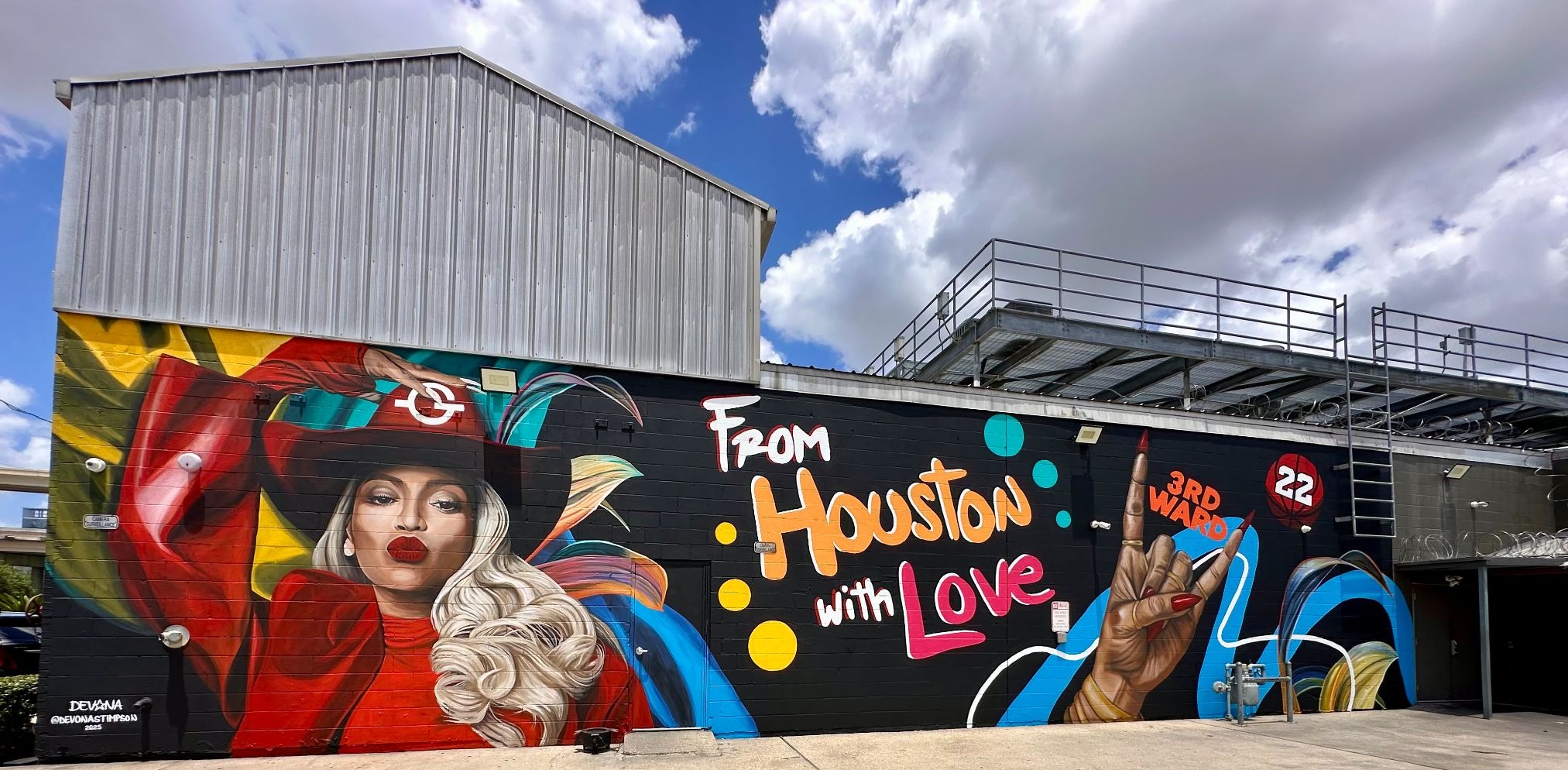
If you’ve ever driven down Pierce Street in Downtown Houston and stopped to look at the famous Beyoncé mural, then you know Devona Stimpson. Her large, colorful artwork often draws on her multiracial identity, the power of womanhood, and her desire to convey the crux of the human experience.
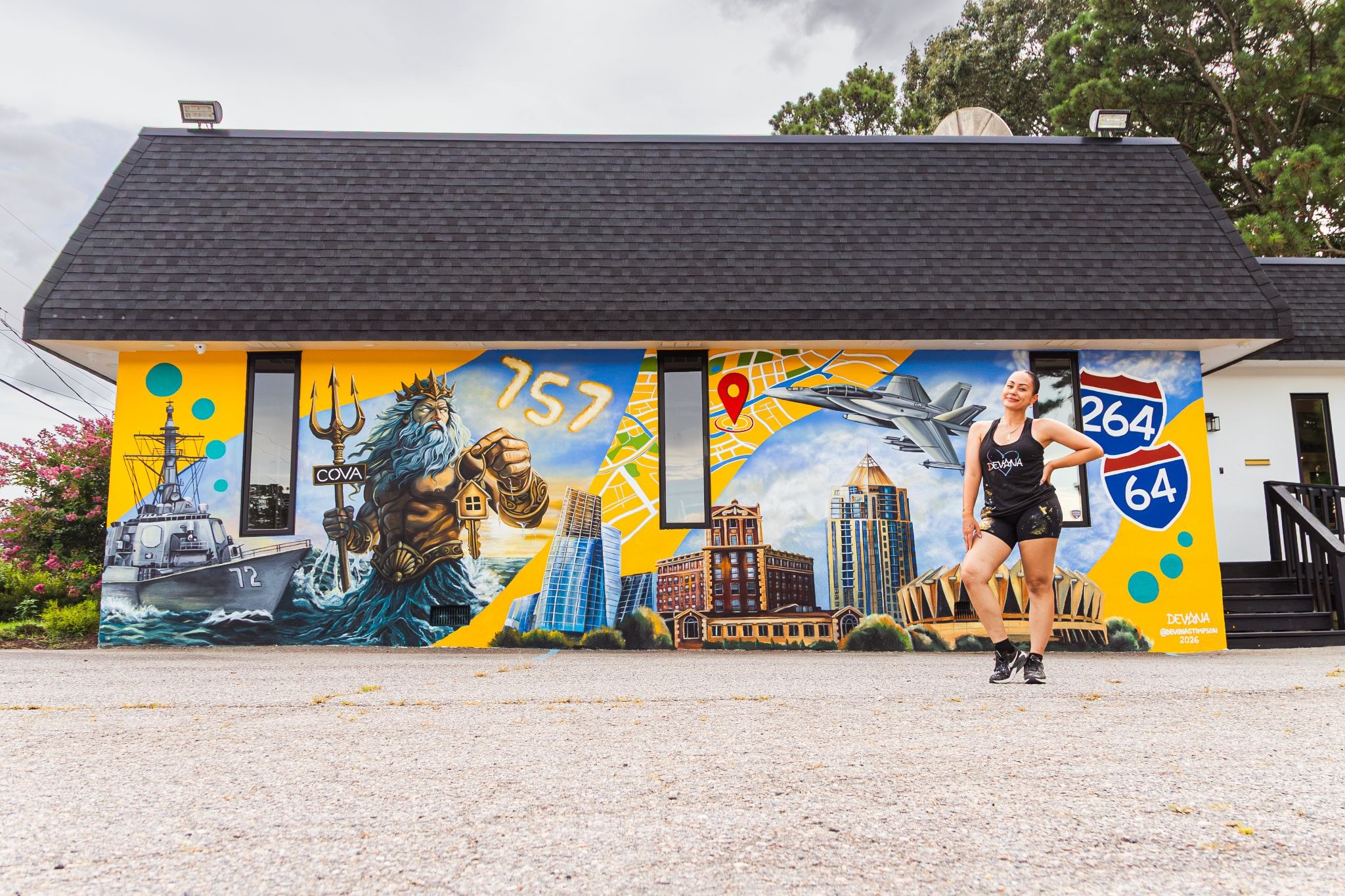
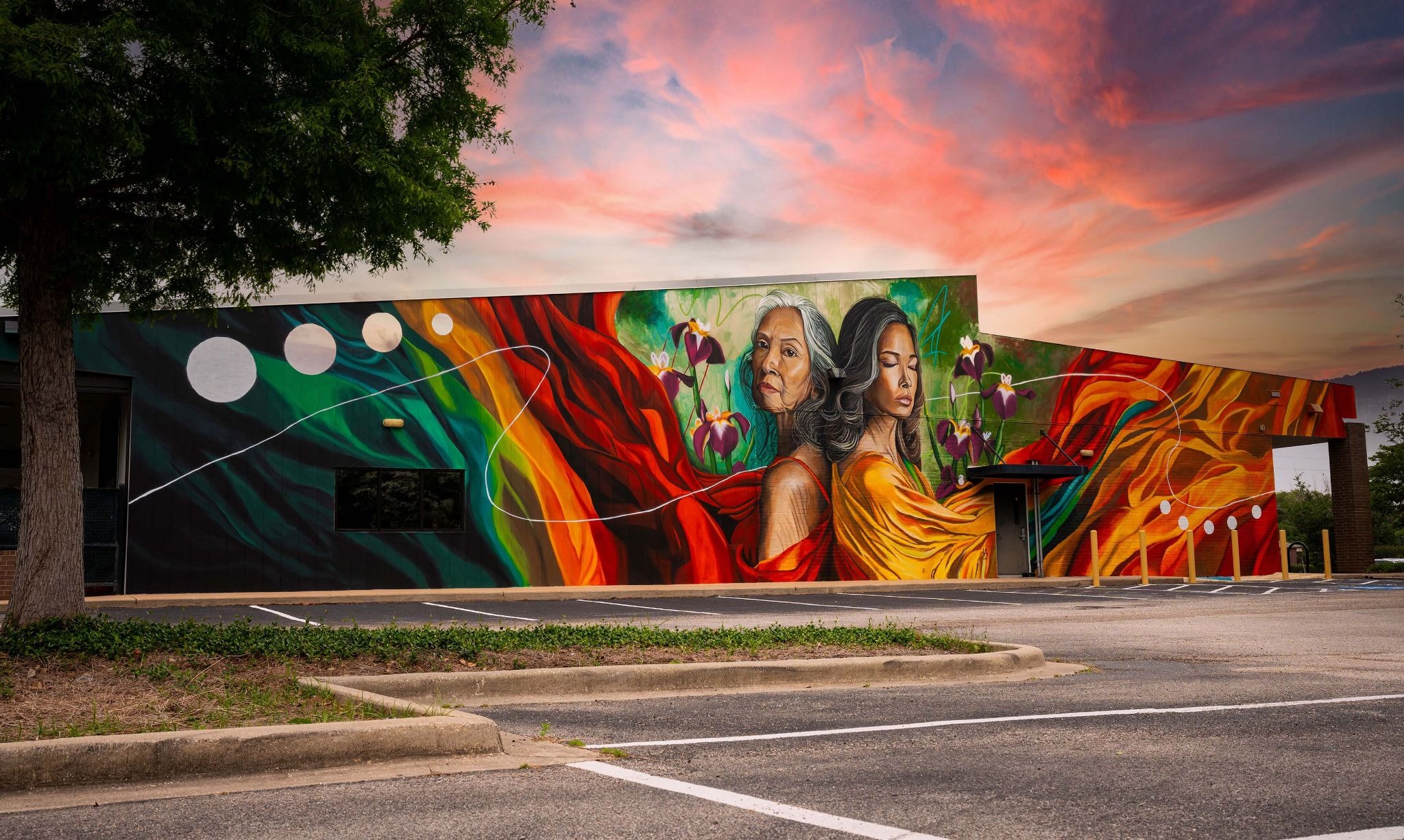
Stimpson is a Houston-based artist, muralist, and entrepreneur whose work has adorned the walls of buildings from Atlanta to California. Outside of painting, Stimpson’s focus is on helping other artists build successful businesses. She does this through offering toolkits, workbooks, and advice to artists who want to make a living off their work.
The key to her success has come from a combination of hard work and social media to build a career—and it hasn’t always been easy. From waitressing and working in the paint and sip industry to collaborating with brands like Google, Stimpson’s career has come a long way.
We sat down with Stimpson to talk about what it took to go from designing her classmates’ MySpace profiles to becoming a renowned artist.
Raj: How did your art go from something that you loved to something you thought you could make a business out of?
Stimpson: I was ambitious when I was younger and self-motivated in terms of teaching myself how to do graphic design and wanting to keep getting better at it.
Throughout grade school, I taught myself how to do web design. I created my first website when I was in the fourth grade. I would do freelance work throughout high school. People would pay me to design their MySpace layouts or do a flyer, or a business card, or things like that. That instilled a creative entrepreneurial spirit within me. When I was in high school, I did a vocational college course. It was two years of digital design, and my teacher was my first big mentor. He really helped shape me and show me that it was possible to do freelance work and be a graphic designer as an entrepreneur.
Raj: Do you feel like an artist can realistically make a living in Houston right now?
Stimpson: I’m an example of it. The thing about Houston is that there’s so much opportunity here. I moved here from San Diego, and there’s not really that much of an art scene there, surprisingly. Moving here, I was like, “Wow, there are so many museums. There are so many shows, pop-ups, and events.” I always use the hashtag “Houston artist” or “houstonmuralist” on all my posts, and a lot of people have found me that way who are looking for those things here in the area.
Raj: Have you ever had a traditional 9-to-5 job?
Stimpson: When I graduated college, I was freelancing and I was trying to build a business with my husband, and then I had part-time jobs. I was waitressing, so I worked in a restaurant for seven years. And I did part-time graphic design for a promotional products company for a year or two. I was also a part-time paint night instructor at one of those paint and sip companies.
Raj: How important is social media to your ability to make a living?
Stimpson: Without it, I wouldn’t have a business. Most of my leads in business come from social media, and from what I’ve been able to build from being consistent on social media and working on my brands and my platforms.
Raj: Do followers always translate to customers?
Stimpson: It’s the marketing. The more and more people see you, the more and more they keep you in the front of their mind. I recently had two people reach out about a big project because they saw my video on Facebook. You know, just a random person—but the right person that saw me on Facebook—and these are six-figure projects. So you never know who’s watching. And if I didn’t have social media, nobody would know who I am. I don’t have a gallery or an agent or any type of representation. It’s just all me building my business and my brand and just putting my art out there. That’s what makes us really lucky in this day and time, because we have something that ultimately is free to use, if you know how to use it right.
Raj: To be a successful artist today, do you have to use social media or be an influencer or content creator?
Stimpson: Yes, you have to use social media. Do you have to be an influencer? No. Do you have to be a content creator? If you want a higher chance of making this a successful thing, yes. Right now, with how saturated social media is, we all have to be like media companies that are shooting and editing and posting, and not just once,multiple times a day or multiple times a week. Back in the day, if you had one awesome video that you worked on for a month and that was it, you’d be ahead of the game. Now everybody’s doing that.
Raj: Do people respect public art in Houston?
Stimpson: Murals actually help decrease crime and decrease graffiti and tagging. Surprisingly, there is typically a respect for it, which is why a lot of commercial developers like to invest in public art—because it hinders people from tagging buildings up. Here in Houston we don’t even need permits to paint murals, but most cities do require permits. In other cities, I’ve had a mural get covered up because my client didn’t get the right permit, and I’ve had to alter a design pretty heavily, because of certain codes and signage rules that it needed to follow. But in Houston, you can paint whatever you want as long as it’s not actual signage or a logo. They’re pretty flexible. We have street art all over the city, all over downtown, all different areas, and they continue to keep adding more and more and more. So definitely there’s a huge respect for it.
Raj: What would your advice be to artists who want to be as successful as you are, but who are working paint and sip jobs or are working in a restaurant?
Stimpson: Entrepreneurship is not for everybody, and if you want to be a full-time artist, that’s what it is. If this is something you truly want to do, it’s one of the hardest things that you could do career-wise. It’s not easy, and you’re going to have to operate as a business owner first and an artist second. And I think that’s hard for a lot of artists or creatives, in general. So if it’s something that you really want to do, I always tell people that you gotta do what you gotta do. You gotta first take care of yourself. If you need to work, you gotta do that.
But if this is something you want to do, you have to take advantage of the free time you do have and take it seriously. If you’re working from 9 a.m. to 5 p.m.nine to five, the extra hours that you have at home —how are you using those to build your brand and your business as a creative? It all comes down to just being consistent and putting in the work, and it’s not always going to be fun.
The cool thing is, we have social media, we have so many ways to be “self-made” in a sense. You don’t have to go the traditional route that a lot of artists and creatives had to take. You can create your own journey, and make it what you want.
Raj: You talk a lot about the starving artist trope and getting away from it. Why do you think it’s such a popular trope, and why is it important for you to push against that?
Stimpson: It’s a status quo, because being an artist has never been a fully understood or respected career or industry. Movies and shows typically portray the artist in this certain light, like they’re depressed or they’re hungry—or it’s the complete opposite, where they’re socialites and selling their paintings in a gallery for millions of dollars. It’s like that. It’s either/or. So a lot of parents typically discourage their kids from going that route. You also have funding cuts for the arts in schools. So there’s a lot of work to be done to change that status quo.
This is why I like to share tips on social media and advice around art business. I like talking to students and sharing what I do. I did a post recently where I shared some of the budgets for my murals. And the whole point of doing something like that is to show people how much a mural actually costs. And then maybe educate parents who have kids that are interested in being an artist. Like, “Whoa, I just saw this random girl’s video on Facebook, and she shows she made this money from these murals. I didn’t even know that was a possibility.”