Chiara ‘Sunshine’ Beaumont grew up knowing something Texas history had gotten wrong: Her people were still here.
Designated “extinct” by the state of Texas, the mythology of the Karankawa being a violent tribe has permeated Texas history for hundreds of years. But now, the Karankawa Tribe of Texas wants to set the record straight. A corrected historical placard and museum exhibit are evidence of their fight to reshape Texas history and regain control over their stories.
The Karankawas are a tribe of Indigenous peoples who thrived along the Gulf Coast as early as 1200 AD, safeguarding their land for hundreds of years—even through European colonization. But because of disease, displacement, and genocide of their peoples by Europeans, the Karankawas’ population significantly diminished in the 19th century.
By the 1850s, the Karankawa faced brutal violence at the hands of Anglo-American colonizers like Stephen F. Austin, who spread propaganda—such as dubbing them killer cannibals—to execute a mass extermination of their tribes. As a result, many Karankawa people were forced off their land, tracked down, and killed. Others were forced to assimilate into Mexican and Anglo-American society.
In Corpus Christi, years of this misinformation has been taken as fact—until this past July.
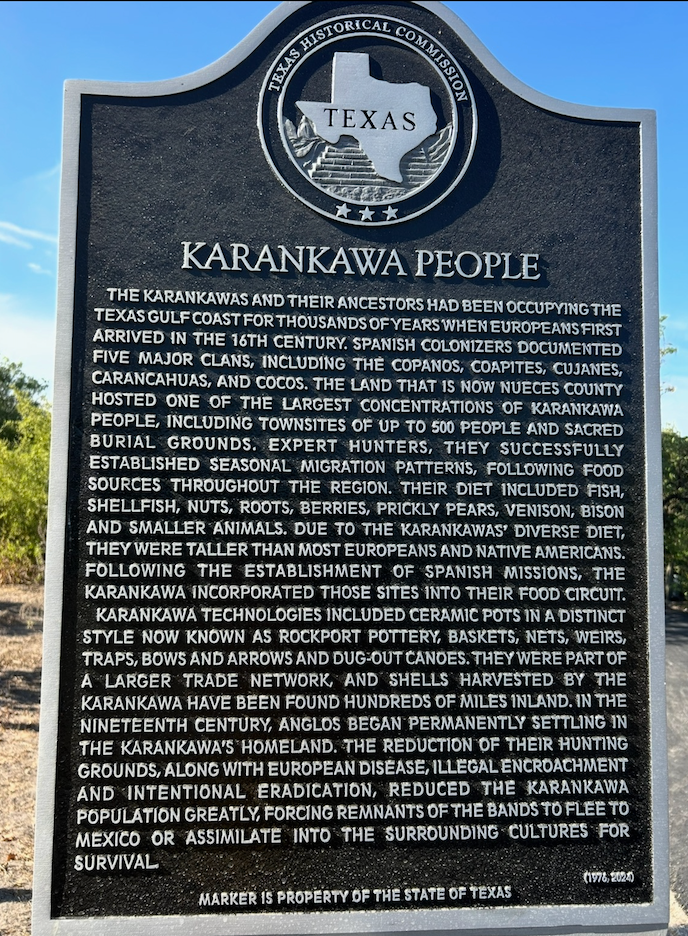
A historical marker describing the Karankawa people as “primitive,” “savage,” and “cannibal” once stood as definitive history in the Hans & Pat Suter Wildlife Refuge in Corpus since 1976. This summer, it was corrected.

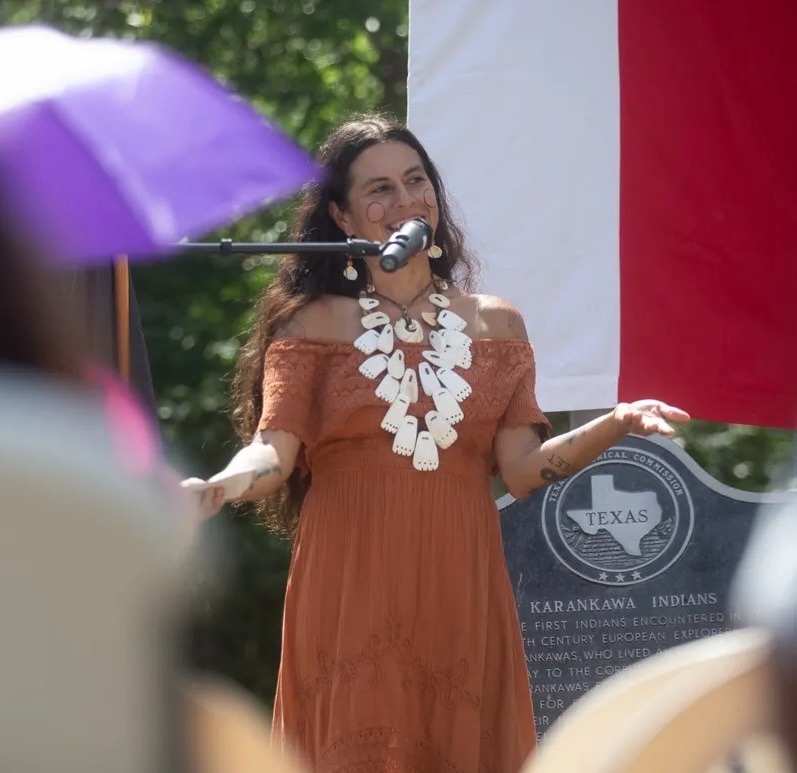
Beaumont, an Indigenous resistance educator, language keeper, & artist of the Karankawa’s Hawk Clan, was one of the people behind the fight to change the historical marker.
“This has been a fight since 2022. There’s quite a settler process of bureaucracy and paperwork, and it was just long and tedious,” Beaumont said.
“Once we actually got the verbiage approved it no longer said we were extinct. It no longer claimed we were nomadic, which not only wasn’t true, but was intentionally used to disparage our ability to establish permanent settlements, which we did. It’s very intentionally worded to make it sound like we were just these savages on the coast barely getting by.”
Museums doing the work
The replacement of the historical marker isn’t the only way the Karankawa are correcting history. About 200 miles up the Texas coast, the Bryan Museum is confronting the same myths from inside an institution focused on telling the stories of Texas and the American West.
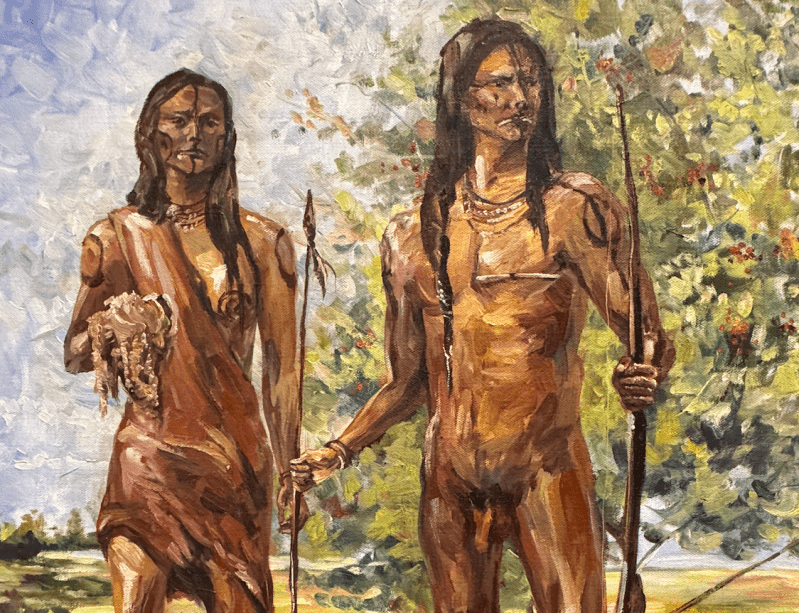
In the special exhibit “The Karankawa: People of the Texas Coast,” Bryan Museum Curator Eric Broussard, a committee of Karankawa tribal members, an academic advisor who has worked with the tribe for years, and museum staff put together an interactive experience showcasing the real history of the Indigenous people of the Gulf Coast.
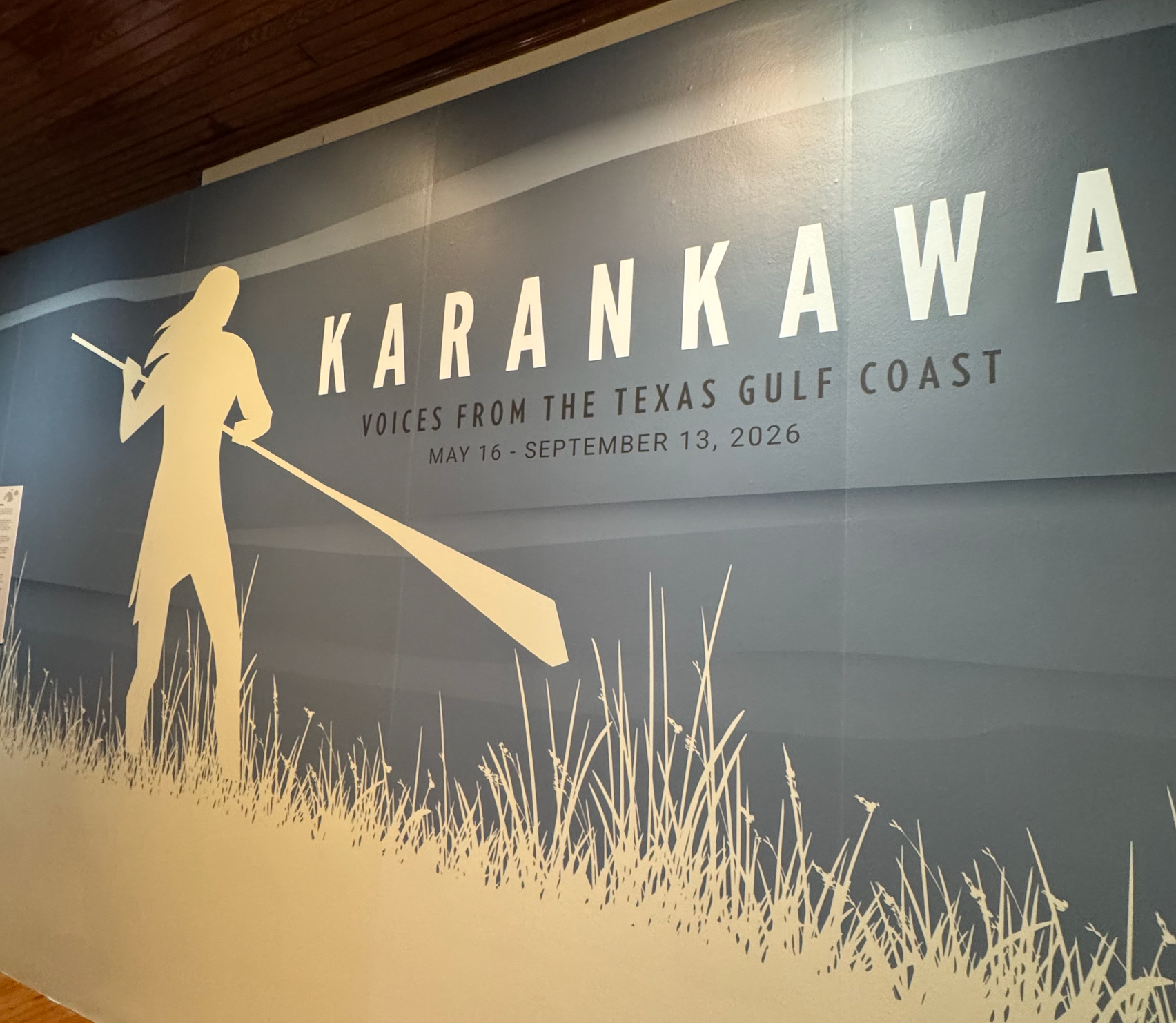
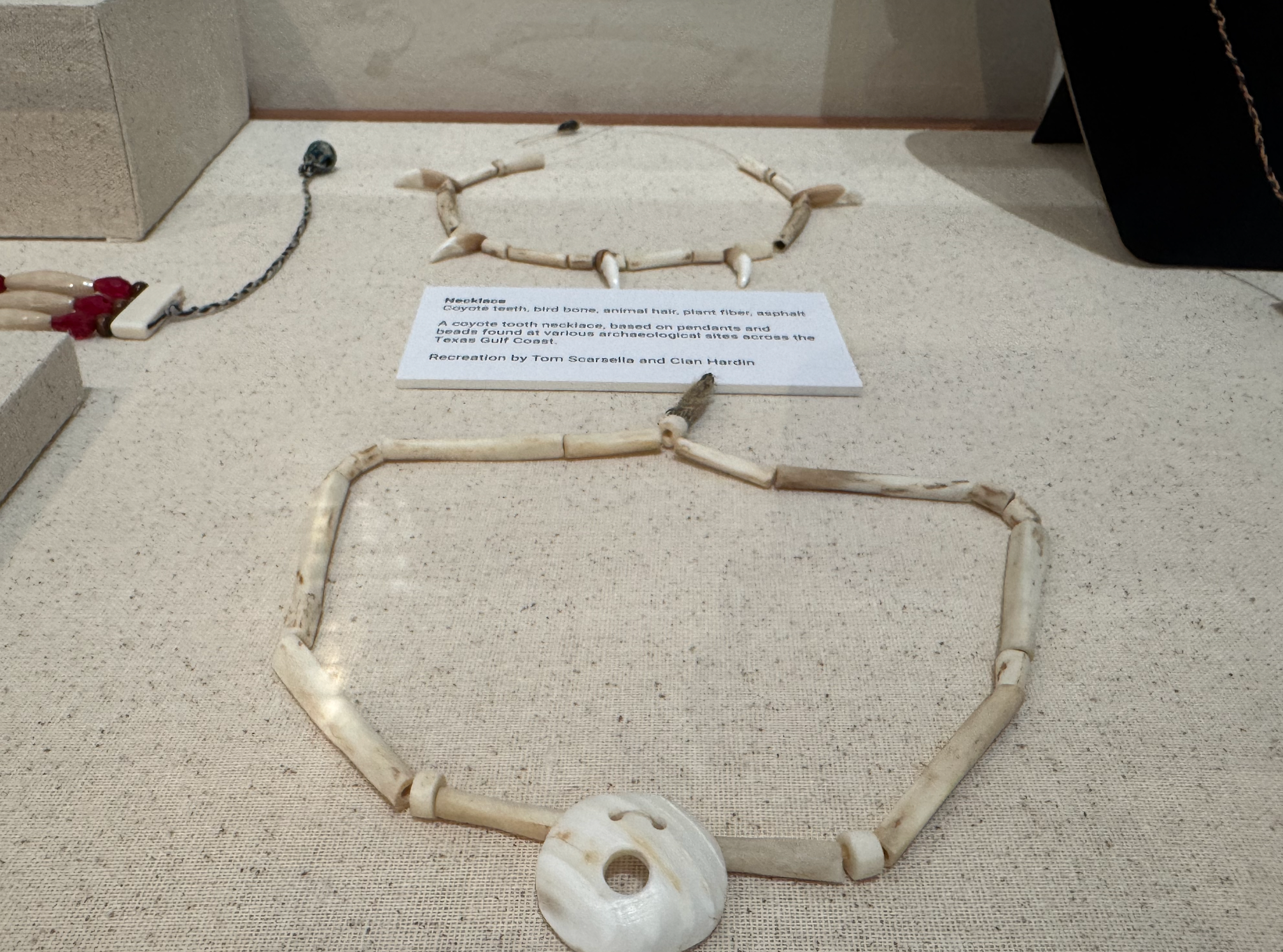
Broussard said that every piece of the exhibit was shown to the Karankawa committee members for feedback before the exhibit was published. The tribe’s members provided critique about how to ethically tell their stories, discouraging museum staff from displaying any authentic historical pieces. Instead, Karankawa artists made and sourced replicas of pottery, jewelry, art, spears, and dwellings.
“After discussing it with the tribe, we understood that putting something their ancestors made with their hands behind glass is disrespectful,” Broussard said. “So it was imperative that we find reproductions. As a public institution that promotes Texas history and history in general, it’s really important that we get everything right.”
Beaumont was particularly proud of this step, seeing it as a new chapter in telling Karankawa stories.
“That’s part of the excitement—it helps us gain control of a narrative that should have always been ours,” Beaumont said. “But for many different reasons, that narrative had been taken from us. I’ve been very lucky to see that in my lifetime we’ve taken those opportunities up.”
Regaining autonomy of their narrative has been rewarding for the Karankawa , but it’s also been a lesson in Indigenous storytelling for institutions across the country.
“It’s an opportunity to educate curators on how to appropriately—with kindness and care—work with Indigenous peoples who since the conception of this regime that is now called the ‘United States’ have only either been fetishized or ostracized.”
These collaborations between curators and culture don’t necessarily happen easily. They require the building of trust and transparency between Karankawa people and settler descendants—and sometimes even intermediaries to facilitate that work.
Broussard’s biggest hurdle in preparing the exhibit was in telling the complete story of the Karankawa people—not just beginning at colonization.
“I didn’t want this to be an exhibit portraying the Karankawa as victims, which they certainly were,” Broussard said. “That is such a small chapter in their history, a horrendous chapter that should’ve ever happened, but when you look at the whole scale, they were here for thousands of years before that, and they still are.”
The exhibit instead focuses on the Karankawa tribe’s historic relationship to the Gulf ecology, their pottery and dwellings, and how they’re reclaiming their language today.
For the Karankawa, correcting the public record also means deciding what the public is allowed to see. As a closed practice, the tribe carefully chooses which stories and traditions to share, balancing the work of re-educating descendants of settlers with protecting a culture that has long been interpreted and defined by outsiders.
“During the first contemporary tribal gathering we had, our people gathered for the first time in 200 years,” Beaumont said. “It was incredible to feel the difference between that and living life underneath a settler gaze, a white person’s gaze.
How it felt to be under the gaze of your people and the care of your people was very different. No anxiety, no nervousness, no masking, not anything but ‘we actually do belong here, and I feel safe with these people.”