Getty Images Signature
For more than a century, Rudolph’s Meat Market & Sausage Factory has quietly done its thing in Deep Ellum, even as the neighborhood around it evolved. Long before neon signs and music venues defined the area, this corner of East Dallas was home to working families who relied on neighborhood businesses, like this beloved butcher shop, for everyday needs. Rudolph’s wasn’t built to be a destination. It became one by staying useful to the community it served.
If you’re new to Dallas, Rudolph’s might be one of those places you’ve heard of but haven’t made the trip yet. If you’ve lived here a while, there’s a decent chance you’ve driven past it on Elm Street and thought, “I really should go check that out.” What’s easy to miss from the outside is just how rare a shop like this has become. It’s a true old-school butcher that never pivoted, never chased trends, and never tried to be anything other than what it already was.
That’s what makes Rudolph’s Meat Market & Sausage Factory worth a closer look. Its history is tied tightly to Dallas’s history. An immigrant family-run business, this little shop prides itself on its hands-on craft. Whether you’re curious about Rudolph’s history and ownership or why locals still swear by the quality of the meat behind the counter, let’s dig deeper into one of the best food stories in DFW.
Pexels
Rudolph’s History
Rudolph’s story begins long before Deep Ellum became known for music venues and late nights out. Back in 1895, the neighborhood was a working, immigrant area of East Dallas, and that’s when an Austrian immigrant named Martin Rudolph opened his neighborhood butcher shop. What makes this particular origin story notable isn’t just the nineteenth century start date, but the fact that the business never uprooted or rebranded itself as the area evolved. Through booms, downturns, and cultural shifts, Rudolph’s stayed exactly what it was meant to be. It’s a place locals have relied on for good meat for over 130 years.
After the founder, Martin Rudolph, retired, ownership passed to Anton Pavelka, who brought in his nephew, Cyrill “Sid” Pokladnik, to work at the shop as a teenager beginning in 1927. When Pavelka retired, Sid purchased the business in 1947, marking the start of what sources describe as the long Pokladnik era. In more recent decades, the shop has been carried forward by the Andreason family, relatives of Sid Poklaknik, continuing an ownership line that has remained intact for more than a century.
Under Sid Pokladnik, Rudolph’s evolved from a simple butcher shop into something more substantial while still keeping its counter-service soul intact. By the mid-20th century, the shop began producing its own meat products. A 1980 D Magazine profile notes that Rudolph’s had expanded its operation to make as many as 20 different kinds of sausage, while also wholesaling items like brisket and frankfurters to restaurants and other businesses around Dallas. People were already traveling across the city for specialties like smoked turkey and dry-cured hams, a sign that Rudolph’s reputation had outgrown its immediate neighborhood.
As the decades rolled on, the family-run identity only deepened. By the late 20th century and into the 2000s, coverage from D Magazine and neighborhood publications highlighted how labor-intensive the shop remained. Meat was still cut by hand. Sausage was still tied by hand. Customers could still have a side of beef hung and custom-aged to their liking, which was a rare service even back then. Multiple members of the Andreason family were involved day to day, and the shop functioned as much as a relationship-driven neighborhood fixture as it did a business.
Rudolph’s Today
Part of why Rudolph’s has survived when so many similar shops haven’t comes down to routine and restraint. A Dallas Observer profile captures the shop’s daily rhythm: arriving early, checking inventory, cutting meat, twisting sausages, and maintaining decades-old butcher blocks that are scraped and cared for every single day. Even as Deep Ellum’s pace and personality have shifted, Rudolph’s has resisted trends and reinventions. The consistency extends to the staff as well, with longtime employees—some with decades behind the counter—helping preserve the feel of the place.
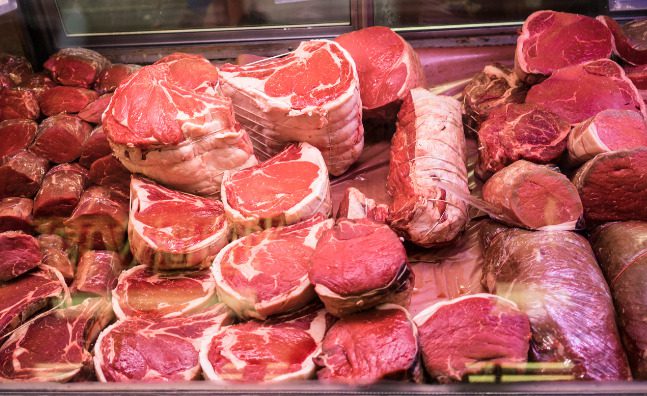
Rudolph’s offerings include classic butcher-shop fundamentals and a strong selection of house-made specialties. If you’re looking for dry-aged Prime and Choice beef, cut exactly how you want it, you’ll find it in the case alongside poultry and lamb. Sausage remains their calling card, with styles celebrating the shop’s Central European roots. These German, Czech, and Polish sausages, alongside Italian options, are sold both fresh and smoked.
Today’s shoppers will find a meat case that’s quite similar to the original: full of familiar favorites. But with innovation over the years, you’ll also find a few things you won’t find anywhere else. Smoked sausage, hot links, and old-school footlong hot dogs are perennial standouts, and it’s easy to build an entire cookout or holiday meal from a single stop.
Rudolph’s Meat Market & Sausage Factory remains rooted at 2924 Elm Street in Deep Ellum, quietly doing what it has done for more than 125 years. It’s worth the visit, whether you’re new to Dallas or just somehow haven’t made it in yet.