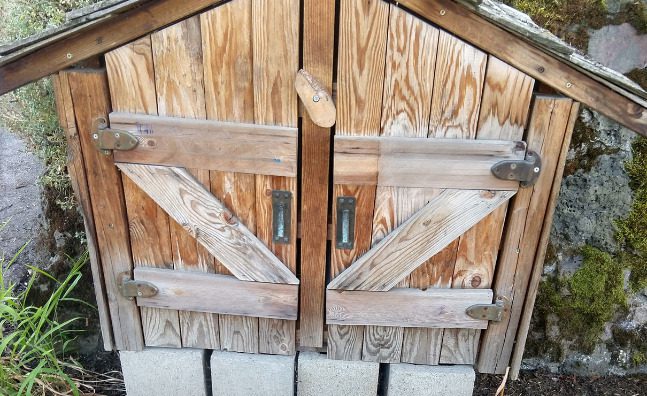
A roadside little free pantry - Pexels
While our area’s food banks and food pantries are the cornerstone of Dallas-Fort Worth’s free food access initiatives, mutual aid groups and blessing boxes fill in the cracks that these larger charities may miss. Mutual aid represents a more informal, neighbor-to-neighbor approach. These small, neighborhood efforts operate on shared responsibility and the belief that communities are strongest when people look out for one another. Whether it’s a blessing box stocked with pantry staples and hygiene supplies or a group organizing free hot meals, these volunteers meet our neighbors’ needs without barriers or bureaucracy.
Mutual aid workers recognize that hunger doesn’t always follow schedules or eligibility requirements. Blessing boxes are available around the clock. Mutual aid groups respond quickly to gaps left by traditional systems. They often reach people who may not have access to transportation or those who may not feel comfortable asking for formal assistance. Just as importantly, these spaces invite participation from anyone, offering a way to give as easily as you can receive.
The purpose of this article is to connect DFW residents to these grassroots food resources, whether you’re looking for immediate support or hoping to give or volunteer.
Getty Images Signature
Mutual Aid Groups in DFW
Food Not Bombs
The Food Not Bombs collective is a decentralized, volunteer-run mutual aid movement that focuses on recovering and sharing free, plant-based food as a form of direct action and community care. Rather than operating as a traditional nonprofit, Food Not Bombs exists as a loose network of independent local chapters around the world, all guided by shared principles rather than centralized leadership. Each chapter organizes autonomously, responding to local needs while aligning with the broader ethos of the movement.
Food Not Bombs began in 1980 in Cambridge, Massachusetts, when a group of anti-war activists started sharing free food as a way to protest military spending and highlight the contradiction between public hunger and government priorities. From those early actions, the movement spread internationally, particularly during the 1980s and 1990s, as volunteers in other cities adopted the model of redistributing surplus food in public spaces. Today, Food Not Bombs chapters exist in hundreds of cities across dozens of countries, making it one of the longest-running mutual aid food movements in the world.
Food Not Bombs has two local chapters in DFW: Food Not Bombs / Comida No Bombas – Fort Worth and Food Not Bombs DTX. Within each local chapter of the Food Not Bombs collective, volunteers serve free meals and share food and necessities directly with people in need. The DTX chapter has recent social media posts showing volunteers gathering and distributing meals on Sundays in Arlington.
DFW Mutual Aid Facebook group
There is also a DFW Mutual Aid Facebook group that remains active as an online mutual aid hub for the region, where community members can post requests for assistance and offers of help. Although this format isn’t a traditional organization with formal leadership and an office, this small but mighty group serves as a live mutual aid network, connecting neighbors who need resources or support with those who can provide them.
Dallas Sandwich Sundays
Dallas Sandwich Sundays is a grassroots, volunteer-led mutual aid effort in Dallas focused on providing free food directly to people experiencing hunger and hardship. The group is best known for its regular food distributions, where volunteers prepare and hand out sandwiches, snacks, water, and other essentials in public spaces, often in and around downtown Dallas. The work is intentionally simple and direct.
Dallas Sandwich Sundays began in the early 2020s, emerging during the COVID-19 pandemic when food insecurity became more visible across North Texas, and many traditional systems were strained or inaccessible. Like many mutual aid efforts launched during that period, it grew out of neighbors recognizing immediate need and choosing to respond without waiting for formal structures or funding. Since then, the group has continued operating through volunteer coordination and community support rather than as a registered nonprofit.
The mission of Dallas Sandwich Sundays centers on meeting people where they are and removing barriers to food access. Food is shared freely, without intrusive questions, paperwork, or eligibility requirements. The group operates under a mutual aid philosophy rather than a charitable one, meaning the goal is shared responsibility. Volunteers are encouraged to see the work not as “helping others,” but as participating in a community that looks after its own.
Blessing Boxes in DFW
The Blessing Box
The Blessing Box in Cedar Hill, Texas, is a small neighborhood-based community pantry designed to provide free, easily accessible food to anyone in need. Located at 1231 Venus Street, it operates as part of the broader Little Free Pantry movement, promoting local mutual aid and food sharing in Dallas County.
Stocked by local residents, it serves as a sharing point for nonperishable goods such as canned food, boxed meals, and hygiene products. The initiative supports individuals facing food insecurity while fostering community engagement and compassion.
The pantry is open daily during daylight hours and requires no formal registration or contact for use. Donors and recipients can approach the outdoor unit freely. This model ensures privacy and dignity for those seeking assistance while encouraging spontaneous acts of generosity.
The Blessing Box at Venus Street is one of many across the U.S. inspired by the Little Free Pantry model, a grassroots effort paralleling the well-known Little Free Library project. These boxes collectively help address local hunger gaps, particularly in suburban and rural neighborhoods where social services may be limited.
West Oak Blessing Box
The West Oak Blessing Box is a small community outreach initiative located at 1014–1034 E West Oak Dr, Aledo, Texas, near Fort Worth. It operates as a neighborhood-based mutual aid pantry and is part of a growing network of Blessing Boxes across the country. Donors may stock the box with shelf-stable goods, hygiene products, or baby supplies, and anyone in need can discreetly take what they need.
Located within the Aledo community—a semi-rural area west of Fort Worth—the West Oak Blessing Box represents a tangible act of mutual support amid the area’s rising living costs and limited public transportation.
Brenda’s Blessing Box
Brenda’s Blessing Box is a community-oriented nonprofit initiative and local donation pantry based near Fort Worth, Texas, at 1461 E Renfro St, Burleson, TX 76028. It operates as a small neighborhood food and essentials resource, designed to provide free, accessible assistance to individuals and families in need within the Johnson County and southern Tarrant County area.
Neighbors can directly share food, toiletries, and daily essentials. This micro pantry supplements larger charitable services in the region by providing 24-hour, stigma-free access to basic items.
Brenda’s Blessing Box helps fill the gap between food drives and organized pantry schedules in the area, particularly benefiting people facing immediate or short-term hardship. Its presence supports local families who may not qualify for formal aid programs but still face food insecurity or financial strain.
Typically stocked through volunteer donations, Brenda’s Blessing Box depends on contributions from residents, local businesses, and nearby churches. Items often include non-perishable foods, hygiene products, and children’s supplies. As with other city-approved donation boxes, Burleson’s local ordinances require that blessing boxes like these remain under 40 cubic feet to avoid permitting.
West Morphy Blessing Box
The West Morphy Blessing Box is a community-based outreach initiative located at 1331 S Jennings St, Fort Worth, TX 76104, in the Near Southside district of Fort Worth, Texas. It functions as a neighborhood resource where neighbors can donate or receive essential food and personal care items at any time.
This local project aims to reduce food insecurity and support vulnerable residents in the Fort Worth area. Operating entirely through community stewardship, it fosters mutual aid, ensuring that assistance is accessible outside of traditional charity or food bank hours. Local volunteers and nearby residents routinely restock the box.
The Blessing Box sits in a busy section of South Fort Worth, surrounded by small businesses, medical facilities, and historic neighborhoods such as Fairmount. The easily accessible corner on South Jennings Street makes it a convenient drop-off and pick-up point.
Efforts like the West Morphy Blessing Box represent a growing grassroots movement in urban areas. By offering discreet, stigma-free assistance, it strengthens community resilience and encourages civic participation and generosity. Regular neighborhood volunteers monitor the box’s cleanliness and inventory to ensure its continued use for those in need.
Lakeside Blessing Box
The Lakeside Blessing Box is a small community-based charitable initiative located at 9396 FM 1886 in the Lakeside area near Fort Worth, Texas. It operates as a local outreach effort providing free nonperishable food and essential items to individuals and families in need, often in collaboration with the nearby church community.
Its purpose is to combat food insecurity in the surrounding Azle–Lakeside region, offering 24-hour access to basic care items and shelf-stable food. The project fosters mutual aid, encouraging residents to participate in both giving and receiving help without formal registration or barriers.
The box is situated near The Word @ Lakeside Church of God, a congregation known for community service activities and outreach ministries. Supported by local volunteers, the Lakeside Blessing Box supplements broader regional aid networks like food banks and church pantries.
Residents of Fort Worth’s northwest corridor and neighboring Parker County recognize the Lakeside Blessing Box as a symbol of compassion and local solidarity. It has inspired similar efforts across the area, demonstrating how small-scale, grassroots projects can nurture a culture of generosity.
Little Free Pantry in East Dallas
There is also a Little Free Pantry in East Dallas at 2607 Millmar Drive, Dallas, TX 75228. This particular pantry also operates a Little Free Library. The signs are written in both English and Spanish to better serve the community. Inside the pantry, you may find hygiene products, everyday necessities, and groceries, as well as literature.
This community-run pantry is part of the broader Mini Pantry Movement. These little free pantries are grassroots food-sharing points where neighbors can leave non-perishable foods and other essentials for anyone who needs them, and visitors are invited to take items without any roadblocks or formalities.
The pantry at Millmar Drive was established by a local resident, Amy Kellick. The impact of it may be small, but it’s tangible. By providing a consistent, neighborhood-based source of food and essentials, it helps bridge short gaps between more formal food support services and immediate individual needs.