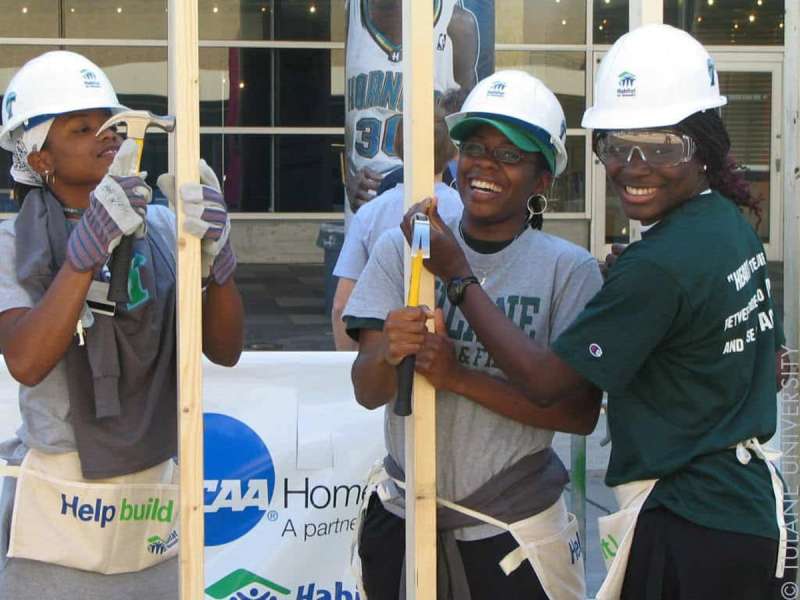
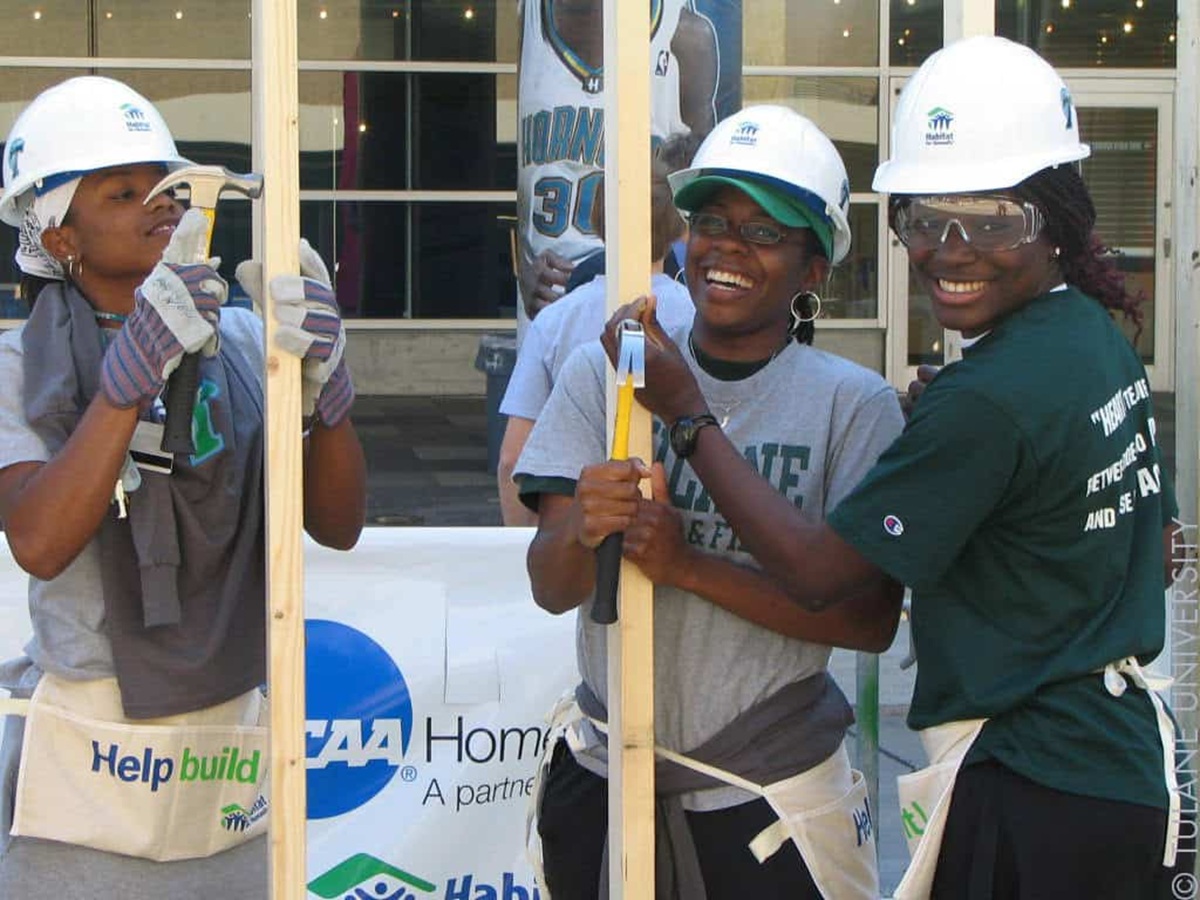
This week, the Dallas Area Habitat for Humanity is working to restore one of the city’s most historic neighborhoods, the freedmen’s town of Joppa. Over the next several days, restoration, repainting, and repairs will be done across homes in the vicinity thanks to the dedication of Habitat’s workers and volunteers.
Aiding in the efforts are locals whose families have direct ties to the region. Donald Payton, a resident of Joppa and an historian, told WFAA that his enslaved ancestors helped build the William Brown Miller plantation in Old City Park. “They built a house in 1855 — That was my grandmother’s grandfather. Mr. Miller brought the people, the first generation of slaves, to Dallas in 1847,” he explained.
Following the abolition of slavery in 1865, formerly enslaved people began establishing freedmen’s towns across Texas. Payton said, “They were allowed to buy houses, buy land, [but they] simply couldn’t buy land in prime areas,” which led them to places like what is now known as Joppa. It was named after the Biblical city of the same name.
As an historian, Payton has been working for years alongside other residents to compile and tell the stories of the freedmen who created the railroad, ferry, and other revolutionary aspects of Joppa. “This was the main landing area for crossing the river, and it was called Miller’s Switch. And then the railroad came in [on] July 17, 1872. And that added to the growth of the community because as men work on the railroad, they serve in communities along the railroad,” Payton told WFAA.
He said that working with Habitat for Humanity to build new homes in addition to working on existing properties is integral to preserving and honoring the significance of the town. “It’s very special because you can feel the ancestors’ spirit [here.]” Payton said that Habitat’s work is “presently saving the old to present it to the new,” and showcases how “we’re lucky to still have Freedman’s Towns.”
On Saturday, October 24, a block party will be held in Joppa from 12 p.m. to 6 p.m. to celebrate the conclusion of the organization’s work in the neighborhood.
A historic Black school in Joppa is being transformed into a community center
Prior to the Dallas Area Habitat for Humanity stepping in to help breathe new life into Joppa, Donald Payton and fellow resident Shalondira Galimore have been proactively working to transform the neighborhood’s first Black school, the Melissa Pierce School, into a community center. Galimore, who is the South Central Civic League/Joppa Neighborhood Association President, previously explained to NBCDFW that Melissa Pierce’s parents were enslaved.
“She [Melissa] wanted to have a school for the children here in Joppa to be able to go to instead of being bussed all over Dallas,” Galimore said. As someone who grew up in Joppa, Galimore has always understood the significance of the neighborhood and how it transformed the lives of countless residents. She’s been trying to turn the former school into a multi-purpose community center for years through the Melissa Pierce Project.
As she recalled to NBCDFW, “For generations, we’ve needed it. I’m fourth of five generations in the community, so I just got tired of hearing ‘we just need a community center.’” Galimore added, “A lot of times people say that Joppa [is] forgotten about. I just say that we were kind of hidden and tucked away, and we have to make our voices heard.”
Habitat for Humanity is one of the organizations that heard Galimore and Payton’s voices—the nonprofit is also assisting with the Melissa Pierce Project. It’s all part of a greater effort to teach new generations about the freedmen’s towns in Texas.
Galimore said, “As I got older, as I came back and I learned the history and learned what it really means and what a Freedman’s Town is and how I was able to be a part of that is really a blessing. I’m able to pass the generations on with something so significant as a historic Freedman’s Town.”
This article first appeared on Good Info News Wire and is republished here under a Creative Commons license.
Related: These 3 historic Dallas-Fort Worth saloons are steeped in lore