Reporting by Jace Tunnell, Harte Research Institute/Corpus Christi Caller Times
I find about 20 dolls on Texas beaches each year during my beachcombing surveys. Some have barnacles growing out of their heads. Others are missing hair, limbs, or whatever innocence they once possessed.
There is nothing quite like a doll with snail eggs coming out of its eyes to ruin a perfectly pleasant walk on the beach.
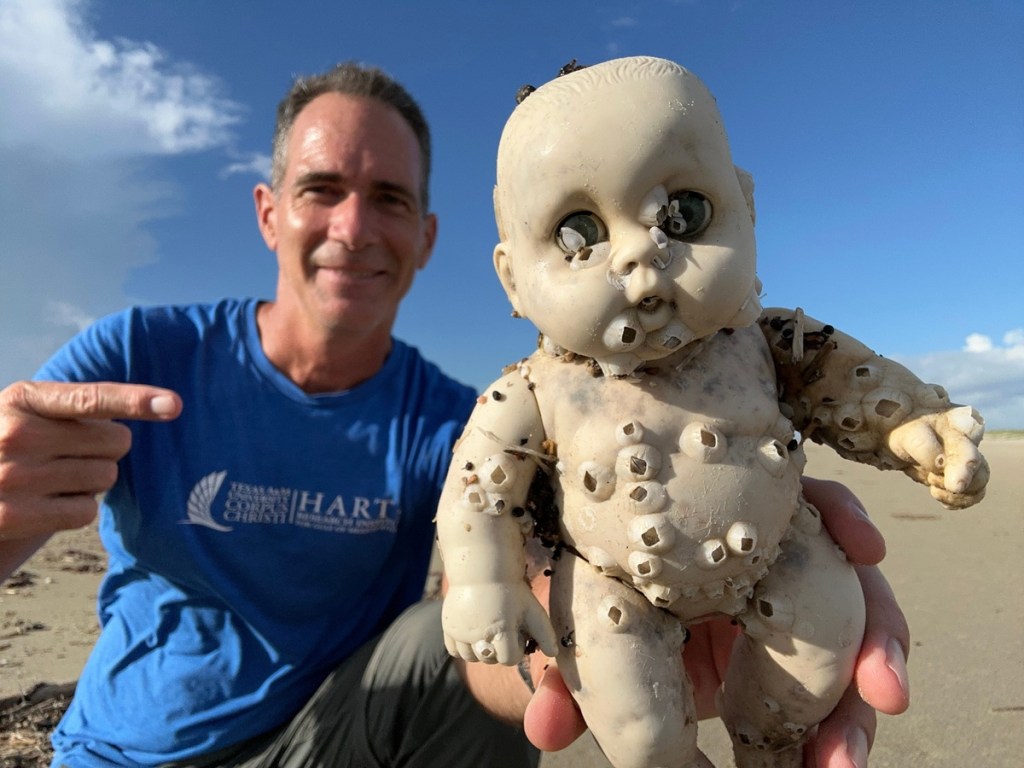
Some may enter the Gulf through rivers or get left behind on beaches, then travel with winds and ocean currents before washing ashore in Texas. Their exact origins are usually a mystery, and the dolls have been reluctant to cooperate.
With Halloween approaching, there is no reason I should be the only one losing sleep.
The good, the bad, and the ugly dolls on Texas beaches
Recently, I rode past a doll lying facedown on Matagorda Peninsula. It wore a sandy white dress, had a full head of hair, and looked disturbingly realistic. Pale skin and tar smeared across both legs completed the scene.
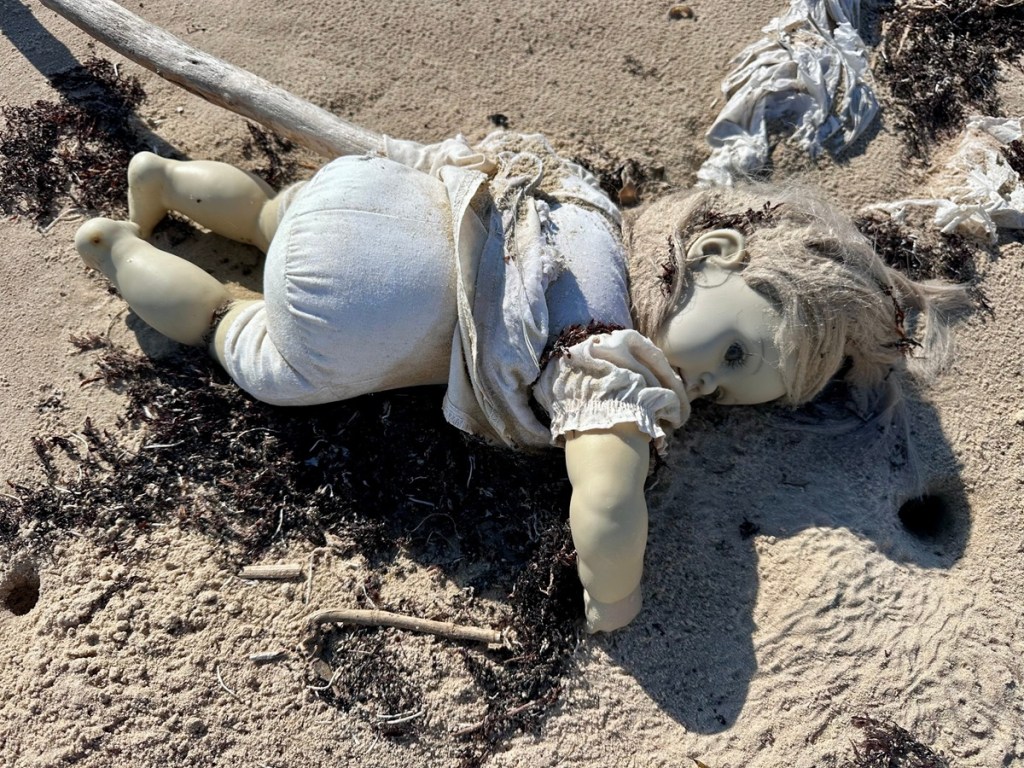
I did a double take from my electric bike, briefly thinking I had found a body. Fortunately, it was a doll about two and a half feet tall. My heart eventually accepted that explanation.
Then there is the post at mile marker 30 at Padre Island National Seashore. Dolls are nailed to it or tied around it. I regularly inspect the residents. New ones appear while older ones become increasingly weathered by sunshine and salt air.

The area is supposedly haunted. My only encounter involved getting stuck in deep sand. That was sufficient.
Occasionally, these finds pay off. HBO comedian John Oliver once paid $10,000 for my collection of about a dozen dolls, then destroyed them. A reasonable approach to home security. I donated the money to the Amos Rehabilitation Keep in Port Aransas, which rehabilitates sea turtles and birds.
So, the next time you find a beach doll, consider the possibilities. It might help wildlife. It might haunt your dreams.
Either way, I recommend checking the eyes before bringing it home.
Sleep tight tonight.
Jace Tunnell is the director of community engagement for the Harte Research Institute at Texas A&M University-Corpus Christi. His Beachcombing series appears in newspapers, as a weekly video on YouTube and KEDT PBS, and as a weekly feature on KEDT NPR. Follow Jace at harteresearch.org, Facebook (@harteresearch) and Instagram (@harteresearch).
This article originally appeared on Corpus Christi Caller Times.
Related: Where do Texans feel most at peace? A new survey points to nature