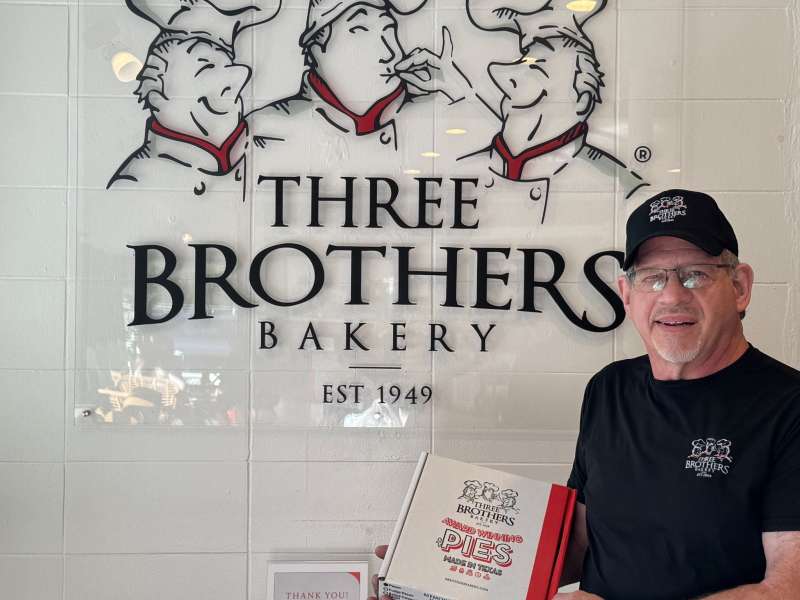
Houston native Robert ‘Bobby’ Jucker grew up spending most of his time on South Braeswood Boulevard, a street running through the core of Meyerland, the city’s largest Jewish community.
Jucker spent his childhood helping out at his family’s business, Three Brothers Bakery, making pastries and serving customers. Jucker was raised to not only know that the responsibility of the bakery would later be on his shoulders, but that he also must carry the legacy of his father’s Holocaust survival with it. More than 77 years later, it’s a responsibility he still treasures.
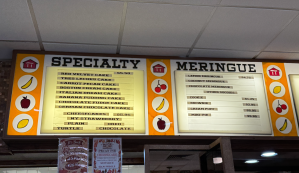
Three Brothers is known across Houston for their Jewish specialty desserts, like Hanukkah cake balls, challah loaves, hamantaschen, rugelach, and even specialty meal plates for families sitting shiva—or observing the Jewish period of mourning following the death of a loved one.
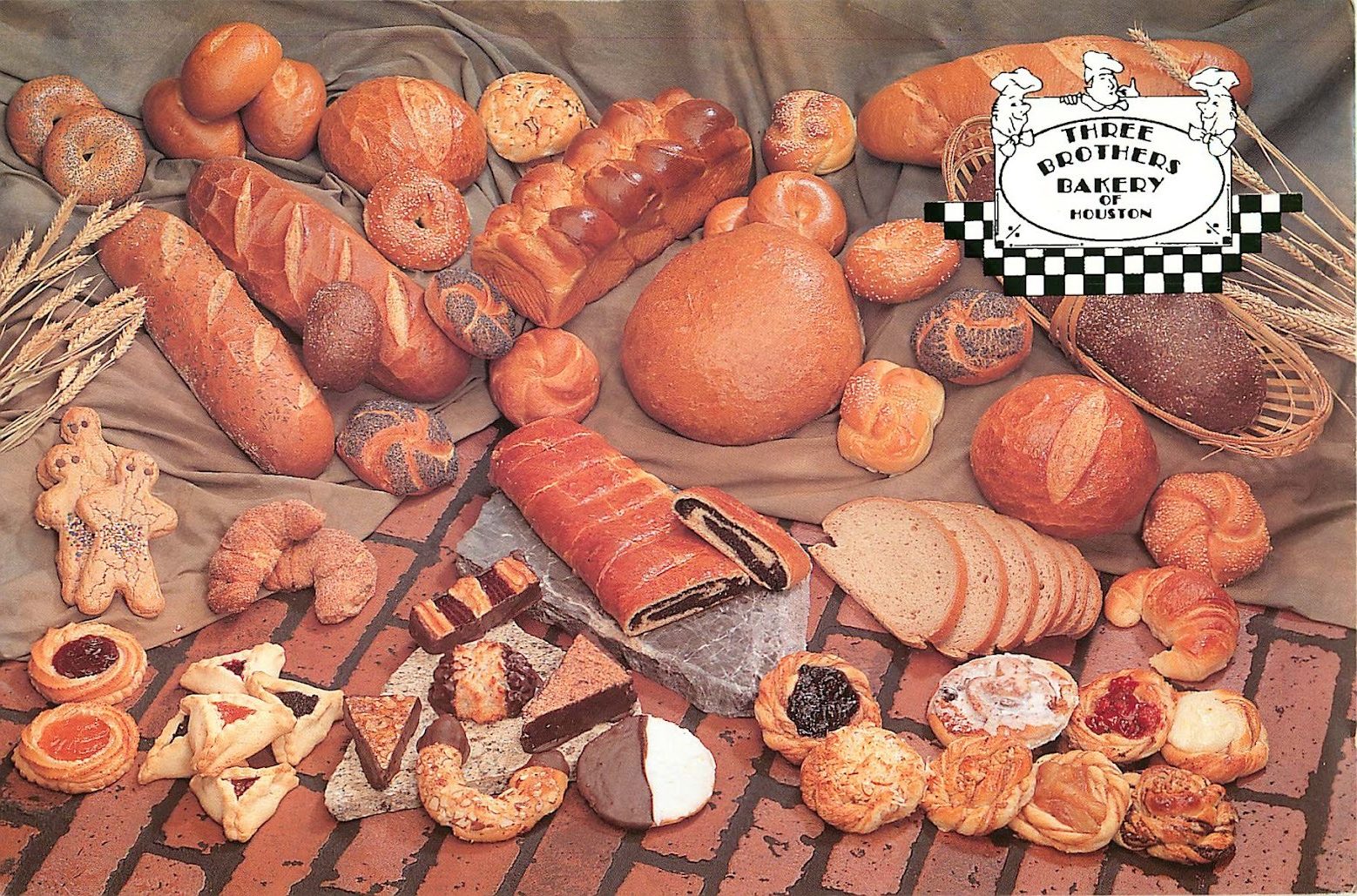
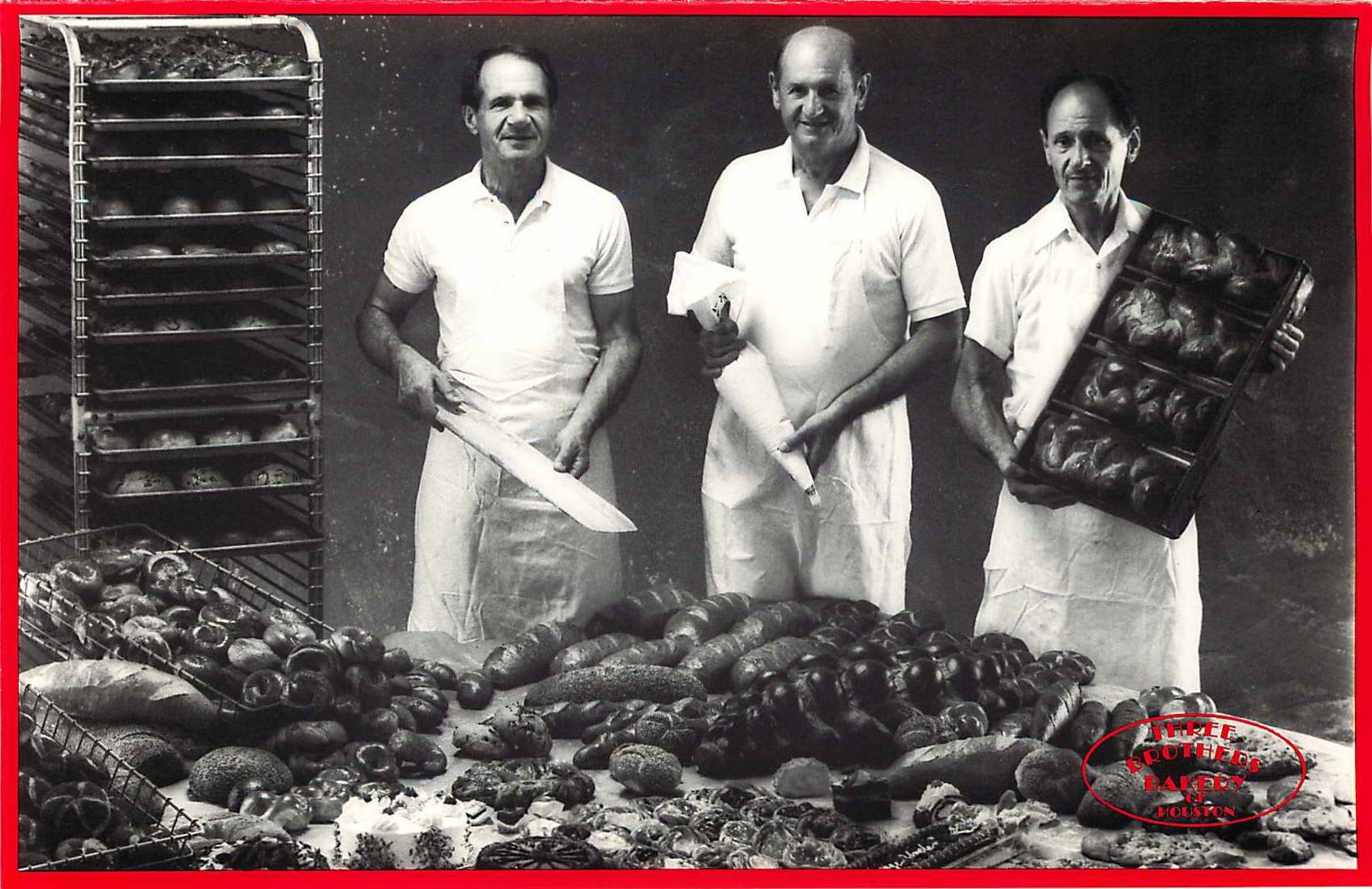
Over 200 years ago, Three Brothers began as a bread bakery in the city of Chrzanów, Poland, where the family baked kaiser rolls, egg bread, rye bread, and corn rye. The family business was thrown into tumult by the rise to power of the Nazi Party in the 1940s.
“The bakery was on the first level, and my grandparents lived on the second level,” said Jucker. “They had a crawlspace in the floor and wall where they snuck their kids, and they lived there for months at a time. Every time the Germans came, they would move into that area to hide.”
Jucker’s father, Sigmund, who was a teenager at the time, was apprehended by the Nazis and forced into a work camp alongside his two brothers, where he performed hard labor through starvation, psychological torture, and physical abuse.
“For the Germans, a bullet was too expensive to kill a Jew, so they would try to kill you in different ways,” Jucker said.
Jucker’s father was ordered to roll through mud, eat sand, and was routinely threatened with the lives of other prisoners. Once freed from the labor camp, Jucker’s father was relocated to a prisoner of war camp by the Russians, where he and his brothers took back their role as bakers and made the first Passover matzot for the liberated prisoners.
After learning their parents had been murdered in Auschwitz, the Jucker siblings relocated to the United States. The bakery was originally founded in 1949 within the historic Jewish community of Riverside Terrace in Third Ward. After Jewish institutions packed up and started to move to Meyerland, the brothers followed, reopening their bakery on South Braeswood in 1960.
Now in operation for nearly eight decades in Houston, Three Brothers has built a national reputation for their confections.
With pastries featured on Saturday Night Live, CBS Morning News, and Good Morning America, Three Brothers Bakery has won awards for their beloved baked goods across the nation. The bakery was named the creator of “the Best Mail Order Pecan Pie America Has to Offer” by Country Living magazine in 2010 and even got a recent visit from Senator-elect James Talarico after their Talarico and Ken Paxton cookies went viral.
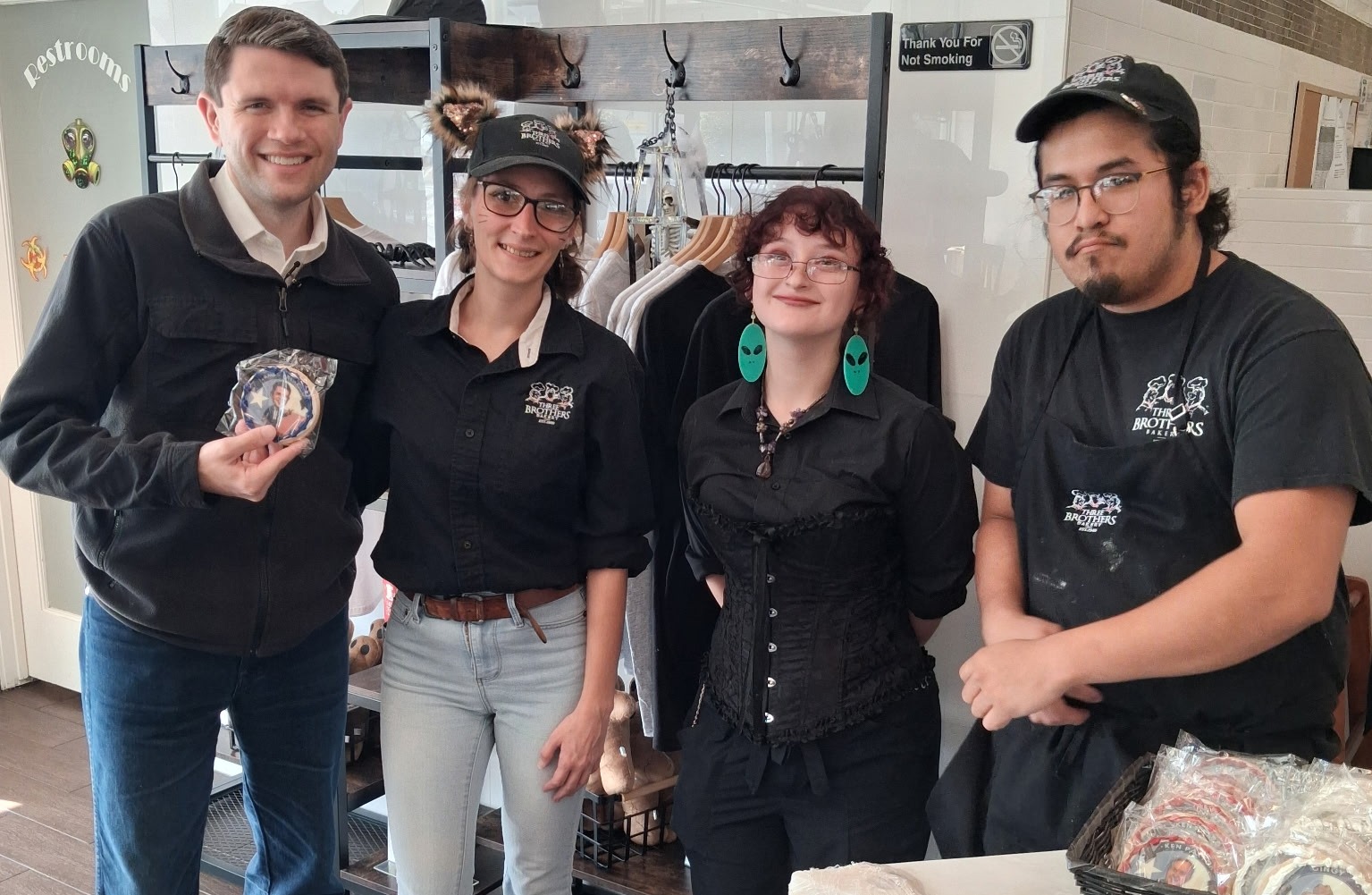
But for Jewish Houstonians, Three Brothers Bakery means more than awards and visits from politicians. It’s a place where Jewish traditions are preserved, even if it took the bakers a little convincing.
A pinch of chutzpah
When the Stella Link Shipley’s Do-nuts opened down the street from Three Brothers in the 1970s, the Jucker family stopped the arduous process of making donuts altogether. Jucker’s father believed that if people wanted donuts, they could go down the street to Shipley’s.
“My dad absolutely hated donuts,” Jucker said. “The grease and everything you have to deal with is just, ugh, it’s horrible. They opened up a Shipley’s Do-nuts and my dad cut the donut machine up and threw it out of here so fast, I’d never seen anything like it.”
The removal of donuts from Three Brothers meant the discontinuation of their sufganiyot, a deep fried, jelly-stuffed, powdered donut traditionally eaten on Hanukkah.
For Jucker’s father, who wrestled with his relationship to Judaism after the Holocaust, the removal of sufganiyot didn’t mean much more than an easier workday with less donut grease on the apron.
“Judaism has always been a struggle for my family,” Jucker said. “My dad grew up in a very religious family and for a lot of people like my dad, you don’t understand why things like the Holocaust happen if you’re doing everything right, and you’re a good person.”
But after 25 years, the Jewish community of Houston wouldn’t have it, and finally demanded their donuts back, showing the Jucker family that to the community, Three Brothers had become a place of cultural preservation and resilience.
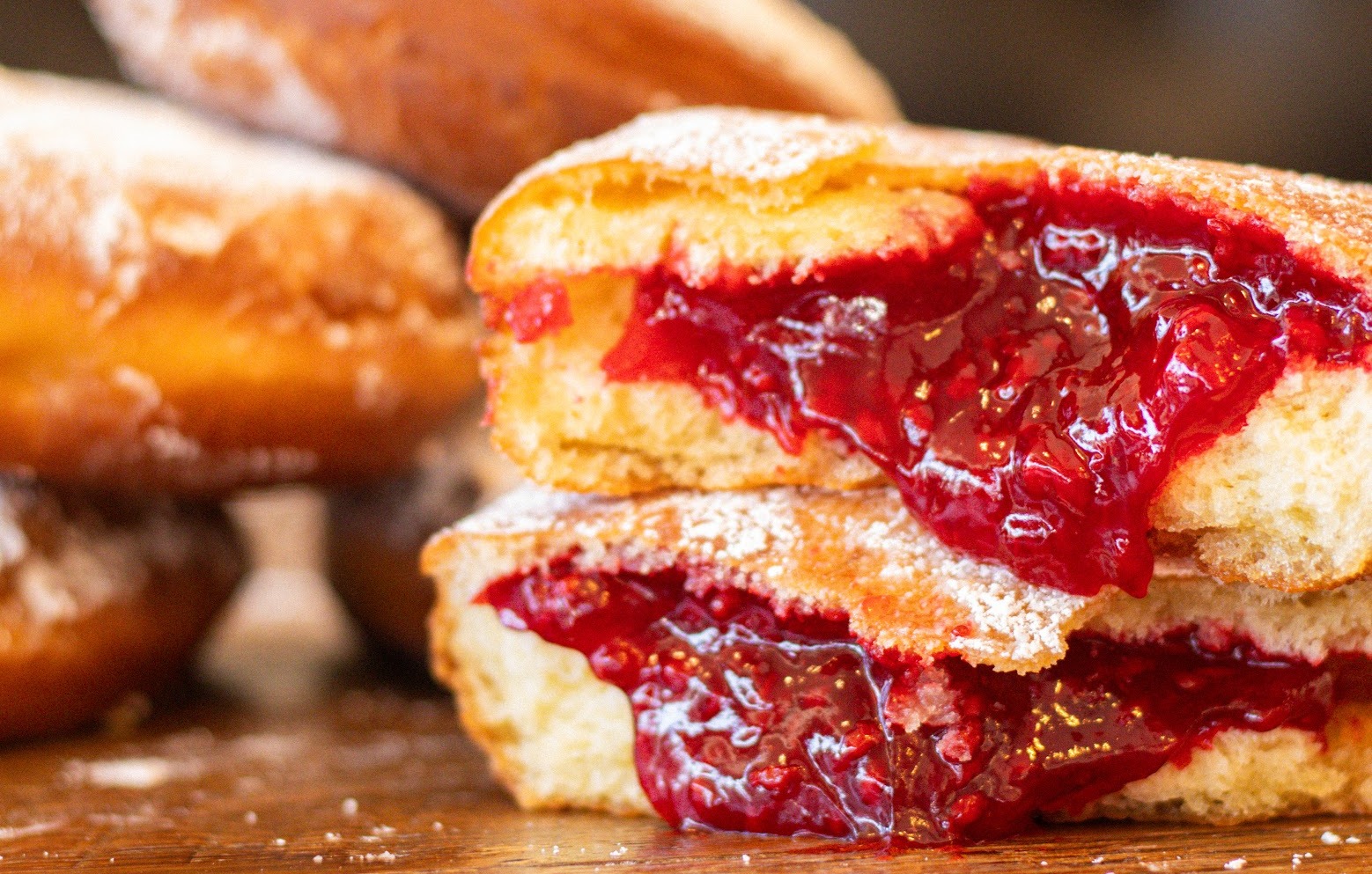
“We brought back the sufganiyot because people were asking us to,” Jucker said. “They said that there really weren’t good ones anywhere else in Houston and asked us to try making them again, so we did. And we’ve gotten an incredible response from the community.”
Just like the classic Hanukkah story where the miracle of the enduring oil nods to Jewish resilience, the Jucker family has emerged from hardship stronger, embracing their role in preserving Houston’s Jewish traditions
“Having to go through what my dad went through and what a lot of Jews that went through, we became resilient afterwards and let people know that you’re not going to make us go away. You’re just gonna make us stronger.”
The sufganiyot recipe used at the bakery today is one Jucker came up with all on his own, and it’s been a hit at the local stores—they sold 2,167 last Hanukkah.
While Three Brothers is popular in the local Jewish community, the family who was once defined solely by their religion has also found that in the multicultural city of Houston, they have the freedom to just be bakers.
“We sell a lot of Jewish baked goods, but we sell a lot more that aren’t Jewish,” said Jucker. “Christmas is our biggest holiday, and that says a lot. People don’t care if we’re Jewish or non-Jewish, they come here because we make quality stuff and we’re consistent about it. People appreciate that and always have.”