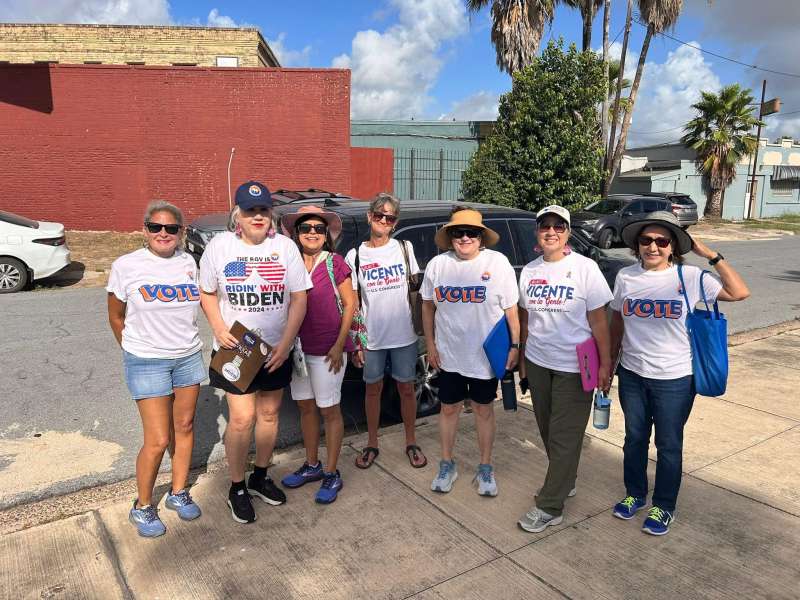
After an election, the routine for grassroots organizers is similar. They’re pulling up stakes, taking down signs, and clearing out an office that had been buzzing for months.
But for organizer Sara Hinojosa-Parsons (no relation to Gov.-elect Gina Hinojosa), and the rest of the Northern Cameron County Democrats (NCCD) the exhaustion was familiar, but the outcome was not.
“We came back stronger than ever, and this time we did it.”
For nearly a decade, the group had been working to change statewide leadership in Texas. They wanted Democrats in the Senate and the governor seats—offices they say shape laws and policies that affect their communities the most. With the belief that work must start close to home, five women began organizing around Beto O’Rourke’s 2017 US Senate run. The group grew into a network of more than 400 members focused on voter registration, education, and getting people to the polls.
For years Democrats lost races, but the work continued. Even when their county, a longtime Democratic stronghold, shifted so far right that they helped deliver Donald Trump’s 2024 victory.
Then came the 2026 midterms—after nearly ten years of organizing, NCCD watched Democrats win every statewide seat on the ballot and take control of the Texas House. Founder Diana Young says the win was a result of the work of volunteers who wouldn’t quit.
Before Beto, there was Donald
Young traces her political organization back to 2016 when, following Donald Trump’s first presidential victory, she joined a local group called Action South Texas.
“There were a lot of people there who were all concerned,” Young said.
But by 2017, she said, the organization had begun to fade. “I felt like we needed to continue because it was so important,” she said.
Then Beto O’Rourke launched his US Senate campaign. For Young, it gave the organizing new momentum.
“It resonated with all of us, and we didn’t want to let it die,” she said.
The odds of changing statewide leadership were steep. Texas had gone decades without electing a Democrat to the US Senate or as governor. Still, Young and four other women began organizing in northern Cameron County, calling themselves the Beto for Senate group and focusing on the part of Texas they could reach directly.
O’Rourke lost his 2018 race to Republican Ted Cruz, but the group stayed active. In 2021, it officially joined the Texas Democratic Party and became the Northern Cameron County Democrats. Four years later, O’Rourke ran again, but this time for governor, and lost to Republican incumbent Greg Abbott.
Then came 2024, where after years of organizing, Young said the group watched their county move sharply to the right. Donald Trump carried it with about 52.5% of the vote, becoming the first Republican presidential candidate to carry Cameron County in two decades.
Young was devastated by another defeat after years of mailing postcards, block walking, and trying everything to reach voters.
“Yes, it hurts,” she said. “Yes, we lick our wounds, but we have to get up. And we have to keep going.” That persistence would become a defining part of the group.
Losing and still coming back
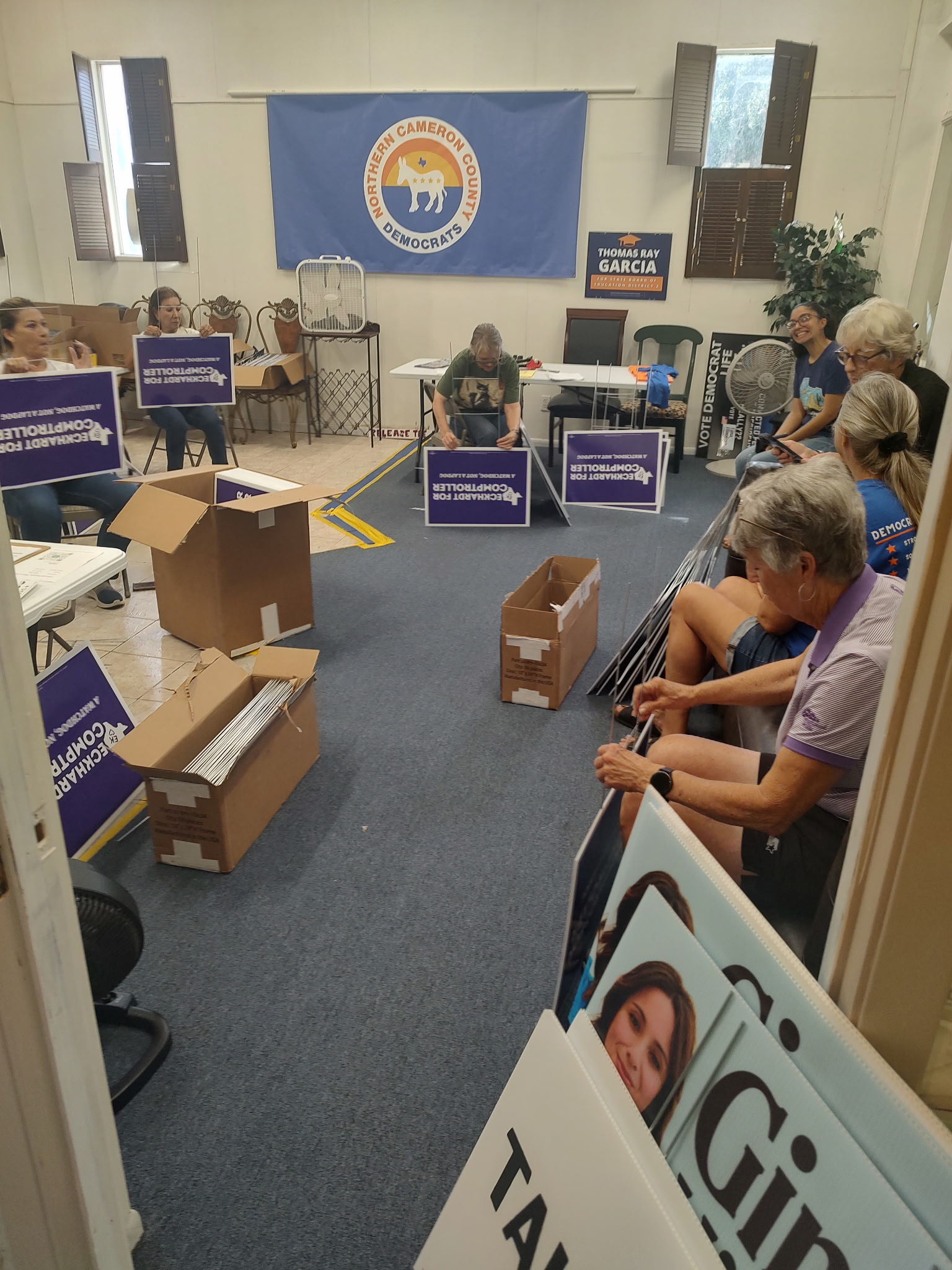
The years in between were not always easy. NCCD organizer Hinojosa-Parsons described previous cycles when volunteers put in hours of unpaid work only to see their candidates lose at the state level.
Unlike larger political operations that may pay canvassers or campaign workers, she said the local group relies heavily on volunteer labor and donations to keep its office running. Members contribute their own time and money for signs, shirts, and other merchandise.
“I wanted to be able to look at my daughter and tell her, ‘Your mother did everything humanly possible,’” she said.
But over time, the combination of long hours and repeated losses took a toll. Hinojosa-Parsons said she had to step back from the organization to focus on her mental health.
Later, when she felt ready to return, she said the other members welcomed her back with open arms. For her, that kind of community, one that endures disappointment together, regroups, and keeps showing up for one another, is part of what defines grassroots organizations like this one.
On election night, hesitation turned into confidence
That sense of community carried into Election Day for Maricela Alvarado, a co-chair and event coordinator with NCCD.
She spent part of it outside a polling site holding signs and encouraging people to vote. By the time polls closed, she said she was tired and hesitant to attend a public gathering to see results.
“I really did not wanna go to a watch party,” Alvarado said. “I was scared of what I was gonna hear.” So she went home, showered and put on her pajamas.
Then the numbers started coming in. As the results began to move in the direction she’d hoped, the mood inside her home changed.
“You need to go with the team,” Alvarado recalls her husband saying. “You’ve worked so hard.”
She took the advice and finally arrived at a local watch party, and when she walked in the door one of the group’s members ran toward her.
“She’s hugging me, and then we start crying,” Alvarado said.
According to Cameron County data, Democratic candidates won the county vote in all the major statewide, congressional races, and county races. Two years after Trump carried Cameron County by fewer than 6 percentage points, Gina Hinojosa won the county by more than 34 points in the governor’s race, while James Talarico carried it by more than 38 points in the US Senate contest.
Tiny ripples
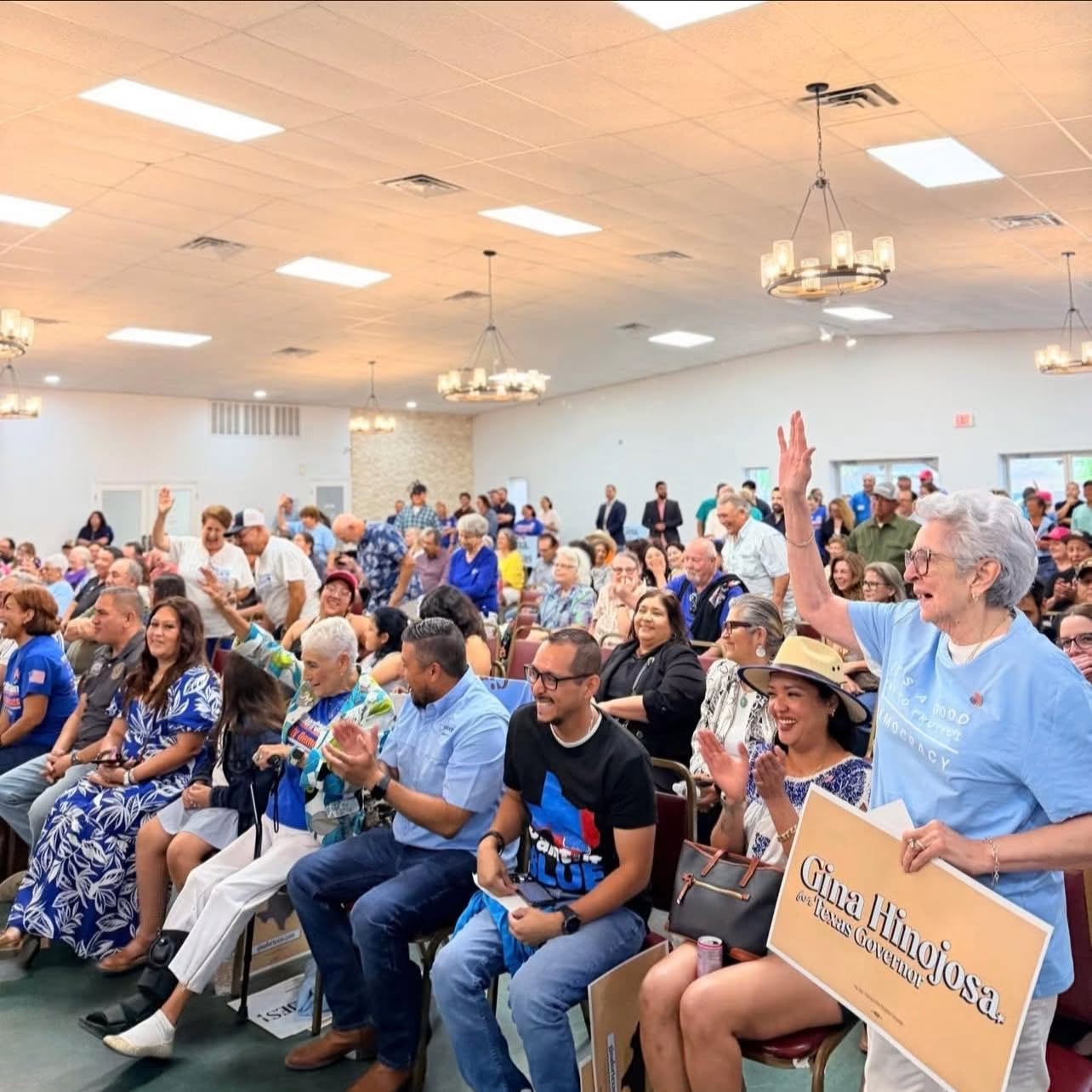
Much of the work didn’t happen at rallies or campaign events. Young said it happened by regularly setting up at the Harlingen Farmers Market, creating a place where residents knew they could register on Saturdays.
They also visited area high schools to register eligible students ahead of the upcoming elections. Eventually, Young said, the outreach became so expected that administrators began reaching out to her.
“Now the schools will call me and say, ‘Hey, when are you coming over to register our kids?’” she said.
The NCCD founder said she noticed an influx of first-time voters this cycle, particularly among students the group had worked hard to register.
That local experience reflected a broader increase in youth participation nationally. An early analysis from Tufts University’s Center for Information & Research on Civic Learning and Engagement estimates that 27% of Americans ages 18 to 29 voted in the 2026 midterms. That’s the second-highest youth turnout rate for a midterm election in the past 30 years.
“These first-time voters…to them it’s like, ‘Oh my gosh, I voted and I, and we won,’ Young said.
She hopes that seeing a direct connection between casting a ballot and an election outcome will keep young voters engaged.
The election is over. The organizing isn’t.
Members say they’re not treating the results as an endpoint. Hinojosa-Parsons said the group is already thinking about the work ahead of the 2028 presidential election.
“This is a grassroots movement that we can’t stop,” she said.
Even in the days after the election, she said, members were still at the office fielding calls and figuring out how to keep the momentum going. Young said the group’s larger goal remains getting more people involved and helping residents understand what is happening inside their communities and government.
And for the women who spent years registering voters, knocking on doors, and building a coalition from the ground up, they hope their persistence pays off again.