After a firestorm of censorship at the hands of Republicans ripped through public colleges and universities in Texas within the last two years, higher education students decisively voted blue this midterm election.
All 15 major Texas university campuses moved toward Democrats compared with the 2024 presidential election, according to Theo Elections.
Only two out of the 15 campuses—Tartleton State and West Texas A&M—remained red, while four flipped—Texas Christian University, Texas Tech, Baylor, and Lubbock Christian. Texas Tech and Baylor saw the largest swings compared to 2024, both shifting more than 50 points.
Professors are pointing to the implementation of Senate Bill 17 and Senate Bill 37 as reasons behind the swing.
While SB 17 banned all diversity, equity, and inclusion initiatives on college campuses, SB 37 stripped educators of their decision making power and gave it to politically appointed boards instead. The two laws have resulted in professors being fired for teaching LGBTQ+ topics in class, banning Plato’s writings on gender in philosophy courses, the shuttering of race and gender programs, and dozens of curriculum reviews.
“The chilling effects have been massive, and the self-censorship has been massive,” said Daniel Morales, a law professor at the University of Houston Law Center and chapter president of the University of Houston AAUP, who spoke to Courier Texas in his capacity as a union member.
“Classrooms are really delicate environments and require a lot of trust between students and the faculty, and class discussions have been diminished,” he added.
The ongoing censorship and culture of fear has led students across the state to hold mock funerals where they “mourn academic freedom” at the hands of their board of regents. It’s also led to a “brain drain,” with many Texas professors looking for jobs in different states over fear and anxiety due to increased political interference on campuses.
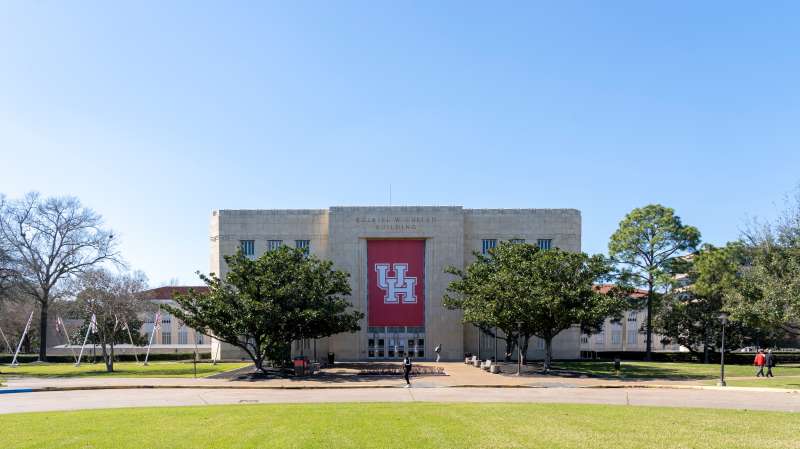
At the University of Houston, the system’s board of regents voted in August to remove 40% of the main campus’s core curriculum options to comply with SB 37.
“Our priorities as educators is not just self-preservation, it’s about the impact that this has on student learning, and the effect that these changes that the GOP have imposed over the past two years on student learning—I think is immense,” said Daniel Davies, an AAUP member and an assistant professor of English at the University of Houston who also spoke to Courier Texas in his capacity as a union member.
“It’s hard to imagine it having any other effect than making it more difficult for students to feel confident that they can have difficult conversations, necessary conversations, in a classroom because politicians have attempted to turn classroom speech into a political battleground where what is a normal, regular, and important discussion can be taken and used for specific political ends by bad actors,” he added.
Outgoing Republican Gov. Greg Abbott played a direct role in the changes seen across campuses, as board of regent members are appointed by the governor. His stance on foreign workers also impacted students and professors, which Morales said had an impact on this year’s election.
In January, Abbott directed public universities across the state to stop filing new H-1B visa petitions and announced an investigation into how they are being used.
The federal program allows employers to hire foreign workers for specialized jobs that require at least a bachelor’s degree, such as professors, researchers, and doctors. Under Abbott’s directive, public universities and state agencies can’t initiate or file new H-1B visa petitions without written permission from the Texas Workforce Commission through the end of the next legislative session on May 31, 2027.
“ We’re dependent on importing talent, and so this really disrupts that model,” Morales said. “Graduate students are having a hard time getting visas and deciding to study elsewhere where the climate is better, and so all of those things combined make this state a less attractive place to study.”
Morales said he’s hopeful much of what’s been done can be unwound and the culture wars foisted upon universities can cease, but he’s cognizant it’s “going to take some will.”
When lawmakers meet at the capitol in January to begin a new legislative session led by Gov.-elect Gina Hinojosa and Lt. Gov.-elect Vikki Goodwin—both Democrats—they could once again tackle several education-related issues and begin to course correct changes previously made under Abbott and outgoing Lt. Gov. Dan Patrick.
Davies said Texas needs laws that “let students learn,” not laws that dictate how students learn through “spreadsheets, arbitrary measurements, and political decisions or AI reviews.”
“ What we need to see is steps taken at every level of government to get politicians out of the classroom,” he said. “One of the things that defines Texas is how the struggle for public education at the K-12 level goes hand in hand with the struggle for public education at the higher education level for colleges and universities.”