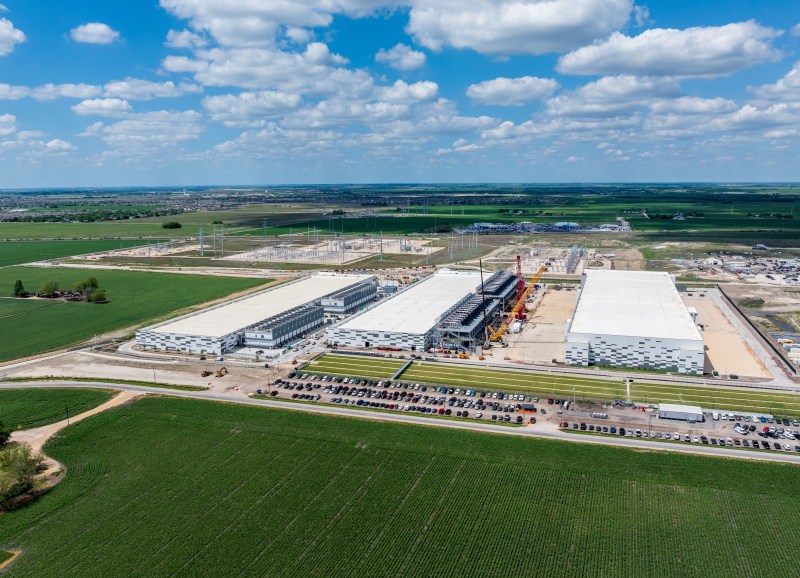
The number of data centers is rapidly growing nationwide, and Texas is leading the boom.
The state is already home to more than 400 centers, second only to Virginia, which has well over 600. But as Republican Gov. Greg Abbott cheers on massive investments from tech companies like Meta and Google, Texas could soon blow Virginia out of the water—if there’s any water left, that is.
This rapid growth is raising alarms in communities across the state. Data centers require enormous amounts of water and electricity, putting added strain on local resources that everyday Texans rely on. That’s why we’ve built this explainer to help you better understand how data centers work and what’s at stake if Texas continues to invest in them without more thorough oversight and community input.
What is a data center and how do they work?
Data centers are large warehouses filled with computer servers that store information. Think of the IT closet at your office—now imagine if it were the size of two football fields. These facilities have to run 24 hours a day, which requires continuous cooling to stay between 68 and 77 degrees—not to mention a constant expulsion of hot air. If those cooling systems fail, equipment could malfunction or shut down completely.
Here are some everyday actions that rely on data centers:
- Swiping a debit card
- Mapping a route with GPS
- Sending an email
- Pulling up electronic health records
- Apple and Google cloud storage
- Cell phone calls
- 911 dispatch systems
How did data centers start and what caused a boom?
The first data center was built in Philadelphia in 1945. It helped the US Army store and process complex artillery firing tables for the Manhattan Project, directly leading to the creation of the world’s first atomic bomb.
With the invention of the first transistorized computers in the 1950s, office buildings began creating dedicated data rooms to make sure these computers stayed cool and reliable, as companies began to use them for memory storage in the 1960s.
Modern data centers, as we know them today, really took off in the 1990s, when computers shifted to a client-server model. Through the dot com era into cloud storage, the need to secure data remotely continued to grow.
Now, the rise of artificial intelligence has launched data needs into a new chapter, and increased demand has continued to mean more and more energy usage.
The pros and cons
When politicians and tech companies talk about the benefits of data centers, they mostly focus on job growth and economic development. Companies want to play ball with Texas because of the significant tax breaks, minimal regulations, and the massive amount of land they’d have at their disposal.
Your energy bills may not reflect it, but Texas also has a ton of energy sources, including solar, wind, and natural gas. Historically, power in the state has been cheaper than in many other parts of the country—one reason why tech companies are attracted to Texas. But for the average Texan, electricity bills have risen as demand on the grid increases.
Data centers are major contributors to that growing demand. Because Texas has its own energy grid, which has historically meant fewer spikes in energy costs compared to states that share energy pools, state officials and utility companies have to constantly build new plants and upgrade the infrastructure to keep up. And those costs are often passed to consumers.
Another growing concern with the data center boom is water usage. The average center will use 300,000 to 500,000 gallons of water a day to keep their facilities cool. Large-scale facilities use anywhere from one to five million gallons a day—that’s the same amount of water used in a town with 50,000 residents.
That’s especially alarming considering Texas has already been managing drought conditions as a result of climate change. Take Medina County, for example. It’s long suffered from water shortages, and now residents are bracing for the impact of eight proposed large-scale data centers for the area.
There are also concerns about water quality: Texas has the worst tap water in the country, with roughly 207 contaminants. Aquifer, or ground water resources, see a heavy concentration of arsenic. Why? Industrial and agriculture waste is seeping into the water supply. Long-existing problems now have the potential to worsen with more industry.
How Texans have fought back
Communities all over the state have been vocally opposing data centers, especially as their impacts become more visible—energy bill hikes, water scarcity, and health consequences from polluted water and air.
One Fort Worth community has been fighting back for months on a proposed $10 billion data center. Courier Texas went to a community meeting about the issue in March, and residents said there was a lack of transparency, as they asked questions about water usage and quality. There were no assurances of minimal impact.
Texas lawmakers say they will study how to balance economic growth with the impact on landowners and community integrity in the 2027 legislative session. Texas regulators gathered water impact information and data from AI facilities in the spring and plan to release a specific report on estimated water needs at the end of the year.
But Texans don’t have to wait for state agencies and politicians to sound the alarm. Here are a few things you can do today:
- Get the discussion going in your community. Organize meetings to talk about the issue with neighbors, business owners, and local environmental groups. Share your learnings in social media groups and speak at your city council meetings.
- Challenge zoning and land use changes. Show up to your city’s zoning meetings and tell your planning commissions to deny accommodations for more facilities.
- Make safeguarding communities a requirement for your political support. Pressure your current lawmakers to vote against more data centers, and, in future elections, vote for candidates who will do the same.
If you’re already doing work to challenge the infiltration of data centers into your community, write in and tell us about it.
Related: How James Talarico will address Texas AI data centers