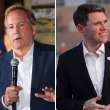
At the Republican midterm convention in Dallas Wednesday morning, Eric Flores, who’s running to unseat incumbent Democratic Rep. Vicente Gonzalez in Texas’ 34th District, touted President Trump’s endorsement, even as his campaign has quietly stripped “Trump Endorsed” and “Republican” off his own yard signs.
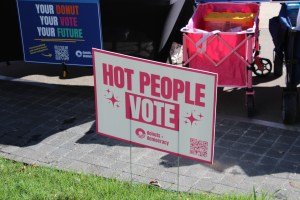
The contradiction, first reported by Politico’s Playbook Wednesday morning, captures the bind facing Republican candidates in swing districts this cycle—eager to claim Trump’s backing where it helps, and hide it where it doesn’t. A before-and-after photo shows Flores’ signage changed after his March primary win, even as he kept the endorsement pinned to the top of his X profile and listed on his campaign website.
A Flores spokesperson told Politico “his sign design choices are not one of those issues” voters care about, adding Flores would “address the real issues that impact the lives of South Texas residents” from the convention stage Thursday.
In a Wednesday interview with San Antonio’s WOAI, Flores leaned fully into the Trump association, saying he was proud to be endorsed by President Trump while casting the race as a choice between “common sense” and Democratic Socialists of America-style (DSA)-style politics—name-checking Michigan gubernatorial candidate Abdul El-Sayed, who isn’t on any Texas ballot or a member of DSA, to make the point.
Flores credited Trump with bringing down inflation, even though it’s increased since he took office. Flores also said he’d love to be joined by the President on the campaign trail and enthusiastically backed Trump’s war with Iran, saying he’s the first President in 40 years with “the courage” and “patriotism” to stand up to that regime.
Flores’ full-throated embrace of Trump in the interview and, presumably, Thursday night from the podium, paired with the softened branding back home, reflects a wider dilemma Republicans are grappling with in Dallas this week.
Trump’s approval rating has slid to the lowest points of his second term—34% approval nationally, according to Civiqs polling from Labor Day, and as low as 33% in a Financial Times/Focaldata poll released this month. Surveys of Texas, a state Trump carried by roughly 14 points in 2024, have shown him underwater since as early as this spring. One Republican operative close to the White House told Politico the “vibes” among GOP insiders in Dallas “are very bad.” He added, “No one is motivated to vote.”
That gap between a national brand in trouble and a base that still demands loyalty helps explain why Flores needs it both ways—Trump’s name is a liability with the persuadable voters his sign redesign was clearly aimed at, but pure distance from the president risks alienating the primary base and donor network he needs to win a general election.
Gonzalez, a five-term Democratic incumbent, has increasingly leaned into cost-of-living messaging as his central case for reelection—a strategy Courier Texas rdetailed in a deeper look at the affordability fight shaping the Texas 34 race.
The district, redrawn last year to lean more Republican, remains one of the most competitive House races in the country and could help decide which party controls Congress next year. Both campaigns are expected to sharpen their messaging in the coming weeks as early voting approaches in October.