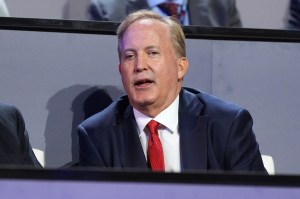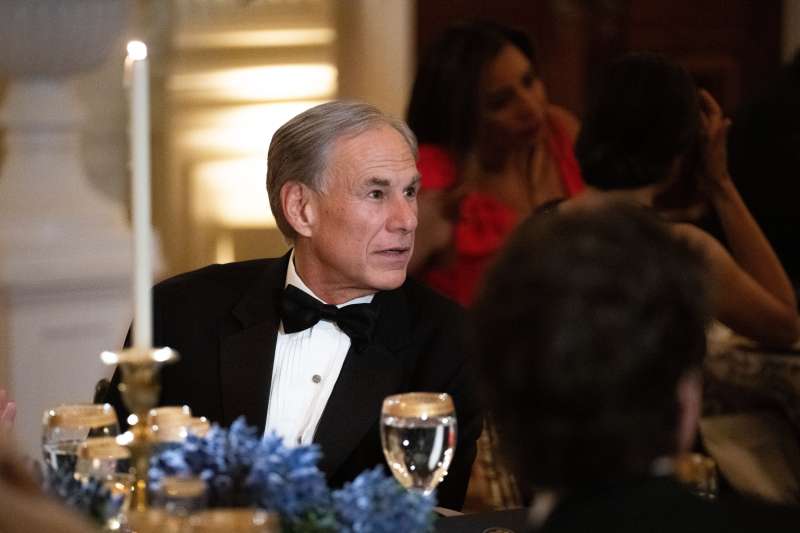
Texas is rich. Greg Abbott wants you to know it.
Under the governor’s 11-year tenure, the state has positioned itself as the premier destination for business, a low-tax haven where corporations and billionaires thrive. And by that narrow measure, it has succeeded: Texas ranks second in the nation for business climate.
It ranks second-to-last in quality of life.
The gulf between those two data points is the defining story of Abbott’s governorship—a record built on surface-level economic growth that has consistently failed to reach the people who live here.
The inequality underlying all of it is stark. Sixty-six Texas billionaires hold more combined wealth than 70% of all Texans. Nearly 42% of Texas households struggle to afford basic expenses. The state carries the 11th highest poverty rate in the nation, while tax policy continues to benefit the wealthy and corporations at the expense of working families.
Under Abbott, Texas is dead last in health system performance in terms of affordability and access. It has the highest uninsured rate in the country at 16.6%, with nearly 5 million residents carrying no health coverage. For more than a decade, Abbott has refused to expand Medicaid—a decision that would have extended coverage to hundreds of thousands of low-income Texans at minimal cost to the state.
Over 30 counties have no primary care doctors. Childhood vaccination rates have dropped sharply enough to contribute to a measles outbreak in 2025. Texas leads the nation in food insecurity. It also ranks sixth in childhood obesity.
The state’s education system tells a similar story during Abbott’s tenure. The state of public education in Texas is dire. The state ranks 38th in fourth-grade reading and 44th in eighth-grade reading. It spends roughly $5,000 less per student than the national average and the latest figures show it pays teachers $11,000 below the national average salary.
The crisis inside Texas classrooms didn’t happen in isolation.
For years, Abbott refused to raise the state’s basic student allotment—the foundational per-pupil funding block—leaving it frozen at 2019 levels even as inflation surged more than 22%. Texas sat on a historic $24 billion surplus while nearly 80% of school districts reported budget deficits or insufficient resources. When lawmakers allocated billions in new education funding, Abbott held it hostage—refusing to release it unless the legislature also passed a voucher program that has siphoned money away from public schools.
The result: Houston ISD faced a $528 million shortfall. Dallas ISD was $186 million in the red. Austin ISD cut teachers in the face of its projected $181 million deficit.
That’s not to mention the takeovers. Since 2015, the Texas Education Agency has seized control of eight school districts across the state. In Houston—the state’s largest district—Abbott’s hand-picked superintendent touted progress while the district lost students and teachers in droves. Other superintendents from across Texas warned the approach was unsustainable, particularly at a moment when districts were already bleeding cash. Local, democratically elected school boards, replaced by state-appointed managers. Local control, eliminated. Budget holes, unaddressed. All under Abbott.
Abbott’s use of funding as a compliance weapon didn’t stop there. In 2023, Abbott signed Senate Bill 17, banning DEI offices, programs, and diversity-related hiring practices at every public university in Texas—and barring institutions from spending a single dollar of state money until they certified compliance.
Universities that failed an audit faced the loss of all formula funding increases. When some schools were suspected of merely renaming their DEI offices to skirt the law, the state threatened to freeze their funding entirely. Abbott then pushed to extend the ban to K-12 schools. Programs that helped Black, Latino, LGBTQ+, and other underrepresented students adjust to campus life were shuttered statewide. This, despite Texas being a majority minority state. The message to institutions was clear: comply, or lose the money.
These moves, of course, signal Abbott’s own willingness to comply with President Donald Trump’s rollback on racial justice. And nowhere has Abbott’s deference to Trump been more naked than on redistricting.
Before calling lawmakers back to Austin to redraw Texas’ congressional maps in 2025, Abbott was initially resistant—and so was most of the state’s GOP congressional delegation, worried that spreading Republican voters too thin could cost them their own seats. Then Trump called. Abbott agreed to put redistricting on the special session agenda after a phone call with the president. He justified the move by citing a letter from Trump’s Justice Department—a letter a federal judge later described as containing “so many factual, legal, and typographical errors” it was “challenging to unpack.”
Finally, there was the February 2021 winter storm. When the state’s electrical grid collapsed, 246 Texans died and the state absorbed an estimated $200 billion in economic damage. Abbott pointed immediately to frozen wind turbines—a claim that didn’t hold up. Data showed natural gas infrastructure was responsible for roughly five times more power loss than renewables during the crisis. More than four years later, while some improvements have been made, the grid has not been fully winterized while the state’s power demands grow alongside its population and the rapid construction of AI data centers.
The crisis ahead may be worse. Texas faces a projected water shortage of 1.2 trillion gallons by 2030. Abbott has not moved to address the shortage.