Labor shortages, tariffs, and immigration raids are threatening the industry that keeps the state’s economy moving.
On construction sites across Texas, saws whirr, concrete pours, and the demand for housing has not faded. But beneath the surface, the state’s once-booming residential construction engine is grinding under pressure—slowed by labor shortages, tariffs, and rising material costs due to inflation.
From Houston to Dallas to the Rio Grande Valley, developers, contractors, and economists are pointing to the same conclusion: Texas construction is breaking down in ways that threaten the state’s economic growth.
At stake is more than the pace of new homebuilding. Texas has long relied on rapid construction to keep housing relatively affordable and to absorb a fast-growing population. But beyond that, the construction sector in Texas is a critical economic engine, contributing $144 billion (5.1%) to the state’s total GDP in early 2025. A slowdown in residential construction has created a drag on overall state economic performance.
The pressures continue to grow, driven in large part by federal policy. One of the most immediate issues is labor.
Roughly 40% of Texas construction workers are foreign-born. That reliance on immigrant labor has become a vulnerability as immigration into the US slows and enforcement intensifies. Immigration and Customs Enforcement (ICE) raids on construction sites have sent a chill through the industry, and even the perception of heightened enforcement can reduce turnout on job sites.
The problem is especially bad in South Texas and the Rio Grande Valley—the latter of which has seen construction loans decline by 30%. ICE agents have arrested more than 9,100 people in South Texas, nearly one-fifth of all such arrests statewide.
“There’s a bunch of fear in not just the workers but in the community,” Mario Guerrero, CEO of South Texas Builders Association recently told KVUE. “They’re [ICE] not showing up with warrants…they’re just showing up sweeping everybody that they can.”
The impact of these sweeping raids, says Guerrero, has been immediate and severe. Projects are both harder to start and finish. Where typically a 2100 square foot home would take four months to build, it can now extend to between nine and 11 months.
Guerrero and other construction leaders have turned to elected officials for solutions. One of them is US Rep. Monica De La Cruz of Texas’ 15th district.
De La Cruz is a Trump-endorsed congresswoman who, in 2023, became the first Republican and first woman to represent the district. She campaigned for Trump’s reelection in 2024 in South Texas and now calls the region’s shortage of construction workers and the impact of ICE raids on their job sites “a crisis” in the Valley. To remedy this crisis, she’s backed a special visa program that would grant construction workers temporary legal status, similar to the H-2A visa program already in place for agricultural workers.
Still, State Rep. Terry Canales, a Democrat whose district overlaps with De La Cruz’s, has heavily criticized the MAGA-aligned congresswoman for her prior support of Trump’s policies, including her vote to give ICE more funding than any other US law enforcement agency. Canales likened De La Cruz to an “arsonist” setting a house on fire and then posing as the rescuer.
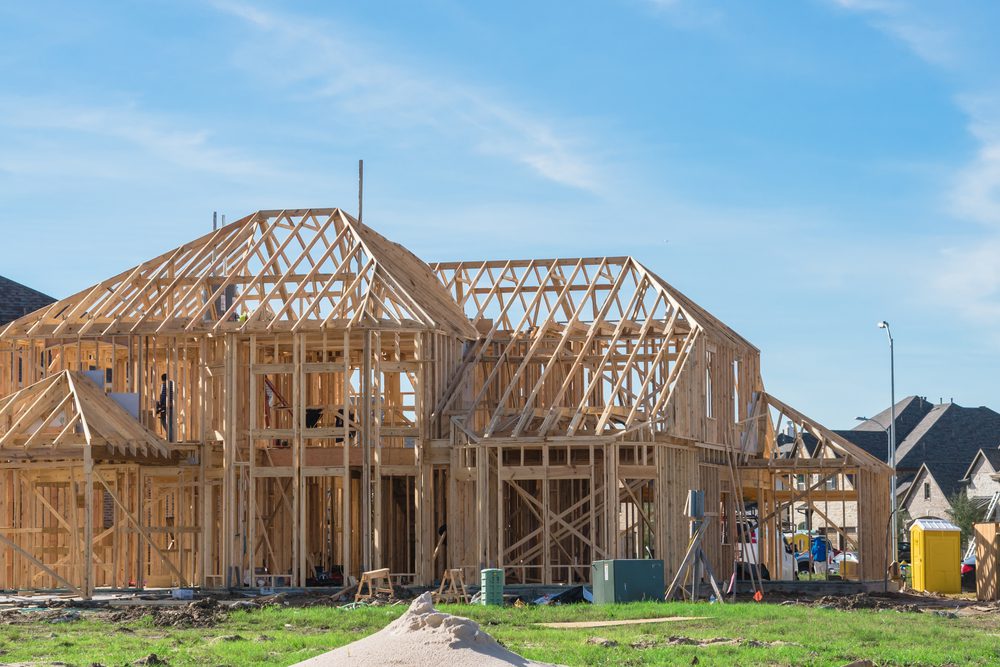
Costs rise amid Trump’s tariff policies
Even builders who have not experienced disruptions in their labor force have faced other economic headwinds.
Robert Setzekorn has spent his entire career in construction and now consults in the industry from his home in The Woodlands. He says material prices have spiked considerably over the past 18 months, shaving margins on many projects.
The price of these materials overall is up 3.5%, with products like metal spiking as much as 50% due to tariffs.
“We get a lot of our lumber from Canada,” Setzekorn told Courier Texas. “And you know the pissing contest we’re in with them.”
The effective duty on Canadian lumber has changed multiple times over the last year, but remains at 35% through August. In total, Trump’s tariffs and the rising costs of goods have added around $17,500 to the cost of building a single home in the US, according to the Center for American Progress.
Rising fuel costs owing to Trump’s war in Iran is the most recent concern. Construction crews in sprawling Texas often travel across cities or to other towns for jobs, frequently in large work trucks. Setzekorn says he is currently negotiating a vacation home renovation an hour and a half from his base, and is proposing that his crew sleep on-site to eliminate commuting costs—a move that would save roughly $400 a week on a project expected to last a month or more.
It’s no small consideration for the individual contractors, who often cover the cost of fuel out of pocket. They’re being squeezed financially in other ways, too. The price of power tools—largely due to tariffs on Chinese-made components—has also increased.
The combined effect of labor shortages and cost pressures is already visible in the data. As of August 2025, the value of construction contracts in Texas had fallen roughly 26% from its peak in January 2025. Some firms are beginning to show signs of financial strain, with steep revenue declines or bankruptcy filings, Guerrero told Texas Public Radio.
Despite the slowdown, demand for housing has not gone away. The state’s population growth and economic expansion continue to drive demand, even as construction struggles to keep pace.