Naming a city or neighborhood must be hard. Do you name it something that sounds peaceful or something meaningful? Should you name it after a person or after something you like about the land?
Below we’ll tell you some of the backstories of your favorite DFW cities and neighborhoods, but here’s a good rule of thumb when inquiring about the name of any area: If it sounds like a person’s name, then it’s probably named after a wealthy landowner or complicated war hero. If it’s nature-related, then it’s probably representative of the landscape at the time it was named.
Cedar Springs did have springs and a cedar grove. Euless was indeed named after a man who owned a lot of land there. But what the heck is a Deep Ellum?
Dallas
There are many different theories about how Dallas got its name, but all concur that it was someone’s last name. Most notably, it’s thought to derive from George Mifflin Dallas, the former US Vice President.
Fort Worth
Fort Worth was named after Major General William Worth. At the time of the city’s establishment, General Worth was considered a hero of the Mexican- American War. The fort he established became the city’s namesake.
Oak Cliff
Around 1850 this area was called “Hord’s Ridge,” after one of Dallas’ early settlers, but was renamed in 1887 for the abundance of green oak trees that covered the area.
White Settlement
It doesn’t take a rocket scientist to deduce the origin of this northwest Fort Worth suburb. In the 1840s, White Settlement was the lone settlement of white folks in the area, so the Native Americans gave it the most literal name possible.
Mesquite
Most know about mesquite trees or at least that their wood adds exceptional flavor to a steak, but did you know that the tree’s name comes from the Algonquian word “mesquite,” which means “strong wood?” The Algonquian have one of the most widely spoken Native American languages.
Plano
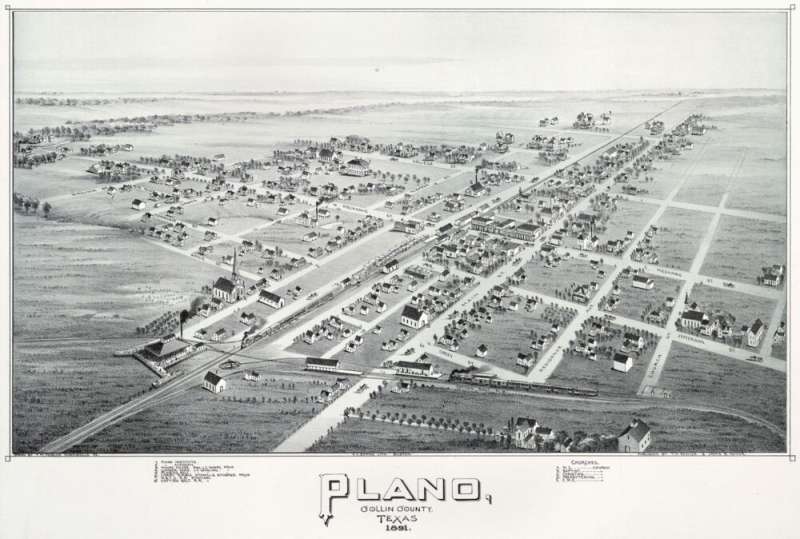
In 1852 the developing city, not yet official, had just opened a post office and postal officials brainstormed a name. At the time they thought Plano meant “plain” in Spanish, and they liked that because it best described the terrain. Plano actually means “flat” in Spanish, but both work to describe a city with essentially no hills.
Deep Ellum
Did you know that the Dallas neighborhood Deep Ellum was originally called Deep Elm? Post-abolition, the area was a Black neighborhood that eventually became home to European immigrants, making it the city’s only unsegregated neighborhood. The residents of the area pronounced elm ellum and the city eventually adopted the name.