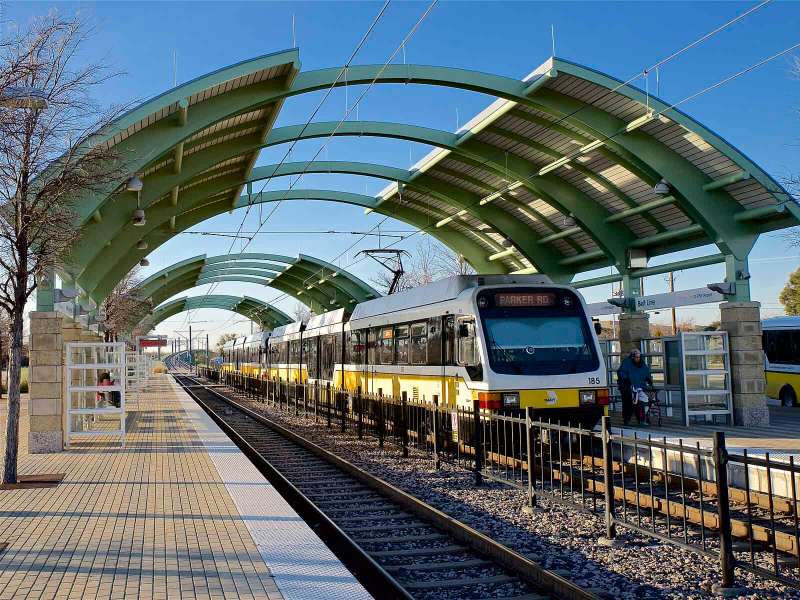
Riders who rely on paratransit services are advocating to stay in DART ahead of the May 2 election. Here’s what you need to know.
On May 2, voters in University Park, Addison, and Highland Park are set to decide whether they want to remain within the DART public transit system or opt out of it. For North Texas residents who rely on DART’s paratransit services, the loss of this accessible option would deeply impact their everyday lives. Francis Zalace, who is a quad-amputee, is speaking openly about the challenges she faces getting from one place to the next when paratransit vehicles are unavailable. “I’m very limited on the type of vehicles that can transport me, but all of DART vehicles are equipped to be handicap accessible for my needs,” she told KERA.
Even though Zalace has to request rides a day in advance to take her to church or to run other errands, DART’s system is still the most reliable in the area. Without these services, she said it takes her about an hour to get to church and another hour to return home. Getting to the grocery store is another obstacle that’s easier to overcome with the help of the city’s paratransit system. Zalace said being able to take these trips with ease helps her feel less isolated. Over 700,000 rides through DART’s paratransit system were logged last year, so it’s clearly a much-utilized and much-needed service.
And while North Texas would establish another system if election results favor leaving DART, Zalace said, “We don’t have enough information on how or if it would improve the current transportation that we already have.” It’s one of several reasons why she, along with others in the community, are advocating to keep things as is for the time being.
Eliminating paratransit services would negatively impact countless resident
Ahead of the election, North Texas residents who rely on DART’s paratransit services are voicing their concerns over the possible loss of this system. Plano’s Ian Rawn, who has Down syndrome, said, “It is really important for people who have intellectual and developmental disabilities to use DART, paratransit, for the future.” He added that he wouldn’t be able to maintain his job or the level of independence he has now without these services because he’d have to rely on his parents to take him where he needs to go.
Kevin Wright feels similarly. An Irving resident, Wright has limited vision, autism, and cerebral palsy. When he heard that voters may choose to leave DART through the May 2 vote, he got involved in local activism right away. “I emailed my mayor and city council twice and — then I went to the meeting so I feel very good about that,” he said. Wright added, “Hopefully the other three cities, the voters will make the right choice.”
On the opposite side of the argument are those who want to withdraw from DART because they believe they’re wasting money on a system that isn’t always reliable. In its place, Addison and Park Cities leaders are proposing a rideshare service similar to Uber, though to Francis Zalace’s earlier point, it’s unclear how exactly this would work or if it would ultimately be a better option. As of right now, she’s just hoping to spread awareness about the necessity of the paratransit system and of making sure that whatever potentially replaces it is an equally good fit. “Our goal is just to make sure that they have all the information to make a, you know, to make a firm decision,” Zalace said.
This article first appeared on Good Info News Wire and is republished here under a Creative Commons license.
Related: Texas Republicans take aim at public transit in two major cities