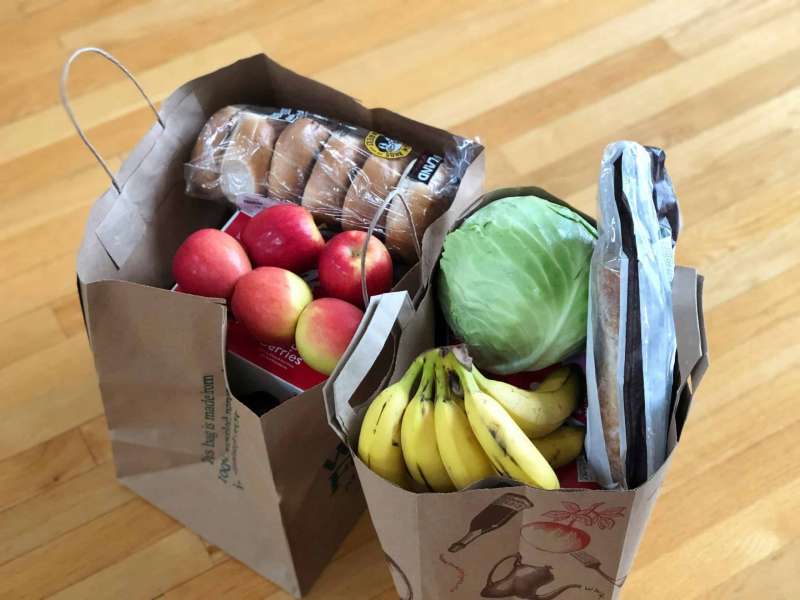
How easy is it for you to get groceries? For many Americans, it’s something they barely think about. They might have multiple stores within walking or short driving distance, or they can easily hop on a train or a bus when they need to stock up. But for millions of people, it’s a much more challenging endeavor. They don’t have nearby access to groceries or other healthy eateries. The closest option could be miles away, and they may only be able to get there on foot.
In Dallas, these food deserts are a particularly common occurrence. Over a third of the city’s residents—a whopping 36%—live in food deserts. The U.S. Department of Agriculture found there are high concentrations in South Dallas, West Dallas, and parts of East Dallas where these food deserts are most prominent.
We’re diving into why these areas have become prevalent through DFW, and what people are doing to help bring relief to food deserts.
What is a food desert?
The U.S. Department of Agriculture generally defines food deserts as “low-income census tracts where a significant number or share of residents” is over one mile from a supermarket in urban or suburban areas and more than 10 miles from a supermarket in rural areas.
There’s also the related and more recent concept of a food swamp, which is any area where there’s “a high density of establishments selling “high-calorie fast food and junk food, relative to healthier food options.”
Both a food desert and a food swamp cause problems for nearby residents. Malnutrition can result in people being over- or underweight, with diet-related complications including cardiovascular diseases, cancers, high blood pressure, and diabetes. According to the World Health Organization, unhealthy diets and poor nutrition are among the greatest risk factors for these diseases across the world, and DFW is no exception.
Why are there so many food deserts in Dallas?
There are a number of reasons why Dallas has an abundance of food deserts. Let’s look at four of the most frequent underlying causes.
Economic disparities
Dallas is one of the most financially segregated cities in the entire United States. About one in ten (10.7%) young adults are living in poverty, while only about a third (31.9%) have reached a living wage. Those numbers are improvements over the past decade, but it still shows a stark reality for many residents.
Lower-income neighborhoods often don’t get the same attention as higher-income ones. And in many cases, they don’t even have the same opportunities. A high-end grocery retailer likely won’t try to set up shop in an area if it doesn’t think it can turn a profit.
Even when the city tries to enact change, things can fall through. In 2023, a 50,000-square-foot Tom Thumb store was approved to open in South Dallas. The franchise has several locations in North Dallas, but this would have been the first in a food desert. Despite a $5.8 million tax abatement offer, Albertsons, Tom Thumb’s parent company, ultimately backed out of the deal in December 2024. In a West Dallas neighborhood, a long-time Cash Saver store closed down without warning in 2025. The store was the only grocery in the area, leaving residents—many of whom had developed close friendships with the workers—scrambling for new solutions.
Transportation challenges
The Dallas-Fort Worth metroplex is nearly 9,300 square miles. It’s about 30 times larger than New York City. Even the Dallas Fort Worth International Airport by itself is larger than the entire island of Manhattan. And the metroplex is bigger than entire states, including New Jersey, Delaware, and Connecticut.
Public transportation is more common in those East Coast cities because there’s less ground to cover. Though there are some buses, trains, and trolleys in Dallas-Fort Worth, they don’t reach every area, including many lower-income neighborhoods.
As a result, residents can struggle to get to supermarkets or grocery stores, particularly if they don’t have a car. In a classic food desert like Bonton, a South Dallas neighborhood, nearly two-thirds of residents (63%) are without a vehicle. It can take some of its population up to three hours one way simply to travel to the grocery store, plus another three-hour trip to return home. Unreliable transportation is a significant factor in food deserts around Dallas.
Lack of local/state-level investment
Local and state policies can contribute to food deserts. In Bonton, for example, federal housing projects from decades ago doubled Bonton’s population, but didn’t provide any additional resources for all those extra people. The area is also predominantly zoned for residential housing, so commercial properties, like supermarkets or healthy eateries, have limited options. In some cases, outdated rules are the culprit. A city might restrict people’s ability to have a farm or grow larger quantities of food on their own.
There can even be distrust among residents. Food deserts often develop over time. Previous efforts may have overpromised and underdelivered. People living within a food desert might be reluctant to change, having been burned in the past.
Not enough retailer interest
The other factors have a trickle-down effect for retailers, as well. They’re hesitant to open in areas with lower populations, since that impacts their revenue. Grocers may have less access to fruits and vegetables if they’re further away from farms, and various zoning laws could prohibit the addition or expansion of stores as needed.
While dropping a few grocery stores into food deserts might seem like an easy solution, the reality is often more complicated. Residents who work long hours or juggle multiple jobs may not have time or energy to regularly shop and make meals at home. Even if a supermarket opened in an underpopulated area, it requires consistent community effort to offer cooking classes, education, and additional resources to maximize the store’s value.
Where to find or offer help
Reducing the number of food deserts in Dallas and Fort Worth is a long-term project, though there are several organizations working toward the cause. If you’d like to get involved or learn more about a particular neighborhood, you have a handful of options.
Dallas Climate Action has resources for both residents and businesses. They offer guidance for growing produce at home or finding a local Community Supported Agriculture group, as well as ways to volunteer at farms and food banks. Empowering the Masses hosts a weekly drive-through pantry and a CommUNITY Market three days a week to distribute free food to individuals and families. At a local level, chefs like Amber Williams, who grew up in a food desert in Oak Cliff, are helping people make the most of their food. She released a cookbook, “Surviving the Food Desert,” providing recipes using ingredients commonly found in food-drive boxes and community gardens.
In Fort Worth, Funky Town Fridge, which provides outdoor, 24/7-accessible fridges, has served over 8,000 pounds of food to over 5,000 families. The organization welcomes fresh produce, essentials, and toiletries. Southside Community Garden is a grassroots initiative that builds garden boxes in homes in the 76104 zip code, which has historically had one of the lowest life expectancies in the nation. Both organizations are tackling food deserts in creative ways that deliver local impact.
The North Texas Food Bank provides 200,000 meals per day to hungry residents. Dallas Leadership Foundation distributes food boxes in East Dallas and Richardson, and the South Dallas Community Food Center has given nearly 9 million pounds of food to families in the community. Volunteers can donate to fund additional meals; food banks are also always looking for people to help sort and distribute food to those in need.
If you’re not currently in a position to donate or volunteer, simply spreading the word about these organizations can be helpful. They’re all working hard to make nutritious food available to everyone.
This article first appeared on Good Info News Wire and is republished here under a Creative Commons license.
Related: Where to find food banks and food pantries in DFW