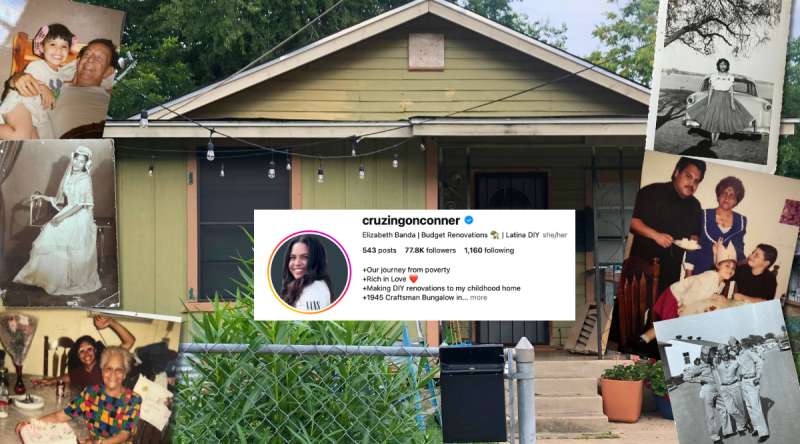
Elizabeth Banda has spent most of her life in the same 996-square-foot house in south central San Antonio. And right now, people from across the nation—the world even—are watching her break it all down. Well, sort of.
For the past five years, Banda has documented the renovation of her childhood home—and all the joy and pain that comes with that—for tens of thousands of people to see on social media. What’s really captivated scrollers, however, has been the 35-year-old’s willingness to be open about processing grief, motherhood, and socioeconomic struggles.
Banda and her brother were raised by their grandparents in this house. The plywood walls and ceilings tell a story of a couple, Maria and Oliver Rodriguez, who spent nearly 50 years there building something sturdy.
“This is going to last forever,” Banda said, imagining what her grandfather was thinking as he expanded and tinkered with the house over the years.
And it very well may last forever—especially given her efforts to turn that same plywood to sheetrock.
It was her house now, a joyful treasure box of memories, and a painful reminder what happened for her to decide its fate.
A parting gift
Banda’s grandfather died in 2012; her grandmother would outlive him by 10 years. Maria spent her final days in the sage-colored house, with Banda as her caretaker. One day, Maria told Banda that she wanted her to have the house. She had brought up the idea several times over the years, but this time she meant immediately. They hired a lawyer to draft the paperwork and a few weeks later, just a month after her 90th birthday, Maria died.
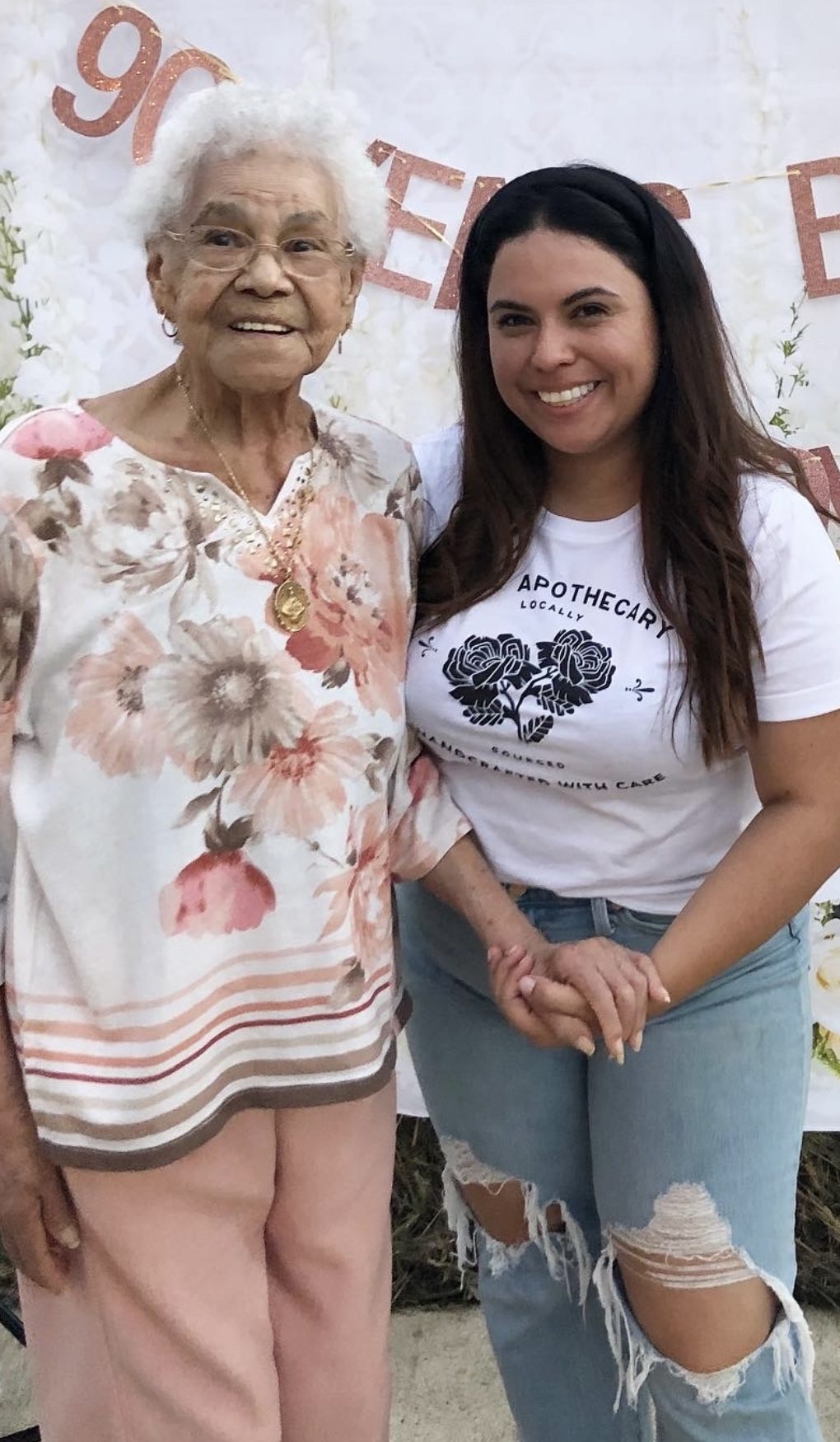
Banda was overwhelmed with everything that had to happen between a death and a funeral. She was a wife and mother of two young children, and suddenly she was the one making decisions about how to memorialize the matriarch of her family.
“ As I was planning her funeral, I was like, ‘I’m too young to do this. This is a lot for me,’” she said.
After weeks consumed in mourning, something clicked. There was a vessel to hold her grief, and it was her childhood home.
Banda threw herself into DIY projects with a vision of remodeling the entire three-bedroom, one bathroom house—a home she says is better off with two bedrooms. She started an Instagram page, @cruzingonconner, to document the work. She and her husband Julian tackled the backyard first, knocking down an old shed in a video that ultimately went viral.
At first, it was mostly her family who tuned in to see what would become of their tia’s house. And then the strangers came, and her reach grew and grew.
“ I was in overdrive that first year trying to, I guess, essentially run from my grief,” she said. “I didn’t wanna feel it as much, and I felt like if I put myself into these projects, it was easier somehow to deal with the grief.”
Digging up the past
The more Banda shared online, the more she was confronted by her own pain and insecurities. Bringing social media into her home opened the floor for comments about the shape of the space. People called her dirty and accused her and her family of ignoring the home over the years.
Growing up, Banda didn’t think her family was poor or that there was any issue with how they lived. Her cousins’ houses looked the same. Her neighbors’ did, too. It wasn’t until she became an adult, and met people from outside of her community, that she realized what luxuries she didn’t have. She began talking about this on her account.
“When people say it costs nothing to be clean, that’s not true,” Banda said in a video. “We spent thousands of dollars knocking down that shed and cleaning up this yard. Between tools and trash takeaway, this costs a lot of money, money my family didn’t have growing up.”
Banda also talks about the lack of time when low-income families are often working multiple jobs to make ends meet.
“I feel seen,” one viewer commented.
Her vulnerability opened up a new debate. What qualifies a family as “poor,” and what constitutes poverty? It’s been a hard topic for Banda to tackle as she’s still settling into viewing her life from the lens of other people. But she knows her grandparents did the best they could, and she’s doing the same.
Banda also realized she hadn’t seen many creators be honest about a project being too expensive or share the realities of renovating on a modest budget. In a sea of DIY pages filled with marble countertops, top-of-the-line appliances, and homes that look like they were styled by Hollywood designers, Banda decided to become the representation she wished she’d had.
“ I’m glad I could be that person for somebody,” she said. “I really enjoy when people send me messages or direct messages, or leave a really nice comment that I helped them be okay with their house and be okay where they’re at at the moment.”
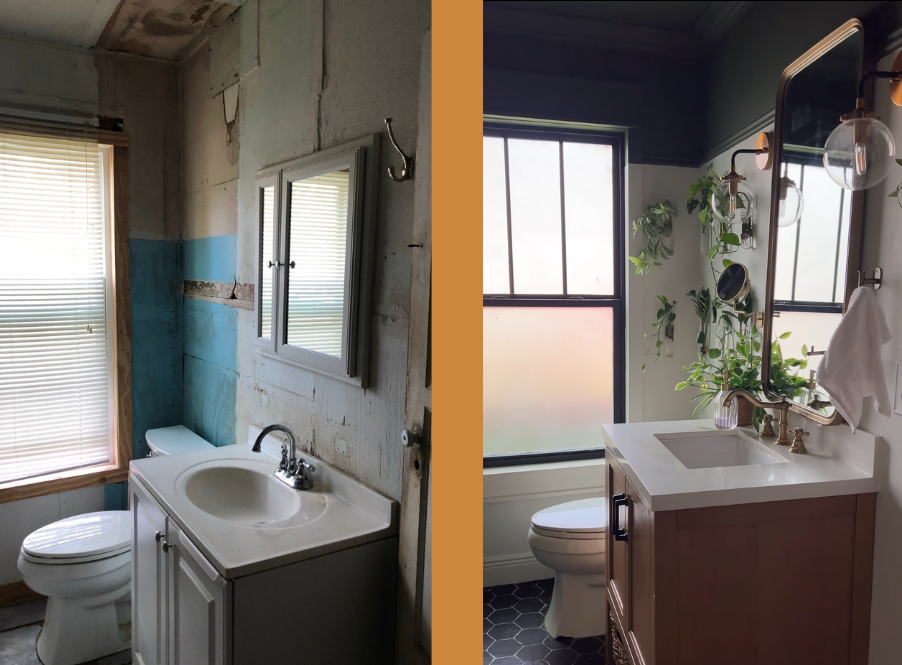
Banda describes her renovation as more of a long haul project. Whether it’s about time or money, she knows she has to pace herself. Her first big focus was the bedroom shared by her sons, now 10 and 6. Then came the house’s only bathroom. A dining area and a hallway were next.
As Banda and her husband prioritize spaces for their sons, the couple sleeps on the couch. Their own bedroom will come last. It’s a concession that doesn’t seem to bother Banda—patience is part of the project.
Perks of the page
For many DIY influencers, projects are made easier with brand deals. Banda said she’s pretty picky about who she works with and admits she hasn’t jumped on every opportunity that’s come her way. But she has good reason.
Sometimes, brands ask for a lot and offer a little, she said. Banda has to weigh the time and energy it would take to create the content and determine if it’s actually worth what they’re offering. As a Latina creator reflecting a lower middle class experience, Banda thinks she often gets lowballed by companies. Every once in a while, though, an offer feels thoughtful.
Last year, for example, a collaboration with Valspar paint was definitely worth it to Banda when she was able to tackle the creation of a hallway, plus an office nook, thanks to a sponsorship. She wouldn’t have been able to do that project at that time without it.
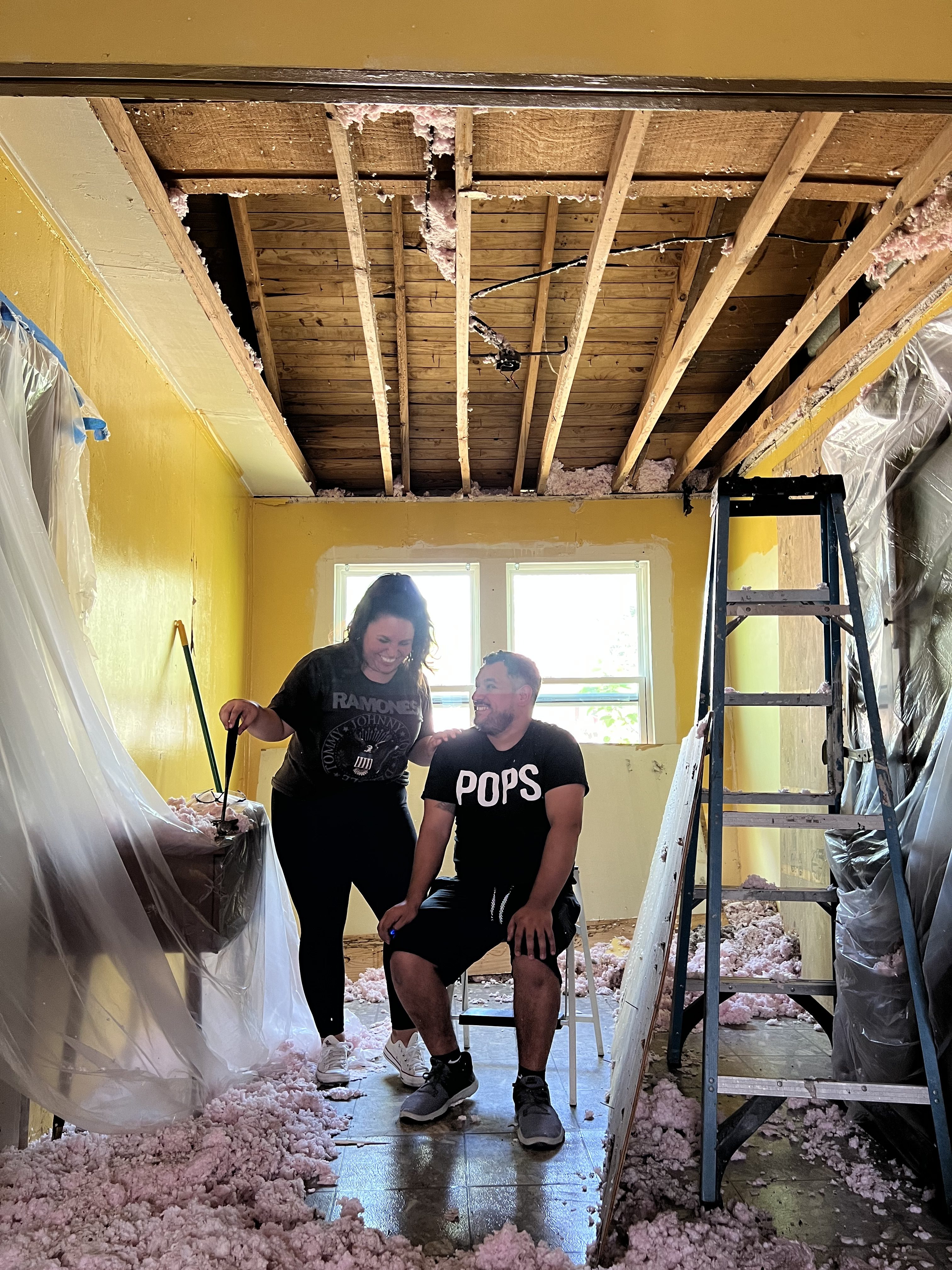
Banda said she’s happy earning enough money—and scoring enough free products—through social media to be able to finish her home renovations. She isn’t chasing a bigger following or dreaming of landing an HGTV show, like a lot of home project influencers. (Her neighbor does, however, call Banda and her husband “Chip and Jojo,” a nod to HGTV stars Chip and Joanna Gaines, who helped turn Waco, Texas, a national destination.)
And while Banda would welcome any opportunity to show off her beloved San Antonio, her goals are really about her family and her neighborhood.
“ I want to fix our home and it to be okay, and I want to really build generational wealth for my kids,” she said, “and that’s the biggest thing for me.”
A decade from now, Banda would love to be flipping houses in her neighborhood—not to transform it into something new, but to help create homes that reflect the love and care of the people who built them.
What we keep
For followers who have inherited a home of their own, Banda’s best advice is to give themselves time and grace.
“ You don’t have to dive in 100%. You can take a moment to yourself,” she said. “ I think it’s a mix of honoring the person who left you the house and, also, respecting your own self, your own boundaries, and knowing your own limits.”
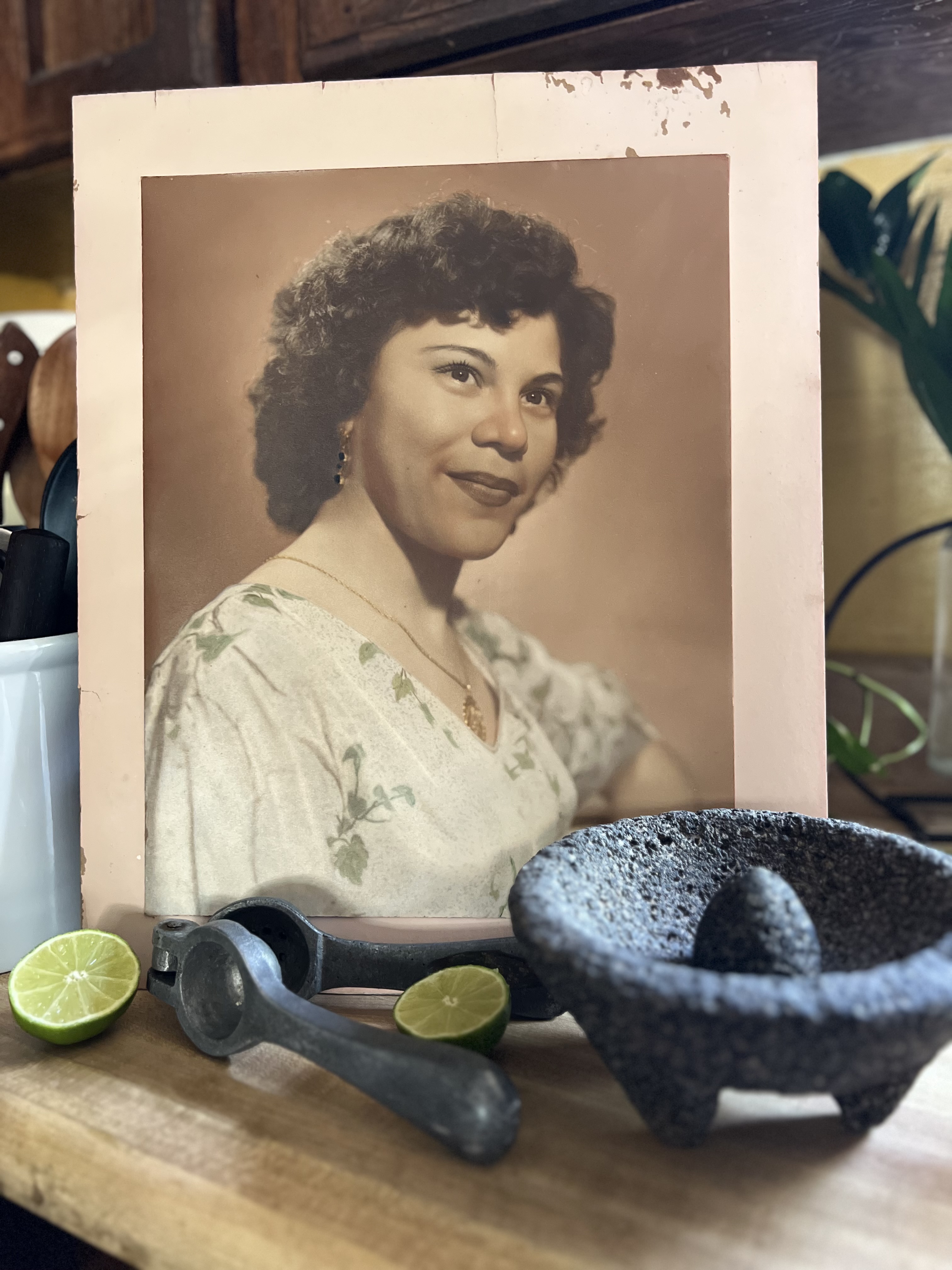
More than the house itself, Banda had to consider all the things left inside it. Her grandmother’s lipstick, pieces of jewelry, the pots and pans, and the old metal citrus squeezer used in every batch of guacamole. Deciding what to keep, give away, and what to trash has been another difficult part of the grieving process.
The kitchen will be Banda’s biggest emotional hurdle. She said she hasn’t changed it at all.
My grandmother “was always in the kitchen making something, and it’s hard for me to want to change that,” she said.
“What really sticks with you is the smell of things. When I put the oil, and then the onions, down [in the pan] to make rice, as soon as I smell that it’s like, ‘Hey, it’s her.’”
For now, Banda is holding onto her grandmother’s rice spoon and molejete. When she eventually tackles the kitchen, she plans to pare down her keepsakes while finding a way to honor her grandmother in the room’s new design.
Many of Banda’s followers have asked why she didn’t just sell the property instead of taking on so much work. It wasn’t something she ever considered. The house is a challenge Banda gladly accepted. And like the cedar pillars that once held up the family’s large shed, she hopes the home can remain a steady refuge for her sons and the generations that come after them.
“ It’s one less thing they have to struggle for.”