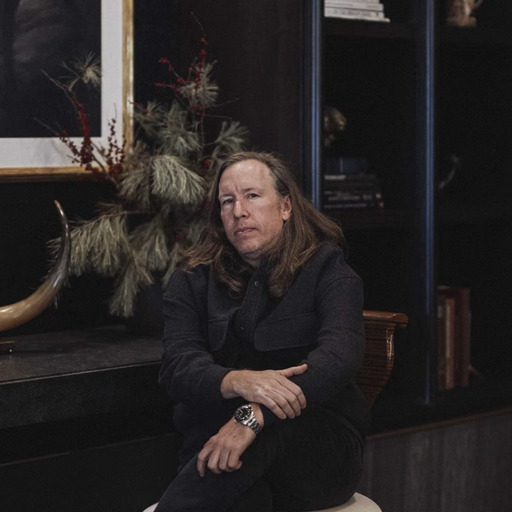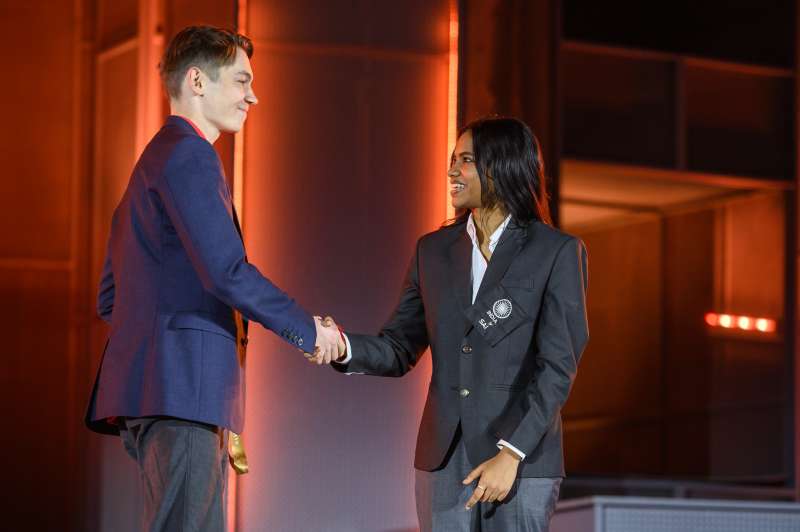
For about four hours, Gleb Dudin tried not to think too much about the person sitting across the chessboard from him—the person sitting across from him just happened to be Gukesh Dommaraju, the reigning world chess champion.
“You don’t really try to think about your opponent,” Dudin said. “You try to think about the good moves and play good-quality chess.”
Turns out, that was a pretty good strategy.
Dudin, a 21-year-old senior at the University of Texas Rio Grande Valley, defeated Gukesh during the final round of the 2026 Chess Olympiad in Samarkand, Uzbekistan, earning one of the biggest individual victories in UTRGV chess history.

Although he is on the campus chess team, he wasn’t competing for UTRGV at the Olympiad. Instead, he was representing Hungary for the first time as one of five players selected for the country’s national team. Born in Moscow, Russia, Dudin recently joined the Hungarian chess federation.
Hungary faced India in the final round and needed a win to secure a bronze medal. Dudin, playing with the white pieces, was tasked with pushing for a victory against the world champ.Instead of being intimidated by the matchup, Dudin said the game quickly moved into territory he had prepared for.
As a psychology major, he has another kind of advantage. Dudin said his studies have helped him understand stress, expectations, and the psychology of winning and losing.
“I got advantage, and I was confident,” he said.
From there, Dudin kept control of the board.
Eventually, Gukesh resigned, practically conceding once it became clear Dudin was in a winning position. Hungary ultimately tied India 2-2 and finished seventh, but Dudin walked away with not just bragging rights, but an individual gold medal for his performance.
His first celebration was especially personal. Dudin’s mother had traveled to Uzbekistan to see him.
“She was the first person who I saw basically after I walked out of the playing hall,” Dudin said.
UTRGV chess coach Bartek Macieja said what impressed him most was not simply that Dudin won, but how he did it.
Gukesh had gone undefeated through his first 10 Olympiad games, winning seven and drawing three. Macieja said Dudin controlled much of their game and never gave the world champion a real opportunity to escape.
“His victory wasn’t accidental,” Macieja said. “From the very beginning of this game, Gleb had advantage.”
And the win carries some extra weight back home.
Brownsville already has a deep chess culture, with programs across local schools and scholastic tournaments drawing hundreds of young players. UTRGV itself has won four national championships in the past eight years and, in 2025, was named Chess College of the Year by the US Chess Federation, the program’s third time earning the honor since 2018.
Macieja said Dudin’s victory gave the program another major chess advantage — this time off the board, too.
“The same day when Gleb defeated the world champion…many new students contacted me asking for a chess scholarship,” he said.
For Dudin, though, there’s no victory lap just yet. It’s back to Brownsville — and back to work.
He plans to continue pursuing professional chess after graduation and is getting ready for the team’s next competition, slated for November.
And for the young players now looking up to him, his advice is simple.
“First of all, they should have fun,” Dudin said. “They should love it … and be passionate about it.”