In school libraries across Texas, the number of books on the shelves is shrinking under the latest Republican-led campaign to pull titles that policymakers don’t like.
Banned Books Week (Oct. 4-10) was created as a national grassroots movement in 1982 to call attention to the harm censorship can cause when books are challenged, restricted, or banned.
In Texas, Over 100 books have been banned from public school libraries in the last year alone, including Pulitzer and Nobel Prize winning titles. Instead of letting librarians choose what books end up on shelves, a Texas law passed in 2025 gives that authority to school boards and an advisory board of parents. The law prohibits books that don’t adhere to “local community values,” which are undefined in the bill authored by McKinney Republican Sen. Angela Paxton. The law bans literature that could even remotely be categorized as “profane,” “indecent,” or “sexually explicit”. This law is the latest development in a Republican-led initiative to ban books that contain topics about LGBTQ+ and communities of color since they are seen as examples of DEI materials.
While board control is new in Texas, the banning of books isn’t. One of the most restrictive book-banning laws in the state was passed in 2023 and intended to keep students from reading “sexually explicit material.” It mandates that book vendors working with Texas public schools label books with references to gender identity, sexual orientation, or intimate relationships as “sexually explicit.” The ratings themselves lack clear definition and aren’t standardized across the state.
Today, Texas ranks third in the nation for these book bans, with over 3,700 books banned.
These bans have long-term consequences on children, particularly those from marginalized communities and backgrounds. According to the Clinton Foundation, when children can’t see themselves in the books they read, they learn that their narratives don’t matter. Banned Books Week, which is organized by several literary organizations, aim to bring attention to this consequence and others. This year, there are in-person and virtual events planned across the state and nation. But if you’d like to learn more about some banned titles, here are some acclaimed novels that are banned in Houston area schools, but have deep roots in the region.
“The House on Mango Street”
The coming-of-age novel “The House on Mango Street,” by Sandra Cisneros was originally published at the University of Houston through Arte Público, the oldest publisher of Hispanic authors in the US. The book is about a Latina growing up in Chicago in an immigrant family. This book has been taught in middle and high schools for decades and has been translated into over 20 languages.
The book is widely lauded for its discussion of class, gender roles, and the experiences of being raised in a Chicano household. The novel has inspired Chicana teenagers for generations, who see themselves reflected in the struggles and triumphs of the protagonist.
The novel is only banned in one other state. Arizona banned it under a law targeting Latino literature authored by the Arizona Superintendent of Public Instruction. The Arizona law was eventually overturned in 2017 after a ruling found the ban racist by restricting access to Mexican American studies.
In New Braunfels, Leander, Frisco, and San Antonio, the ban is still in effect for sexual, racial, and DEI content.
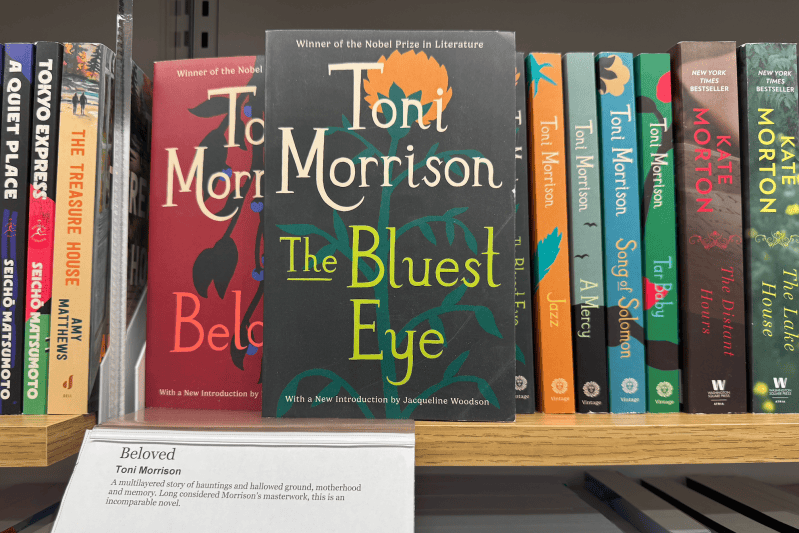
“The Bluest Eye”
Toni Morrison, the Nobel and Pulitzer Prize winning author of “The Bluest Eye”, began her career teaching English at Texas Southern University in Houston’s Third Ward in 1955.
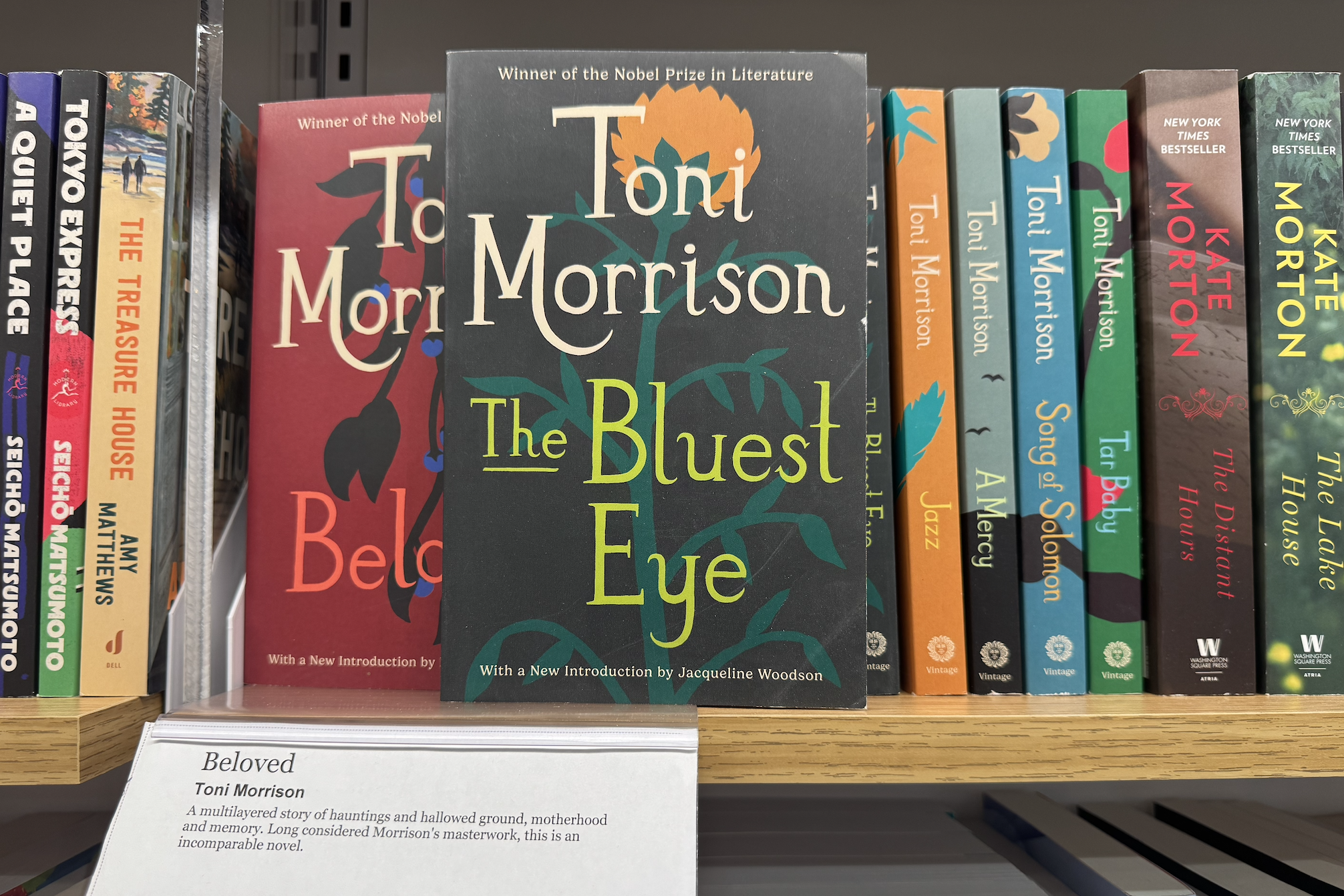
The novel was Texas’ most banned book across school districts in 2022 for themes of sexual abuse, racial identity, racism, motherhood, and slavery. These bans have been challenged by civil rights organizations like the NAACP, that say that the bans censor the history of race in the US. No school in Katy, Birdville, Fredericksburg, or Klein ISD allows this book in their libraries.
“The Road”
Cormac McCarthy, the author of the novel “The Road”, lived in El Paso, Texas for 20 years and wrote some of his most famous works there. He’d go on to share his collection of notes, research, letters, writings, and photographs with nearby university Texas State in San Marcos.
“The Road” is a book about a father and son navigating a post-apocalyptic world fighting to keep their humanity alive. In the novel, the author uses cannibalism and violence as metaphors for American consumerism, which serve as warnings for the future of humanity and the environment under capitalism. Instead of reading these themes through the lens of parable, the state has banned the book for depictions of horror.
“Lonesome Dove”
The laws targeting many books are so broad that even white, pro-American stories are being pulled from the shelves. “Lonesome Dove” is heralded as a great American novel, but the book was recently listed among removed and restricted titles in New Braunfels ISD for “indecency”, where banned books include those by Barack and Michelle Obama, Bill Clinton, and George Bush.
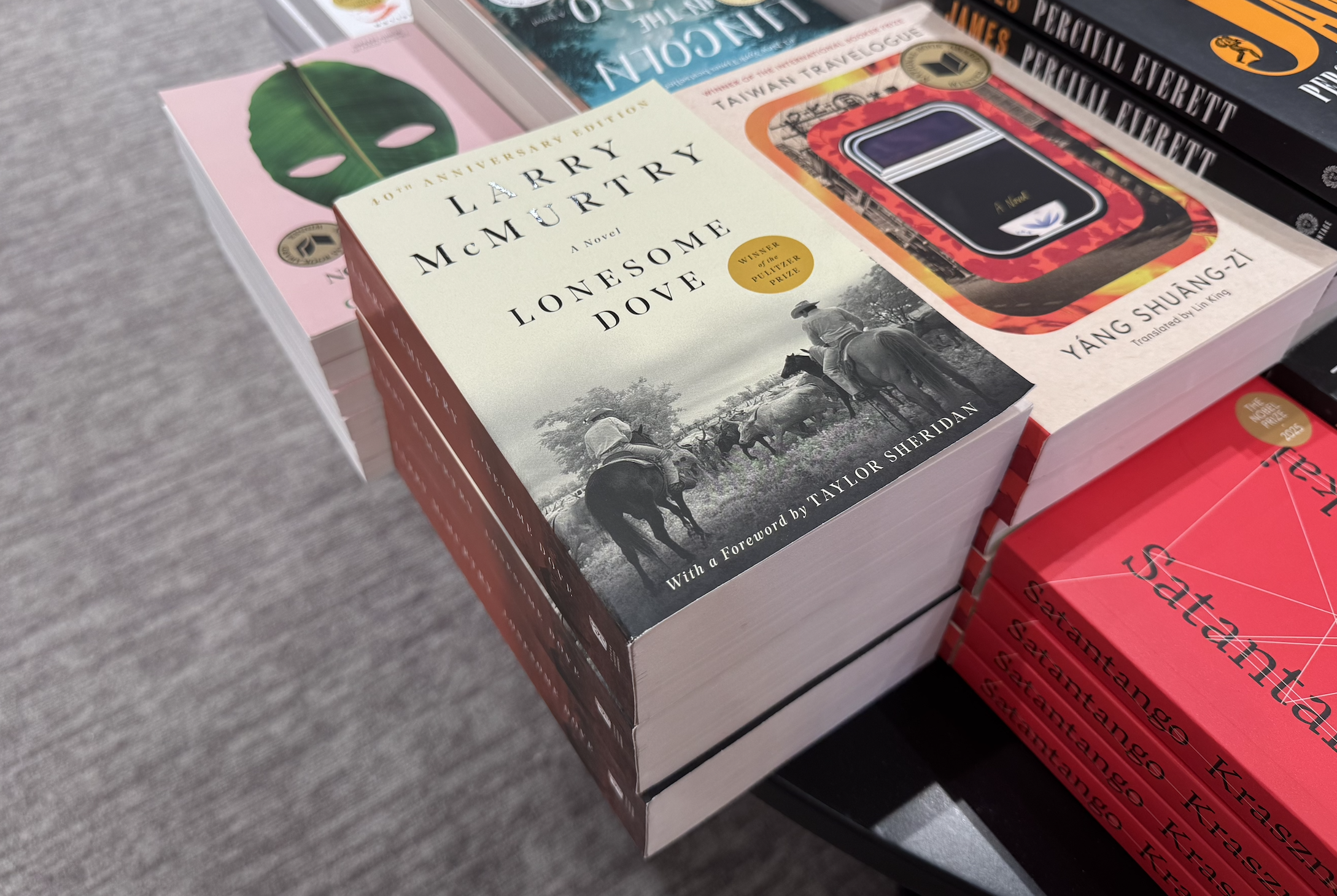
The book’s author, Larry McMurtry, author of “Lonesome Dove,” attended Houston’s Rice University, where he first began his writing career. McMurtry called Rice his “intellectual home” and often spent hours in Fondren Library, eventually writing a book set in the library.
“Slaughter-House 5”
Kurt Vonnegut wrote “Slaughter-House 5” to process his traumatic experiences during World War II and its success got Vonnegut to Houston. The book depicts the horrors of war and the consequences on its survivors. Because of its unflinching depiction on what it was like to fight with the US Army during WWII, and be taken as a prisoner of war, the book has been banned for being “anti-American” and “anti-Christian.”
The novel has been removed from schools across the United States, most notably in Utah, where Vonnegut’s estate is suing the state. It’s most recent ban was in Texas, where it is among the list of books Lt. Gov. Dan Patrick wants removed from school libraries.
Vonnegut may not have attended Rice like McMurtry, but he did deliver a famous commencement speech at the university in 1998, which garnered international attention after an internet hoax. Vonnegut was invited to Rice’s campus because of the success of the 1969 best-seller “Slaughter-House 5.”
To see a complete list of books banned from public schools around the country, check out this list.