The relationship Dallas police should have with US Immigration and Customs Enforcement has been an ongoing debate among city leaders and residents.
Over the last year, residents have called on city leadership to be more transparent about ICE’s presence in Dallas, and the role local officers play in immigration enforcement.
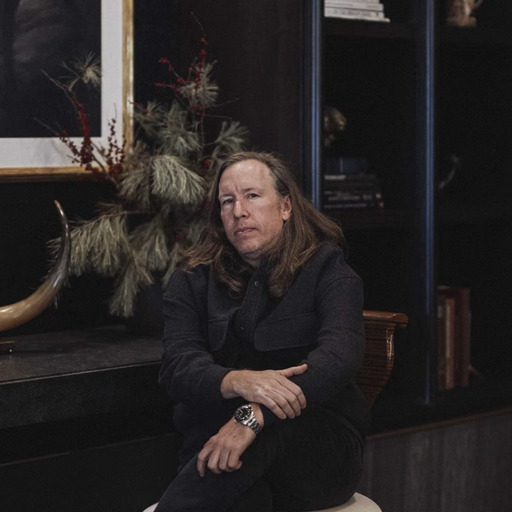
”It’s gotten to the point where they’re getting more aggressive, and they’re getting bolder out there in the streets. That’s the shift that’s happening right now,” Azael Alvarez, an organizer with El Movimiento, told Courier Texas.
Alvarez has been fighting back against President Donald Trump’s mass deportation efforts since his second term began. Alvarez went viral last year after recording an incident outside a 7-Eleven in South Dallas, where a group of masked ICE agents surrounded a car in what he described as a kidnapping while Dallas police officers stood by watching.
“When stuff like that becomes normalized, it puts fear in the community,” he said.
In April, Republican Gov. Greg Abbott sent a letter to Dallas officials threatening to withhold millions of dollars in state and federal funding if the Dallas Police Department did not adjust its guidelines and comply with a state grant agreement requiring the city to work with the Department of Homeland Security on immigration enforcement.
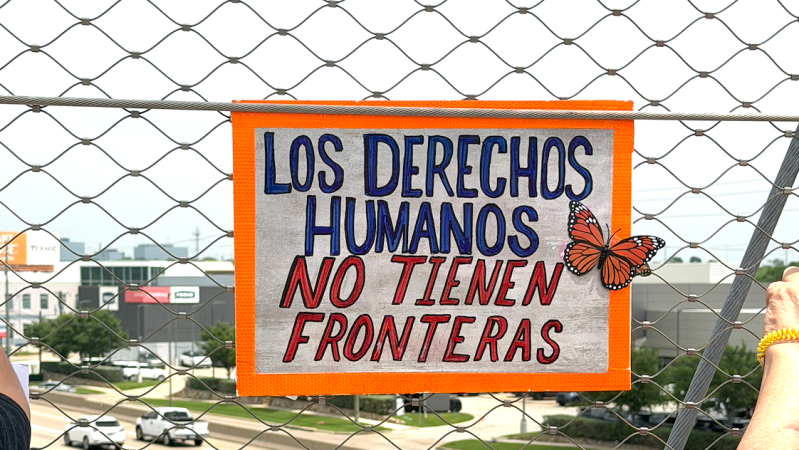
“ I am so disappointed that he would use that kind of tactic against the city of Dallas, which is already having trouble financing the police,” Margo Miller, a Dallas resident, told Courier Texas during a “Community Not Cages” event on April 25. “We are 600 police officers short and are already short on funds, and I think it’s absolutely criminal for him to do that.”
Shortly after Abbott’s threats, Dallas Police Chief Daniel Comeaux announced his department would comply with the governor’s demands. City Manager Kimberly Tolbert similarly released a memo stating the city is now in compliance with the grant agreement.
One of the biggest concerns about the city’s response to Abbott’s threats, Alvarez said, was that it was made without a city council vote.
“ Dallas revised the police general order, and that decision was made administratively without a city council vote or public process,” he said. “So the concern isn’t necessarily the policy itself, but how it was implemented and what we’re seeing now as a result. They changed the policy without the public’s or city council’s consent.”
“It’s going to change how families engage in public life—with schools, with public safety and everyday life across North Texas,” he added.
This is not the first time the city’s handling of ICE has raised residents’ concerns.
Comeaux announced in October he turned down $25 million to join an ICE 287(g) program, which would have allowed local officers to collaborate with ICE and perform federal immigration duties. Just days later, Mayor Eric Johnson called on the city council to reconsider the offer.
Ultimately, the city council backed Comeaux’s decision to remain out of a 287(g) agreement. But just three months later, Comeaux refused to share details and data on how often DPD interacts with ICE, rejecting a request made by the Community Police Oversight Board in January.
“This is not just an immigration issue,” Alvarez said. “We need to focus on it being a local issue, a governance issue, an education issue, and a public trust issue.”
In South Dallas, an ICE warehouse proposal became a growing concern earlier this year. After the Washington Post reported ICE had plans to convert an Amazon warehouse into an immigrant detention center, residents pushed back and shut the plans down.
“ Hutchins is a wonderful example of community coming together to oppose something that is a violation of human rights,” Samantha Mitchell, an organizer with Indivisible Dallas, told Courier Texas. “The city of Hutchins specifically had fewer people than would have been housed in that detention center, so it would’ve put an enormous strain on their municipal capacities and resources.”
“Not only that, but it is a human rights violation to hold people without charge and to deport them to countries they’re not even from,” she added. “But only one or two or three people can’t do anything against it, we have to come together as a community. We have to come together despite any disagreements we might have.”
For Dallas residents who want to get involved but don’t know where, Alvarez said there are options.
“ There’s multiple different roles you can play in these coalition groups,” he said. “If you’re a lawyer, you can help write ordinances for your local governments. If you’re part of the media, you can amplify these stories. If you’re a grassroots, on-the-ground resident, you can go to city council meetings and speak up about it—because that’s what local governments should be, right? They should listen to their constituents and find out a way on how to enact policies throughout the city.”
“We saw what happened in Hutchins,” he added. “The city council and the mayor joined forces with the residents and got it shut down. It took a group of residents who didn’t even know each other, but they’re all connected in this one issue.”
As Dallas residents continue to push for more transparency and fight back against laws like Senate Bill 8, which requires local sheriffs to perform federal immigration duties, they could soon face a new obstacle.
Texas lawmakers passed Senate Bill 4 in 2023, which allows local law enforcement to arrest individuals suspected of entering the country illegally. Federal courts paused SB 4’s implementation after it was signed into law, but now the bill could take effect as soon as May 15.
The American Civil Liberties Union, ACLU of Texas, and the Texas Civil Rights Project have filed an emergency class-action lawsuit seeking a preliminary injunction to block several provisions of the bill so it doesn’t take effect.
“SB 4 would transform our police and judges into immigration agents—threatening neighbors who have families here, who have lived here for years, even those who have legal status,” Adriana Piñon, legal director of the ACLU of Texas, said in a statement. “Immigration enforcement is exclusively the federal government’s arena, and no state has ever claimed the power Texas threatens to wield here. We are taking this back to court to defend our Texas communities.”