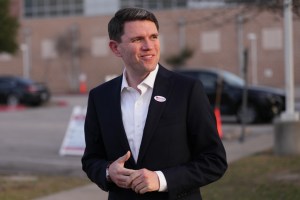
When news broke in early February that the Trump administration had quietly purchased a 639,595-square-foot warehouse on San Antonio’s East Side to convert it into an Immigration and Customs Enforcement (ICE) detention facility, San Antonio District 2 council member Jalen McKee-Rodriguez didn’t hear about it from federal officials. He heard about it from reporters chasing rumors.
“The federal government never reached out to us as a municipality,” McKee-Rodriguez told Courier Texas. “City staff had not had any correspondence. No one was communicating with us at all. In the same way that the state and federal government expect us to be a partner as much as we can be, we expect the same courtesy.”
That silence—and what it represented—is what drove McKee-Rodriguez to act.
The federal government is exempt from local zoning rules under the Supremacy Clause of the US Constitution. The East Side warehouse—purchased for $66.1 million and slated to open by fall 2026—was beyond the city’s reach the moment the sale went through.
McKee-Rodriguez’s team studied what other cities had done to slow expansion of ICE facilities, and a target came into focus: the private detention industry.
Nationally, roughly 90% of all immigration detainees are held in privately operated, for-profit facilities. Unlike the federal government, private companies are bound by local law. They need permits. Zoning approvals. And if a city makes those requirements rigorous enough, it can make standing up new facilities significantly harder.
On April 17, the San Antonio City Council voted 9-2 to pass new rules requiring future private detention facilities to have industrial zoning, obtain specific use authorization from the city council, and be located at least 1,000 feet from schools, parks, churches, and residential areas. Private operators must also notify the city 30 days before opening, renovating, or operating a new facility—the kind of transparency the federal government never offered before quietly buying that warehouse.
San Antonio is not alone. Elected officials in Arizona, Georgia, and other states have deployed similar bureaucratic maneuvers to slow ICE expansion in their communities. So far, 13 warehouse sales have been canceled across the country—including one in Hutchins, Texas—largely due to organized public pressure. The federal government, facing opposition in city after city, has slowed its rollout and begun conducting environmental impact assessments, which require a period of public engagement before construction can begin.
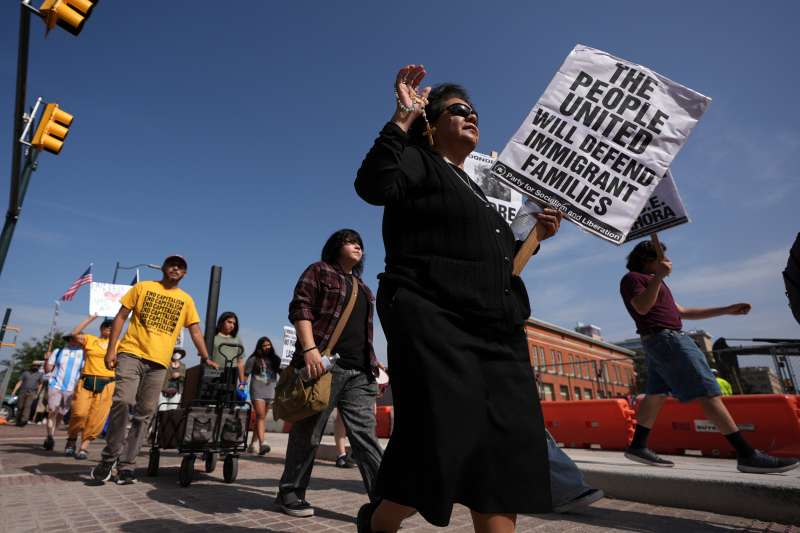
The time that takes makes it harder to catch locals flatfooted. When communities know what’s coming, they organize. When they organize, detention center deals fall through.
Texas is the epicenter of America’s immigration detention system, and has more ICE facilities and book-ins than any other state—over 200,000 across 115 facilities from January 2025 to October 2025. The two dominant private operators, GEO Group and CoreCivic, have turned that footprint into extraordinary profit.
CoreCivic’s facility in Dilley—reopened by President Donald Trump’s administration—is expected to generate approximately $180 million in annual revenue. Congress gave ICE $45 billion in July 2025 to expand detention, and Trump’s declaration of a border emergency in January 2025 allowed the administration to hand out no-bid contracts to both companies, bypassing the competitive bidding process entirely.
Those no-bid contracts did not arrive in a vacuum. GEO Group and CoreCivic, along with their PACs, subsidiaries, and executives, donated $2.8 million to Trump’s campaign, inaugural committee, and related fundraising entities, according to Citizens for Responsibility and Ethics in Washington analysis of Federal Election Commission data.
GEO Group was the first corporation whose PAC maxed out its donation to Trump’s campaign. Their stock rose 42% the day after Trump’s election victory. CoreCivic’s rose nearly 29%.
The expansion of private detention in Texas has come with a documented record of abuse and neglect. Camp East Montana in El Paso has drawn particular scrutiny. The ACLU has called the facility an “unfolding humanitarian crisis,” alleging detainees are subject to beatings, sexual abuse, medical neglect, hunger, and denial of access to attorneys. There was a measles outbreak. Three people have died at the facility, one of which was ruled a homicide.
At the El Paso Service Processing Center, Amnesty International found widespread human rights violations, including physical abuse by guards, use of solitary confinement, unhygienic living areas without functioning toilets, and consumption of expired food.
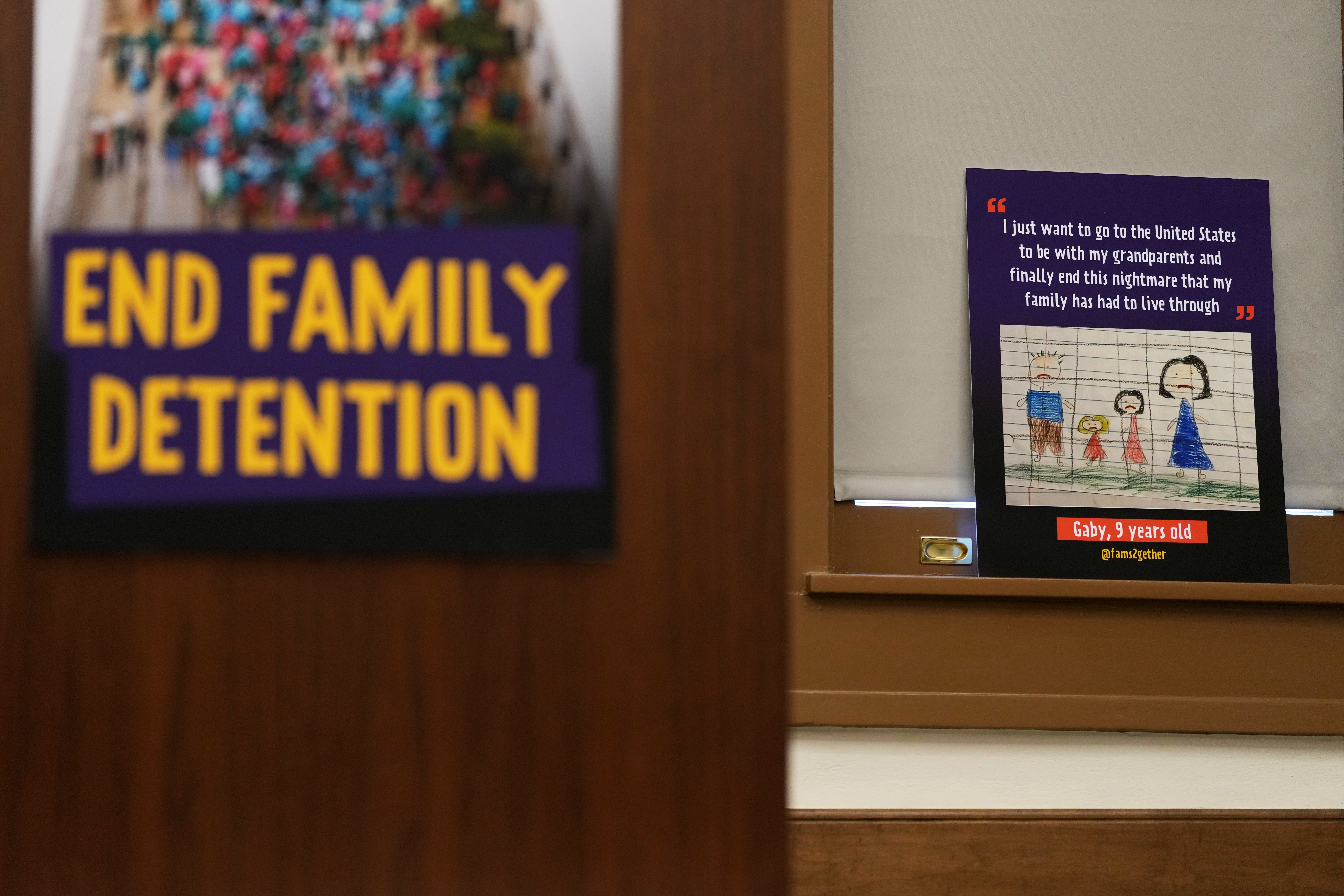
Stoking increased public backlash of these facilities is growing awareness of who is being held in them. Nearly 75% of those locked in ICE detention centers across the country have no criminal record or conviction and are not, as the Trump administration has repeatedly claimed, “the worst of the worst.”
In Texas—which houses the country’s only centers that detain immigrant families—several high-profile arrests of children have brought the issue to audiences who might otherwise have tuned it out: the mariachi brothers, the 9-year-old spelling bee hopeful, and Liam Conejo Ramos.
For McKee-Rodriguez—who announced on Thursday the East Side warehouse had been put on pause due to suits brought by multiple US cities and states—each of those cases is a reminder why passing the local ordinance matters. In a state where private detention has operated largely without scrutiny, and billion-dollar, no-bid contracts flow freely to companies that spend millions of dollars boosting presidential candidates, local governments can feel a bit like a daisy before a bulldozer in the face of federal power.
The fact that these facilities are run by private companies, however, is what can make them vulnerable—and it is precisely the opening San Antonio city council and others have exploited.
“We are the closest to the people,” McKee-Rodriguez said. “Folks come to us and say, ‘We know you might not be able to do everything—but what can you do?’ They want us to do whatever is in our power to stop this.”