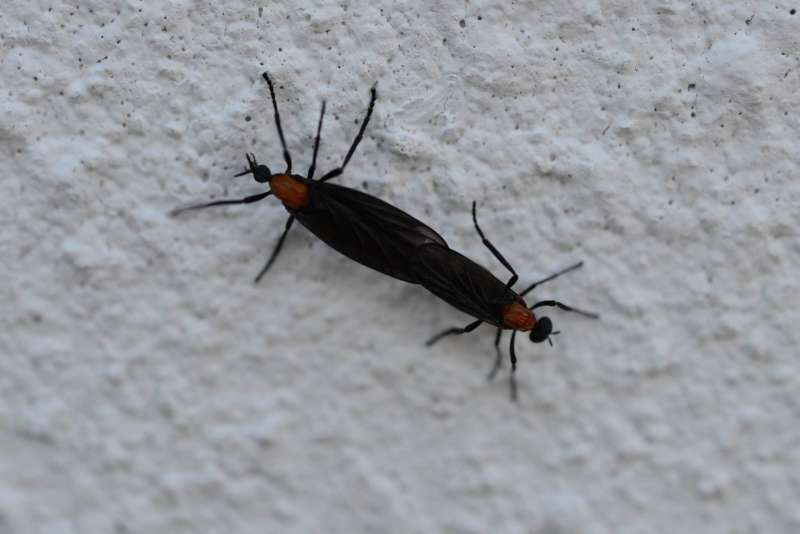
Houston residents have been fighting the good fight against swarms of lovebugs the last few weeks. The insects, which are commonly referred to as honeymoon flies, are plaguing the Gulf Coast in pairs, as they spend most of their adult lives attached to their mates. (Hence the whole honeymoon thing). They’re harmless to humans because they don’t sting or bite—their main focus is mating with each other—but their incessant buzzing and constant presence are irritating when you’re just trying to enjoy some time outside. Lovebugs flock to areas with high heat and humidity, so they’re most commonly seen at ponds, parks, and other outdoor spaces like, say, your backyard or the highway you use to get back-and-forth to work every day.
Though the flies descend twice a year—once in the spring and again in the late summer/early fall—they’re running especially rampant right now because of the recent increas in rainfall. Lovebugs thrive in damp conditions because they deposit their larvae (AKA babies) inside of decayed vegetation and moist soil. These current weather conditions are providing a very fertile breeding ground for the lovebugs, which is why you’re seeing more of them than you usually would. Oh, and the pesky flies apparently love the smell of vehicle exhaust because it reminds them of decayed vegetation, so they often cluster around highways because of this.
Sienna resident Latreace Harrison spoke with KRPC about the issue, saying, “I mean, everywhere I go I’ve noticed them. They somewhat attack you at your vehicle. To get in your vehicle is just really overwhelming.” The only thing making these attacks more bearable is knowing that they’ll come to an end shortly. Most lovebug swarms only last four weeks, so we’ll hopefully be in the home stretch soon. In the meantime, we’re going to go over a few tips and tricks for getting rid of honeymoon flies around your home.
How to get rid of lovebugs
If you’re trying to avoid lovebugs while you’re running errands or enjoying a day off, keep in mind that they’re most active from mid-morning until the late afternoon, so traveling at dusk and dawn will reduce your exposure. Unfortunately not much can be done to get rid of or avoid them in public places, but you can at least make sure the flies stay far away from your home. Orkin, a pest control company, says that lovebugs are drawn to overgrown grass and standing water. So, your first two lines of defense are going to be mowing your lawn and dumping out any containers of water you may have outside. Clearing debris from around your home is also beneficial because it gives the flies fewer places to leave their larvae.
Vacuums are good at sucking the critters up both indoors and outdoors, and fans can act as a natural deterrent or a basic way of blowing them further away from you. And to protect your car, Farmers’ Almanac advises spraying your hood and bumper with cooking spray or applying baby oil to these areas to make it more difficult for the lovebugs to get stuck there. Pro Tip: Only use a light layer of oil or spray when going down this route, and remember to wash the bugs off your car as soon as you can.
This article first appeared on Good Info News Wire and is republished here under a Creative Commons license.
Related: Bow-wow! 12 dog-friendly restaurants, bars in Houston