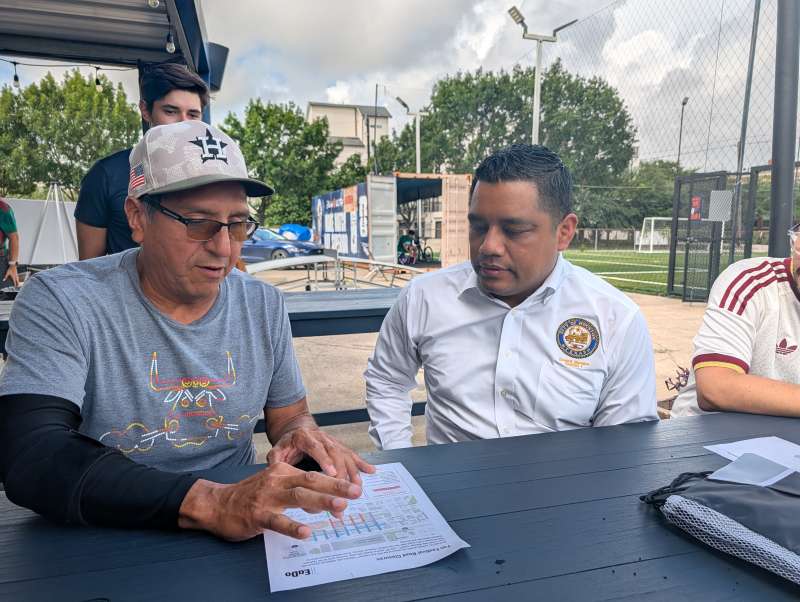
On Saturday morning, June 6, a few dozen residents and business owners from East Downtown Houston filtered into the covered outdoor picnic tables at Pegaso HTX on Polk Street. Since May 1, construction in and around their homes for FIFA Fan Fest Houston has disrupted their lives. Trees outside their buildings have been cut down. Sprinkler systems have been removed. Roads have been blocked off. Gates have gone up, sometimes blocking the entrance and exit to their parking garages. They had questions.
There to answer them were District I Council Member Joaquin Martinez, along with Ryan Walsh, CEO of the Harris County-Houston Sports Authority. The meeting had been called to give the neighborhood a chance to ask what life would look like for the next six weeks—and to hear from the officials overseeing the massive fan fest, which opens Thursday just outside their front doors.
What followed was a candid exchange about their concerns—trash accumulation, foot traffic management, road closures, and noise. And, since this is America in 2026, what would happen in the event of a mass shooter.
Tenants from nearby buildings like Herrin Lofts and Promenade Place—both of which sit steps from the festival footprint—have spent the past month watching their neighborhood transform into a construction zone.
The message from city leaders was reassuring: Houston is ready, the work is nearly done, and the payoff is coming. Whether residents fully believe it is another matter.
“It’s kind of like this is happening to you whether you like it or not,” Erik Bogle, who has lived at Promenade Place for 10 years and serves as president of its board of directors, told Courier Texas. “It’s happening to us, not with us.”
It’s a lot for a neighborhood that has already absorbed punishing disruption—Texas Department of Transportation’s nearly $9 billion I-45 expansion project has caused headaches since October of 2024 and isn’t expected to be completed until 2038 or possibly, 2040. And that’s before the fan fest arrived at their doorstep.
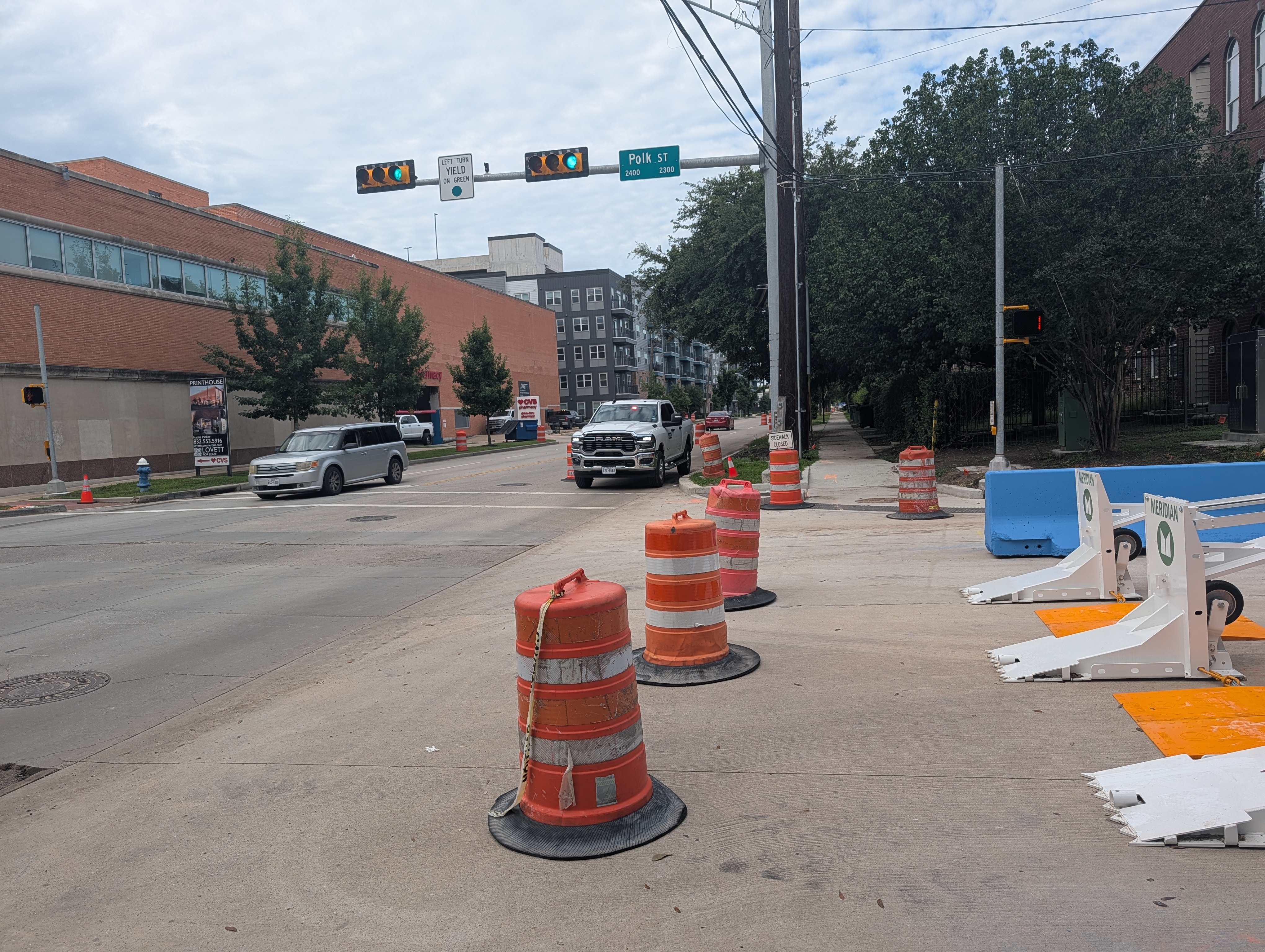
The 275,000-square-foot entertainment district is carved out of the blocks surrounding Shell Energy Stadium—roughly the footprint of five football fields. It runs June 11 through July 19, free and open to the public across all 34 World Cup match days, with gates opening 90 minutes before the first match of each day. Organizers expect more than 500,000 total visitors over the run of the festival, with roughly 15,000 passing through daily, capped at 7,500 inside the grounds at any given time.
Construction began May 1. Load-out isn’t expected to be complete until August 1. That’s a full financial quarter of disruption for the people who live and work there.
Bogle has seen the Super Bowl, the Final Four, and the World Series roll through town since he’s lived in EaDo. None of them, he said, felt quite like this. The host committee had to physically move their fencing after residents of his building pushed back—the original placement blocked access to Promenade Place’s parking garage. Starting June 10, residents must pass through FIFA private security and HPD checkpoints just to enter their own street. Bogle called it a double-edged sword.
“It’ll be nice to have 24/7 security,” he said. “But the juice isn’t really worth the squeeze.”
Early last week, the building started shaking. Sound system testing for the Fan Fest sent bass vibrations through the floors and ceilings of the 100-year-old concrete structure. The host committee has already secured city permits for a noise curfew extension—potentially as late as 1 a.m. for at least one event.
“We’re going to have to push back on the decibel level,” Bogle said. “It’s just too loud.”
The pattern residents describe is a consistent one: The host committee and city officials invited input, acknowledged concerns, and then went quiet. Adding insult to injury, one tenant at Herrin Lofts described the delivery of “six cookies” to their building from the host committee with a note attached that read “Thank you for your partnership.” They have, he said, not felt like partners in the process at all. The tenant added, “We have 52 units in our building. Six cookies for 52 units.”
At Saturday’s meeting, officials from the Sports Authority and Martinez’ office said they were committed to better communication through the duration of the festival. The council member even gave out his personal cell phone number to a small group of Herrin Loft residents after the formal question and answer session concluded.
The neighborhood’s bars and restaurants—Pitch 25, Little Woodrow’s, Rodeo Goat—figure to be among the tournament’s biggest beneficiaries, drawing fans who spill out of the fan fest looking for a place to watch the next match or relive the last one. “We’re so happy for them. We frequent those businesses, and we’re thrilled for their success,” said Mark Salais, a Herrin resident. “But we’re really being put out here, man.”
Bogle owns Houston Watch Company across downtown and isn’t so sure that supposed windfall will come. He describes his mood as “cautiously optimistic.” His best sales day ever was Super Bowl Sunday in 2017. He’s been told the World Cup could deliver seven of those.
“I’m just hoping it helps me recoup my losses from the last year of preparing for it,” he said.
World Cup-related infrastructure and beautification work forced him to close for two weeks last summer when crews tore up the street in front of his bar. He received no compensation.
“My best hope is that it’s a break even over the long term.” The year-long road construction around downtown gearing up for this international sporting event has been, he says, “a disaster” for downtown businesses.
For EaDo, the next six weeks are an experiment. The city is betting the disruption will be worth it. The residents absorbing that disruption are rooting for the same. When the final whistle blows and the crowds thin, this will still be their home.