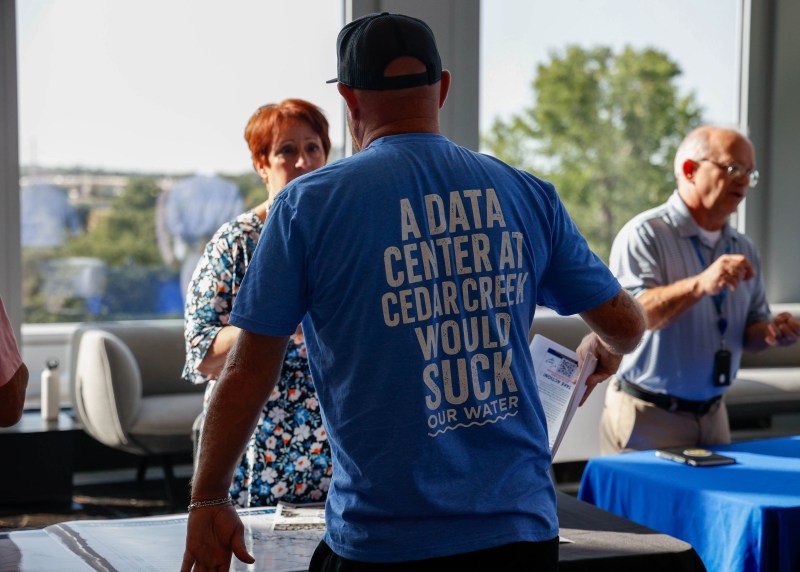
Sue Weston owns a historical garden in Fort Worth. The city wants to build a data center 300 feet from it—about the length of a football field.
“They’ve already rezoned two sides immediately around my 100-year-old garden,” Weston told Courier Texas during a data center open house the city hosted Tuesday night. “Everything that I’ve read, there’s not going to be anything good to come out of it. But the city’s already made up their mind, now they’re just trying to convince us this is a good thing.”
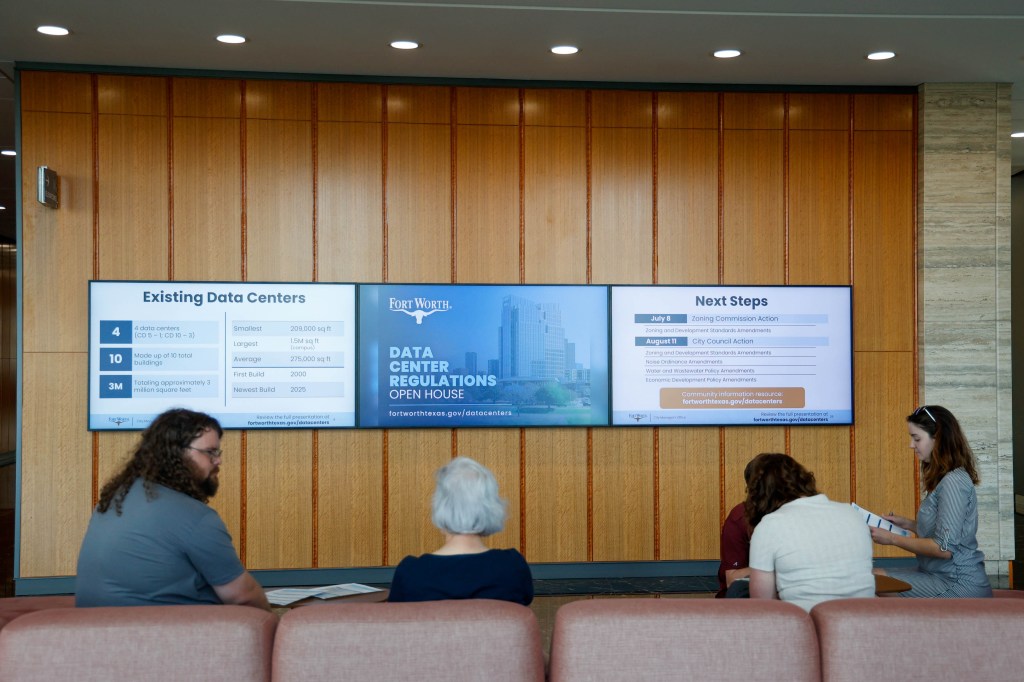
Weston is referring to a 187-acre site plan for a $10 billion data center located in southeast Fort Worth proposed by energy company Black Mountain. Fort Worth currently has four data center developments in the city spanning more than 3 million square feet, according to information shared at Tuesday’s event. Another is currently under construction, and an additional four within city limits have been proposed, including Black Mountain’s.
Following ongoing resident pushback, the city presented a series of proposed amendments to regulations related to data center developments, including zoning, noise, water, and economic development standards. But some residents don’t believe the proposals, or Tuesday’s open house, are in good faith.
“Over 26,000 emails have already been sent, over a hundred comments have already been made during public comment at city hall meetings,” Fort Worth resident Alexander Montalvo said. “People have communicated to council members one-on-one, it’s very clear what the people want, yet they continue to try to put forth more efforts that we have to participate in to prove what we want. So at some point, you have to ask if this is devised so they can get enough voices that are different from the ones calling for a moratorium.”
Jessica McEachern with the City Manager’s Office said the city has the authority to regulate four aspects of data centers—zoning, noise, water, and the economic development and incentive policy—and that Tuesday’s open house was meant to gather feedback and assess whether the city is on the right track.
Attendee Pamela Roberts Jimison said she was disappointed Black Mountain wasn’t present at the open house, and raised concerns that this would be Black Mountain’s first data center.
“ They’re going to use us like guinea pigs,” she said.
She also voiced her disappointment in the city council for their handling of the situation, and said they’re supposed to be the voice of people, and the people have made it clear they don’t want this.
The council has faced recent backlash, with members being accused of taking thousands of dollars in campaign donations from Black Mountain, influencing their decision to approve new zoning measures for the company.
Mayor Mattie Parker’s husband is also listed as having been a lobbyist for a data center industry trade group since January, according to recent reports from the Fort Worth Star-Telegram. Parker and her husband have denied any conflicts of interest.
“ It shows that they’re compromised in their leadership and governance of our city when there’s over $40,000 accumulative campaign contributions from the CEO of Black Mountain,” Montalvo said. “He’s one of the top 16 donors to city council members across the city.”
Letitia Wilbourn, who has lived in Fort Worth since the 1960s, had a more candid response to the allegations.
“ I think every last one of them can go to hell for greed, I really do,” she said.
As Texas becomes a hotspot for data centers, cities across the state are taking action. This week, San Marcos became the first Texas city to ban data centers.
“There’s so many news stories showing the environmental impacts of what these data centers are doing, what they’re doing to people’s water supply and electricity, as well as the noise,” Montalvo said. “The city is gaslighting us as residents, trying to convince us that those bad things aren’t going to happen, and it just shows that they are beholden to corporate interests versus the people.”
Montalvo said Fort Worth is a city of a million people—the tenth largest in the country—and that they don’t need to negotiate with corporations who are trying to do harm.
“We have enough people for economic opportunity, we shouldn’t be relying on something as risky as a data center,” he said.
Wilbourn said Mayor Parker likes to mention that they’re the tenth largest city in the country, but never mentions they’re also one of the most polluted.
“She’ll never talk about that, but she’s adding to the situation,” Wilbourn said.
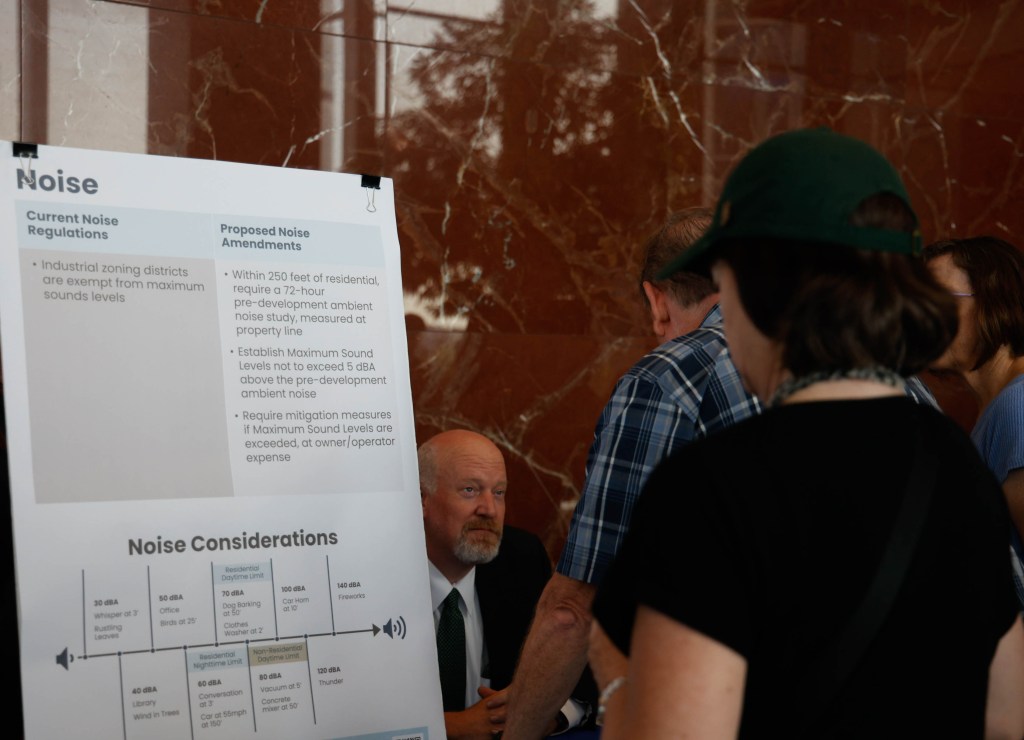
Noise pollution—specifically infrasound—is also a top concern for residents. Esme Zuniga, a graduate student researching the correlation between infrasound and mental health for Downwinders at Risk, said her research has found links to anxiety, depression, headaches, nosebleeds, and structural damage. Studies also show infrasound at levels equivalent to data center output has caused cardiovascular changes in mice and cellular degradation in plants.
“I’m like, ‘Hello, and you want to put it right next to a 100 year old garden? To people’s homes?’ Weston Gardens is historical, it’s beautiful, it’s our home,” Zuniga said. “We’re Texas, we’re the ‘come and get it state’ and the ‘this is my land’ state. Where’s that mentality now? It’s ridiculous.”
The Fort Worth Zoning Commission will meet on July 8 to discuss the city’s proposed amendments, including prohibiting crypto currency mining data centers, barring sites less than 250 feet from residential districts, and creating acoustic barriers. The city council votes on the proposed amendments Aug. 11, and on Black Mountain’s data center specifically on Aug. 25.