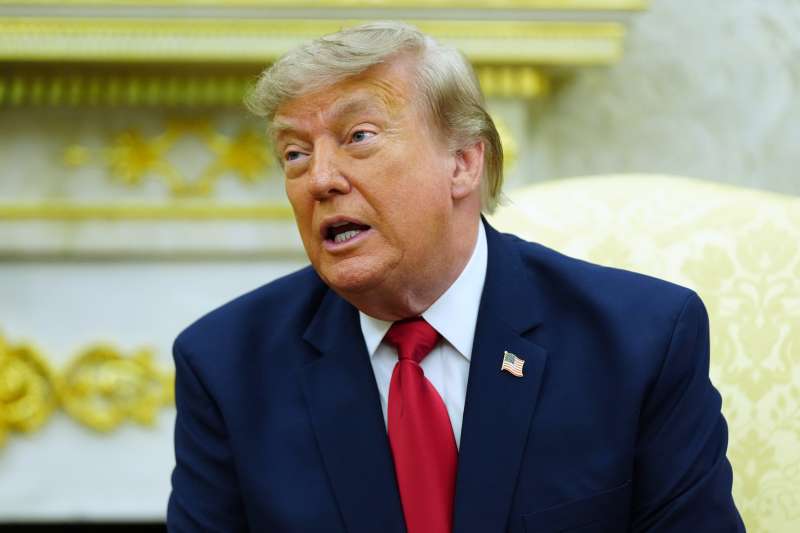
President Donald Trump is scheduled to deliver a primetime address tonight on what the White House calls newly declassified intelligence about the 2020 election and alleged vulnerabilities in voting machines. Numerous courts, ballot audits, and his own first-term Justice Department found no evidence of widespread fraud that could have affected the outcome. But for Texans watching closely, tonight’s speech lands in the middle of an election year already shaped by a coordinated series of actions voting rights advocates say are designed to tilt—and potentially contest—November’s results before a single ballot is cast. The groundwork has been laid piece by piece.
The US Supreme Court, in a 6-3 decision, granted Texas’ request to allow a heavily gerrymandered congressional map to take effect for the 2026 midterms—a map a Trump-appointed federal district judge had found was drawn to intentionally dilute the voting power of Black and Latino Texans. The redraw was conducted at Trump’s explicit request, with the goal of flipping five additional congressional seats from Democratic to Republican. Under the new map, Republicans could pick up five more seats in Congress. Texas was the first domino—the state’s decision to gerrymander at Trump’s demand set off an unusual arms race of mid-decade redistricting across the country.
A federal court found evidence of intentional racial discrimination, noting the Trump administration told Texas to take a wrecking ball to majority-minority congressional districts—and that’s precisely what it did. The US Supreme Court allowed it anyway.
Then, six weeks ago, Texas Secretary of State Jane Nelson (R)—the state’s chief elections official—announced suddenly and without warning she was stepping down effective July 17. By law, Gov. Greg Abbott (R) is required to nominate someone to fill the vacant position “without delay,” but he has not yet named a replacement. The departure leaves Texas heading into a consequential fall election—one that features competitive statewide races for US Senate and governor—without a confirmed elections chief, and with Abbott free to install whoever he chooses to oversee the results.
During Nelson’s tenure, her office complied with the US Department of Justice’s request for access to the state’s full voter roll. The data handed over included identifiable information about the state’s 18 million registered voters, including dates of birth, driver’s license numbers, and the last four digits of their Social Security numbers. Election security experts and voting rights groups criticized the requests for voter rolls across the US as a violation of voter privacy.
Meanwhile, Trump has ramped up calls on Congress to pass the Safeguard American Voter Eligibility Act (SAVE America Act), which would require documentary proof of citizenship in the form of a passport or birth certificate to register to vote and photo ID to cast a ballot in federal elections. The bill passed the House in February 2026 but has stalled in the Senate. The president has tried to create a federal voter list through an executive order but federal courts have repeatedly ruled that the president lacks authority to rewrite election law and blocked the executive order’s major provisions. But the president’s push to pass the SAVE America Act continues.
Trump has suggested California’s primary vote in June was “rigged,” and just last week invited a defeated Los Angeles mayoral candidate to the White House after crediting his loss to voter fraud. According to a May Reuters review, Trump claimed the 2020 vote was stolen more than 107 times over a recent six-month period.
Critics fear tonight’s speech is less about 2020 than it is about 2026. Trump appears to be ramping up his election fraud claims as the November midterms approach. In Texas, where Democrats have their best shot at winning statewide office in a generation—with Democrat James Talarico running neck-and-neck with Republican Ken Paxton for US Senate and Gina Hinojosa (D), despite recent polling, mounting a serious challenge to Abbott in the gubernatorial race—the pattern is hard to ignore: Maps drawn to suppress minority representation, a voter roll handed to federal authorities, an elections chief gone with no explanation, and a president priming his base to question results before they’re counted.