Reporting by Nell Williams, Amarillo Globe-News
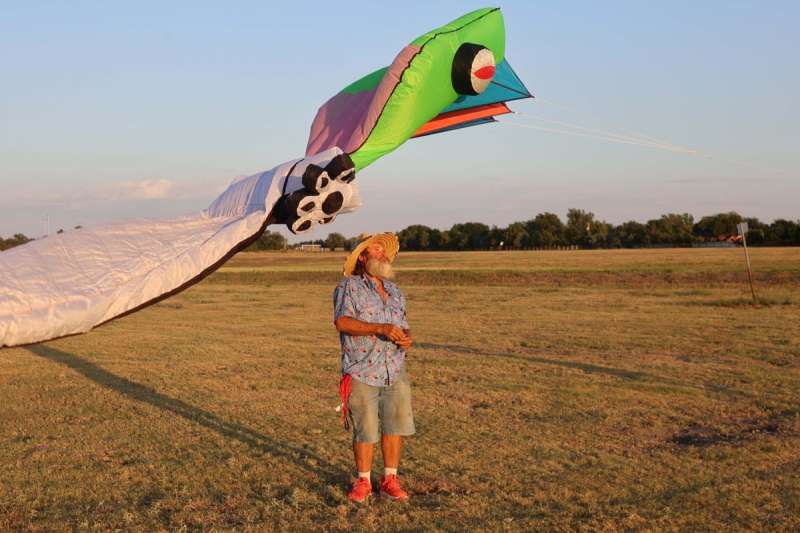
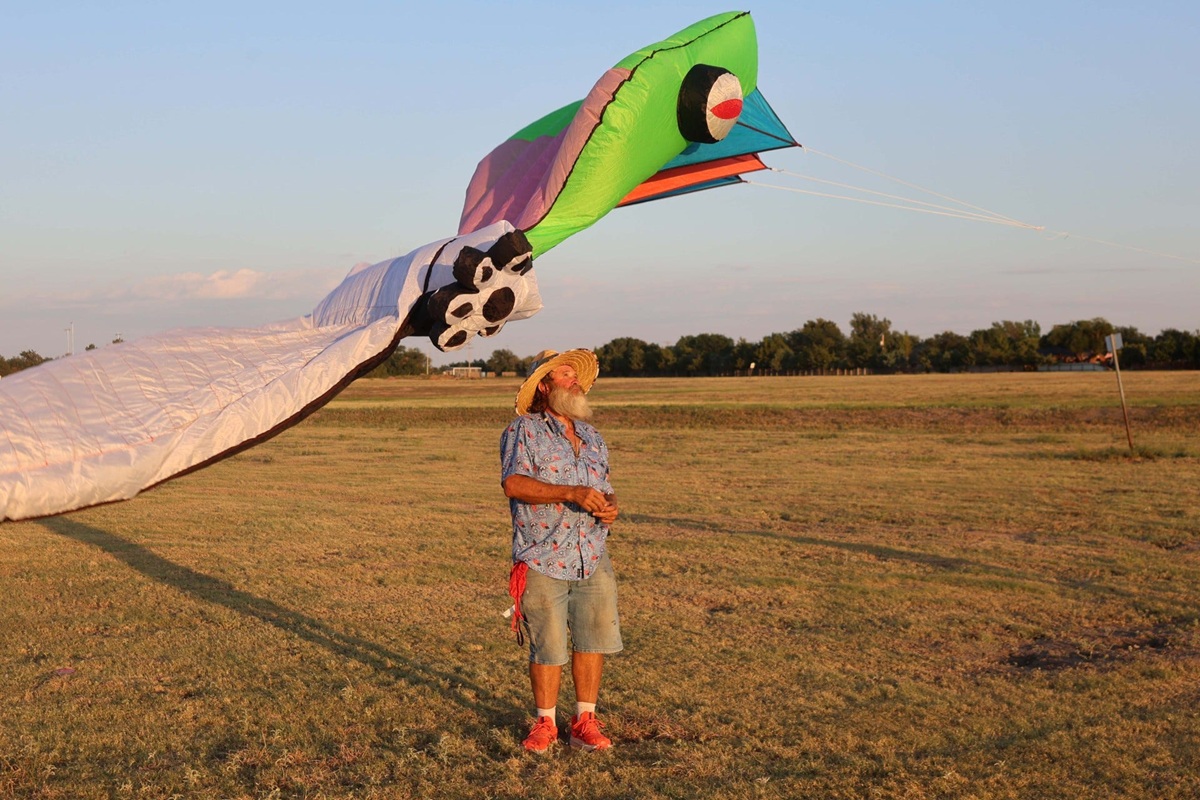
Douglas Hardy, of Perryton, has a fixation on kites. So much that he now has a massive, colorful kite collection, including the trailer that he can carry them in, so he can let other people enjoy his addiction.
“I never envisioned when I took up the hobby that I would be so obsessed,” he admitted, adding that he now has at least 100 single-line show kites.
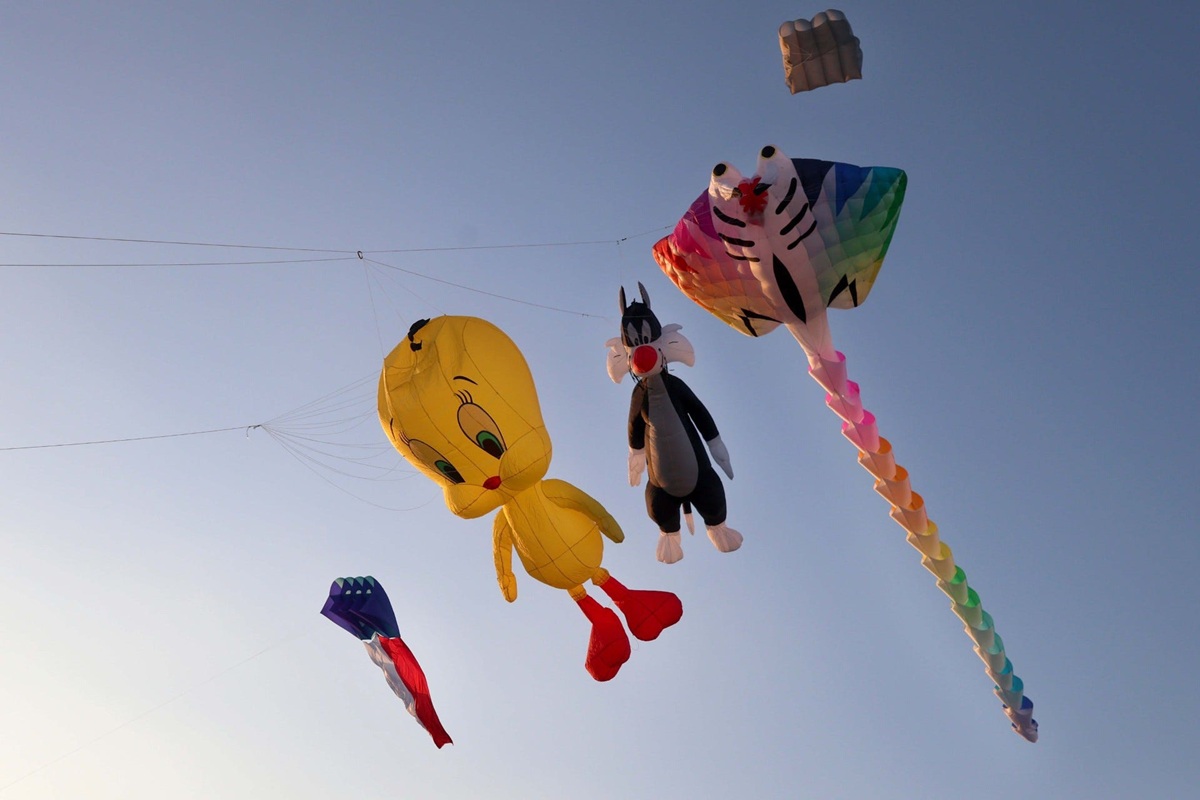
A third of those sport LED lights, which can light up at night and look even more spectacular. The kites were recently visible in a colorful spectacle decorating the Amarillo sky.
“I always just need one more,” he said with a laugh. “When people say which one, I say, ‘the one I don’t have.’”
These days, the kites are made mostly of ripstock nylon, and they used to be nylon or silk. Most are made in China or the Phillipines, although he has some from Vietnam and other Asian countries where kites flourish.
“They’re lightweight, takes a very small battery pack and they’ll fly about an hour and a half,” Hardy said.
Hardy said he has a few kites with a traditional frame of a hard stick, which is actually a diamond or delta shape, but he has more than 200 different ones, along with a 24-foot trailer that he pulls and a 30×15-foot building at the house that is climate controlled for storing the kites.
Most new kites have a carbon fiber composite for the frame now, he said, which makes them lighter.
Proud of his Texas heritage
One of his Texas designs has a Longhorn, and another is a cowboy, which he loves showing at different festivals and occasions. He said that he doesn’t charge to go to festivals, but he takes donations to help him pay for his gas and lodging due to the high price of things. He said it can cost up to $500 to make a trip to a festival, if not more.
“People don’t have too much trouble figuring out I’m from Texas,” he said. “I’m very proud of my heritage.”
The Perryton native said that he grew up farming and ranching and still has a few cattle and some farming. He has also worked in the oil fields. Hardy said he retired for about three and a half years to take care of his dad, who was about to become 101 years old. At that time, he started rebuilding his own house.
“I’m still working on the remodeling,” he admitted, “but the cost of rebuilding and health insurance … I decided to go back to work.” Hardy said his wife, who fully approves of his hobby, is a few years away from Medicare, so he went back to work full-time, as many have.
“But I work as a compression mechanical for energy transfer,” Hardy said, adding, “I had worked with them over 9 years previously and decided to go back with them in March and will work with them until I fully retire.”
“It also helps with my habit,” he said with a chuckle.
“If I can could figure out how to do it, I’d fly kites full-time,” he mused. “I just thoroughly enjoy it and enjoy watching the people and the joy it brings to them.”
A bonus: Meeting kite enthusiasts from all over the world
Hardy said the other thing he didn’t realize when he got into kiting was the network of people across the world that he’s met and come in contact with.
“It blew me away … I had no idea,” he said, adding that he has talked to people regularly from Vietnam, the Philippines, New Zealand, Columbia, Europe, the U.S. and Canada.
Hardy said he had even traveled to Europe and Canada in his kiting treks, along with the East and West coasts. In the U.S., he has been to Kansas, Indiana, and Oklahoma, and Texas, with four or five more festivals to fly in.
“There’s a great American Kite Company, and they put on four festivals across the U.S., and I go fly with them. I’ve become friends with them,” he said.
Hardy also said that there are some good kite shops in Galveston, Port Aransas, Corpus Christi and some up in the mid-states around Chicago.
“I have a friend in Philadelphia that’s been into kiting for 30-plus years,” Hardy said. “He’s getting out of it now and moving toward drones.”
A pricey kite collection
Hardy admits his hobby is expensive. “I have one kite that I have spent about $4,800 on,” he said, “but I also have some that just cost $40 or $50. Some of the kites are inflatable where there’s no sticks.” The cheapest of kites he owns run about $250, but custom-made ones can run anywhere from $1,000 to $3,000.
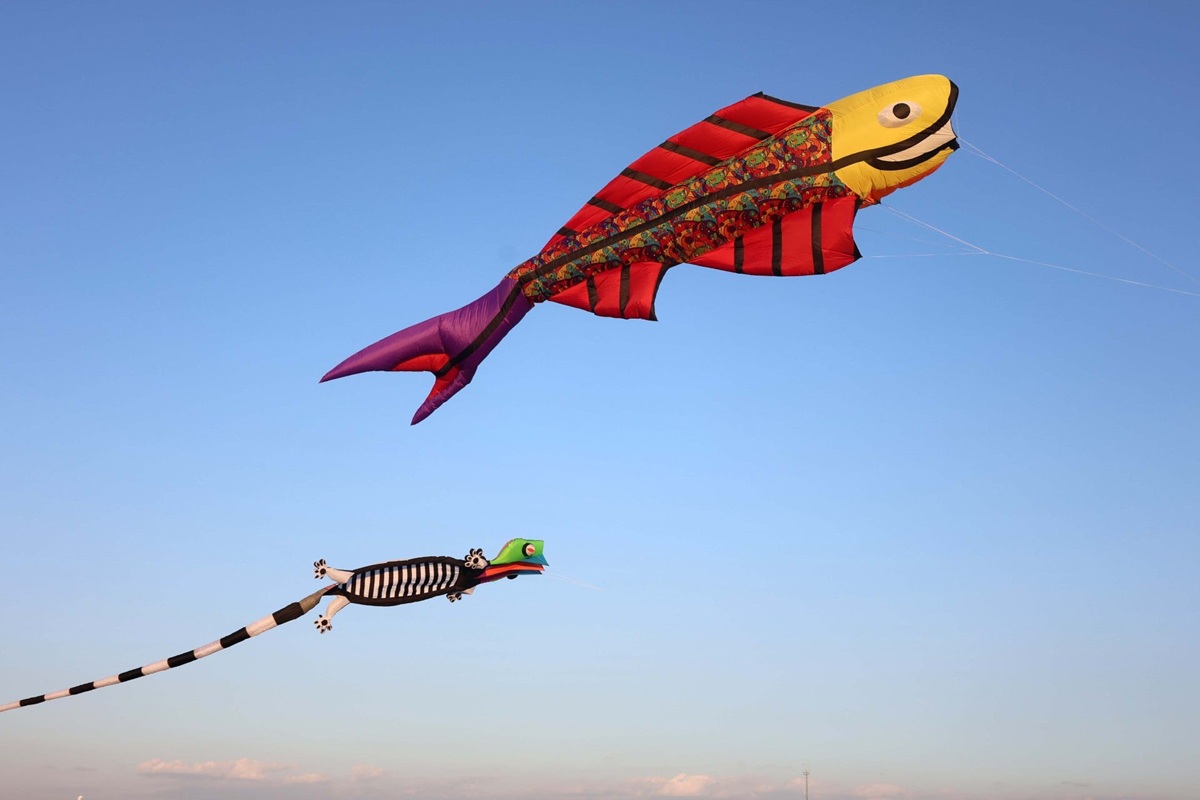
Among his collection worth around $100,000, he has such amazing custom designs as a Gecko, one of his favorites, and custom made designs that are of a Texan style, such as the Texas Star — some of which are 30 feet wide with a 150-foot split tail on it.
“I have a fall festival over in Callahaney, Oklahoma, that I’m doing the 6th and 7th of November. They saw my stuff and contacted me. I’ve been gone since March at least two weekends a month to somewhere,” Hardy said. “And when I’m not traveling somewhere, I try to fly here locally out of Perryton or neighboring communities.”
“It’s something so simple, but brings so much joy to people, adults and kids,” he said recently in an interview. Hardy said he loves the beauty and peacefulness of it, “but more than that — the interaction with other people. It never fails to draw a crowd.”
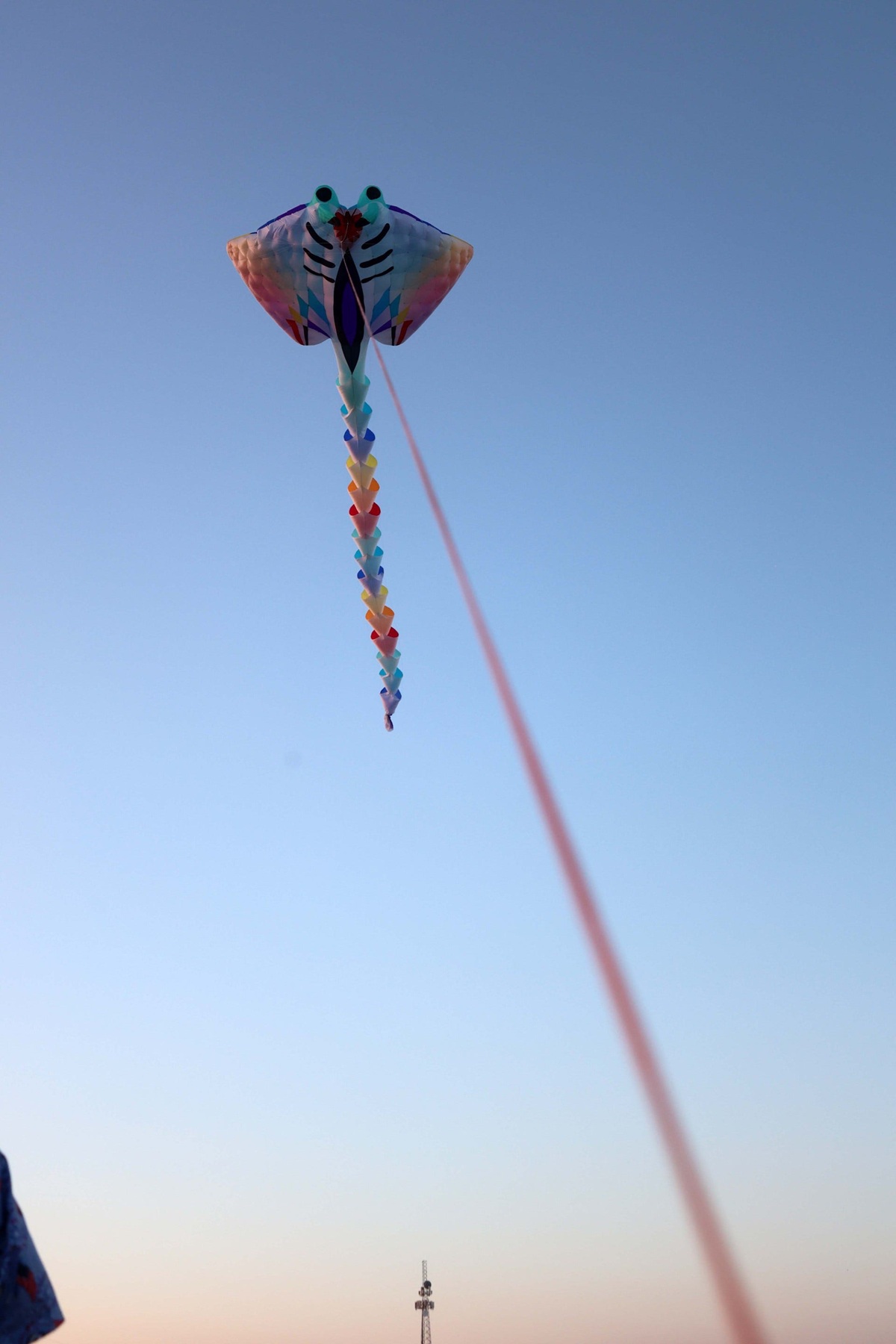
Hardy flies his kites starting around 8 or 9 a.m., and they fly all day, when he’s at an event or showing them. “I’ll fly them into the night, so when I get done, it’s around 10:30 p.m.,” and he still has to pack up. “It’s not unusual to be down here Monday at midnight,” he said, adding that he can sometimes get home at 1 or 2 a.m.
The kites of yesterday are certainly not the kites of today. Many of us grew up with paper kites that had very thin wooden frames that were broken or torn up on the first crash. They got tangled in trees, power lines or carried away with brisk West Texas winds and were never very long-lasting.
But today’s kites are a new breed of kite, said Hardy. “There’s a lot of different application too,” he said. “There’s light wind kites and ones you can fly in heavy winds.” Hardy explained that there are even sports kites that people fly indoors, where they just walk around and create their own wind, because they’re extra light.
Hardy admits that he’s a two-line or four-line type of guy, which he can manipulate, and that many of his kites are massive, up to 80 feet tall.
Hardy has a son and a son-in-law who have taken to his hobby, but for the most part, he flies them by himself.
“I don’t want to rely on somebody else to be able to go and fly them,” he said.
Nell Williams is a staff writer covering trends and other news for the Amarillo Globe-News. Have a story idea? Email her at nwilliams@usatodayco.com.
This article originally appeared on Amarillo Globe-News.
Related: Not all artists are starving, just ask Houston muralist Devona Stimpson