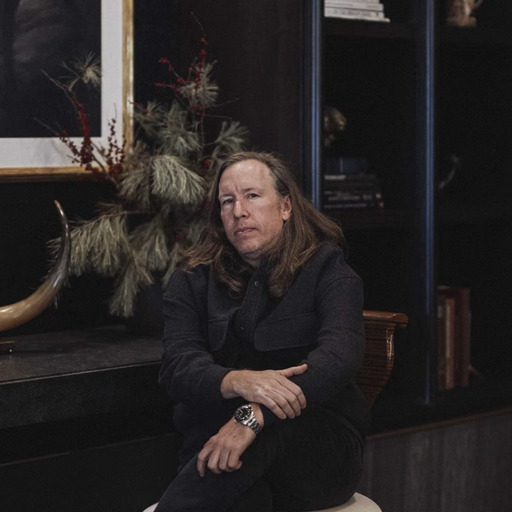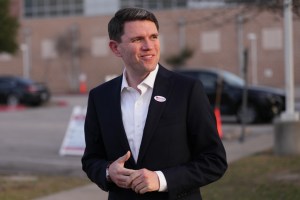
Billy Bartko has spent his life building something in Terlingua. He and his wife own Far Flung Outdoor Center near Big Bend National Park—guided river trips, Jeep tours, ATV tours, and a 25-room adventure hotel that, as he puts it, is “100% dependent upon national park tourism.” Twenty-five percent of their revenue comes directly from river trips. If the Trump administration’s border wall goes through as planned, that quarter of his business is simply gone, he said.
“There are several companies in town—that’s all they do is river trips,” he told Courier Texas. “There goes all of those companies.”
But the financial hit, Bartko said, is secondary to something harder to quantify.
“If someone’s never been here, it’s really hard to describe why the people who live here live here,” he said. “We live here for peace and harmony and really just to buy into a way of life that America used to value and honor. It’s about being part of something bigger than yourself. And this takes all of that and industrializes it into something that won’t even work.”
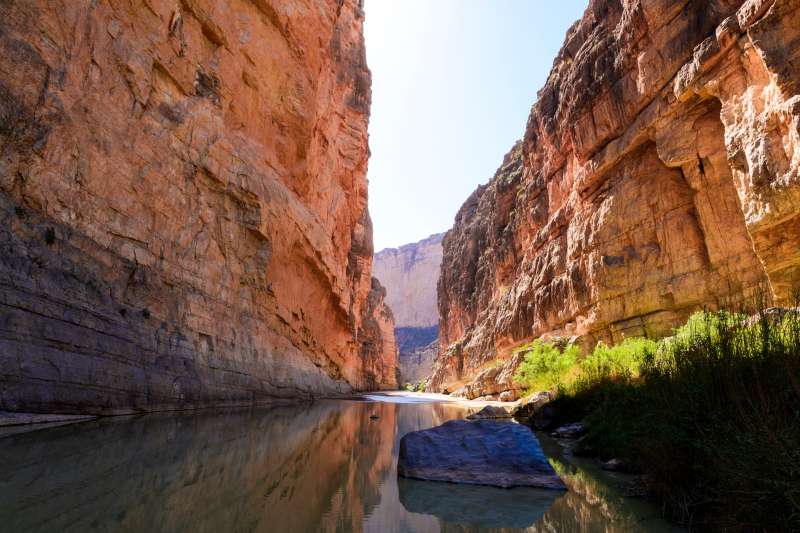
Federal contractors broke ground inside Big Bend National Park on Aug. 6, beginning construction of border barriers along the Rio Grande in one of the most remote and ecologically significant landscapes in Texas and the United States. As Bartko spoke to Courier Texas, bulldozers were already pushing a new road near the Santa Elena boat ramp near the iconic canyon. “What sense does a road make 40 feet away from a road that already exists?” he said. “But that’s what they’re doing.”
The construction marks the first time in American history the federal government has built inside a national park after waiving the environmental laws designed to protect it. In February, then-Department of Homeland Security (DHS) Secretary Kristi Noem signed a waiver circumventing 28 federal laws—including the National Park Service Organic Act, the Endangered Species Act, and the Wild and Scenic Rivers Act—to authorize construction of border barriers, roads, and lighting through the park. In May, DHS awarded a $1.72 billion contract to Southwest Valley Constructors of Albuquerque—the largest single border wall contract ever given in Texas—to span the entirety of Big Bend National Park and extend into the Lower Canyons of the Rio Grande. The contract alone costs nearly half the entire 2025 operating budget of the National Park Service.
The administration has justified the construction by citing what it calls an “acute and immediate need” for border security in the region. The numbers tell a different story. The Big Bend Sector covers 517 miles of the US-Mexico border—more than a quarter of the entire boundary—but saw just 1.3% of total border apprehensions in 2025. Within Big Bend National Park itself, apprehensions constituted just 0.045% of the national total.
Bartko put the math plainly: “The inverse of that is 99.95% of all apprehensions happen elsewhere. How is that even justifiable—that you’re going to spend billions of dollars for 0.045%? It defies logic.”
For the people like Bartko who live, work, and play along the Rio Grande, the consequences will be immediate and lasting. River guides, outfitters, and small businesses that rely on river access and tourism have long warned that construction will disrupt the recreation-based economy that supports local communities. Bartko raised a concern that goes beyond lost revenue: The proposed vehicle barriers—described by DHS as four-to-six-foot crossbars — would block first responder access to the river entirely.
“If somebody were to have a simple minor injury, a heat stroke or a mild heart attack—something they could be saved from fairly easily with proper medical response times—they’re making that impossible,” he said. “As an outfitter, I don’t know how I would be able to sell a trip to your mom or your dad and say, ‘Let’s go down the Rio Grande,’ knowing that if something happened, we’re on our own.”
The Rio Grande itself is not just a boundary—it is an ecosystem. Border barriers elsewhere along the Texas-Mexico border have cut off migratory routes and water supplies for wolves, ocelots, jaguars, black bears, elk, and dozens of other species that inhabit both sides of the boundary. Big Bend National Park is home to 409 bird species—the second-highest bird diversity of any national park in the country. A physical wall would cut off travel routes for black bears, mountain lions, jaguars, deer, and javelinas, eliminate visitor access to the Rio Grande, and severely impact bird habitat throughout the park.
Previous border wall construction in other regions has damaged artesian wells and groundwater systems, altered natural water flow, contributed to flooding, and caused damage to cultural sites including tribal burials. The Rio Grande regularly experiences flash floods peaking at 30,000 cubic feet per second. Razor wire and construction materials washed into the park from upstream pose significant risks to both recreationists and wildlife.
The destruction is already underway—and not just in Texas. On July 27, DHS contractors cut down three Fremont cottonwood trees in Lochiel, Arizona, estimated to be between 200 and 250 years old. The cottonwood grove was described by a neighboring homeowner as “the heart” of the San Rafael Valley. The trees had anchored underground water in the valley for centuries, providing rare shade and habitat for wildlife in one of the most biologically rich landscapes in North America.
The Sierra Club said no environmental monitors were on site during the demolition, despite a June commitment from US Customs and Border Protection (CBP) that monitors would survey for active nests before clearing began. The trees were cut during Arizona’s active nesting season for migratory birds.
Activists have since climbed into the last remaining cottonwood at the site to try to stop it from being felled next.
Seven former superintendents of Big Bend National Park have written to DHS Secretary Markwayne Mullin imploring the federal government not to waive environmental laws, writing: “There does not need to be a conflict between a strong border, a thriving local economy, and conservation of the wildest, most intact landscapes of Texas and our nation.”
Five border county sheriffs have spoken out against the plans. More than 2,000 people showed up at the Texas Capitol to protest in April. Even the Texas land commissioner issued a cease-and-desist order to US Customs and Border Patrol last week for illegally clearing state land.
Bartko noted opposition to the wall is one of the rare things in American politics that unites people across the ideological spectrum.
“You can be way on the left side of the spectrum and environmentally worried, or you can be on the right and economically worried. This makes all of us worry,” he said.“It doesn’t matter if you’re all about animals and plants, or if you’re all about dollars and cents. No one stands to gain from this other than the people receiving the money to do the destruction.”