by Alejandro Serrano and Gabby Birenbaum, The Texas Tribune
August 21, 2026
For over a generation, Texas Republicans have owned the politics of the southern border. Now the Trump administration’s latest border project has them cornered, stuck between constituents outraged over federal plans to carve roads and barriers through Big Bend and a president none of them want to cross.
Even Ken Paxton is choosing his words carefully. The Republican Senate nominee, a reliable ally of President Donald Trump, said in a statement that the administration’s plan “is not smart border security,” representing a rare break from the White House.
As bipartisan outrage has exploded in West Texas, numerous top Republicans have hedged on the matter, welcoming this week’s construction pause without entirely breaking from the Trump administration. U.S. Sen. Ted Cruz, echoing other GOP leaders, said he was glad federal officials were taking a beat “to hear the concerns of local landowners and law enforcement.” And he acknowledged that “the tools needed to secure the border in Big Bend are likewise different than those needed in a dense urban environment,” without explicitly condemning the project.
“It is a huge liability,” said former Land Commissioner Jerry Patterson, a Republican who has been outspoken about the political vulnerability presented by construction in the beloved region. “This issue has become big, really big, and it’s going to become bigger.”
Republicans are already taking a battery of attacks from Democrats, who are bullish on claiming a statewide victory in November’s midterm elections, which would be their first since 1994, and nabbing congressional districts that can upend power dynamics in Congress.
“To be honest with you, we’re in a general election coming up that’s going to be pretty tough,” state Rep. Wes Virdell, one of three GOP state lawmakers to sign a letter asking the governor to step in, said during an interview last week with KXAN News. “If people are watching Republicans not stand up for them down in South Texas, I think we’re going to lose the vote down there.”
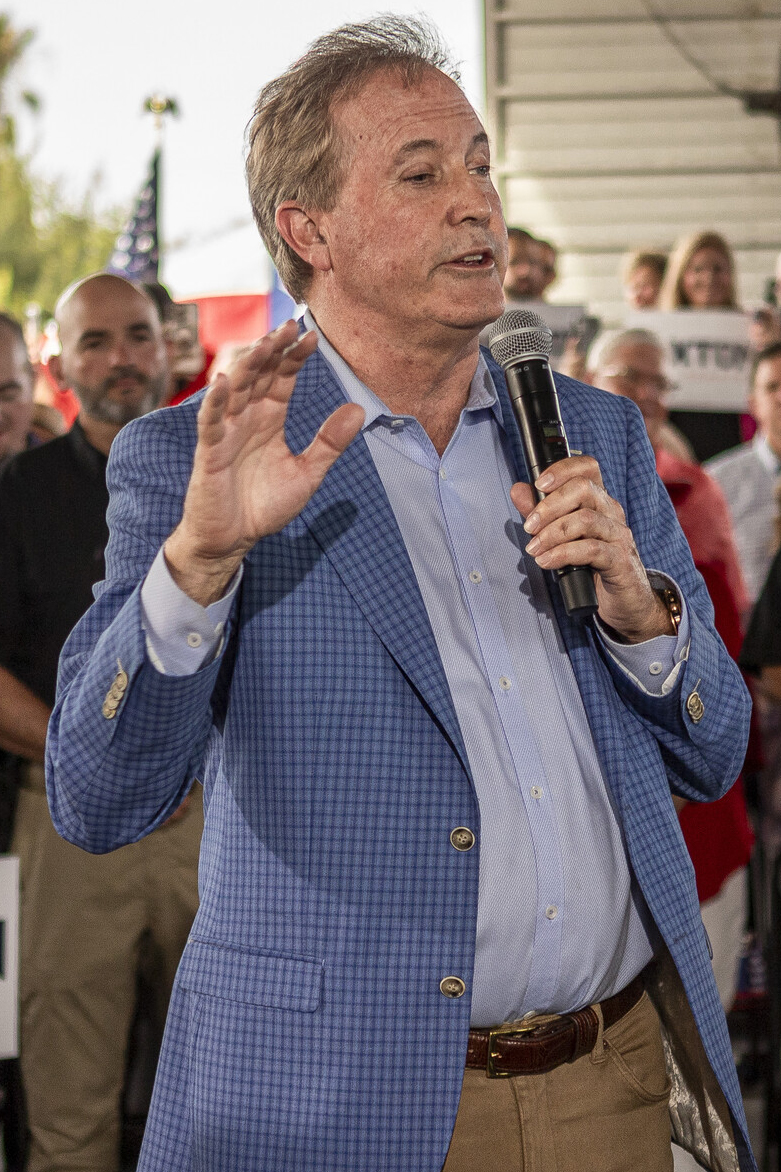
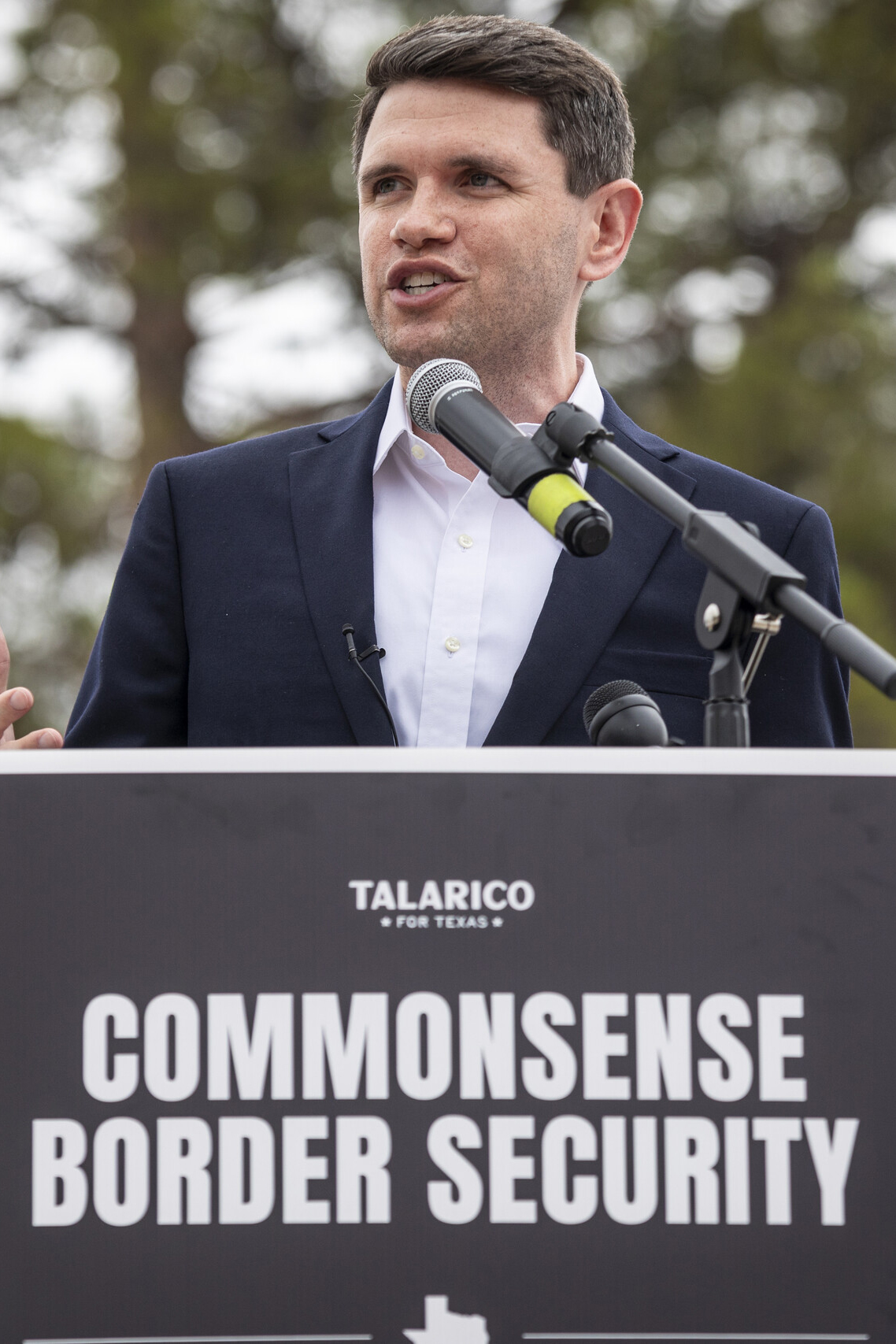
The race for U.S. Senate is shaping up to be the greatest threat for Republicans, whose nominee, Paxton, will face Democratic state Rep. James Talarico of Austin. Polls place the two in a tight race, and Talarico, like many other Democrats, has spent weeks blasting the Trump administration’s plans.
After initially declining to say where he stands, Paxton issued a fresh statement that pushed back on Big Bend construction in starker terms.
“Texans know this stretch of our border better than anyone in Washington. Destroying one of our state’s greatest natural treasures with unnecessary roads and barriers is not smart border security,” the attorney general said. “We must always put Texans first. That means effective enforcement that protects our communities and supports our law enforcement while respecting the unique character of places like Big Bend and leaving our natural resources undisturbed for future generations.”
Changing plans cause confusion
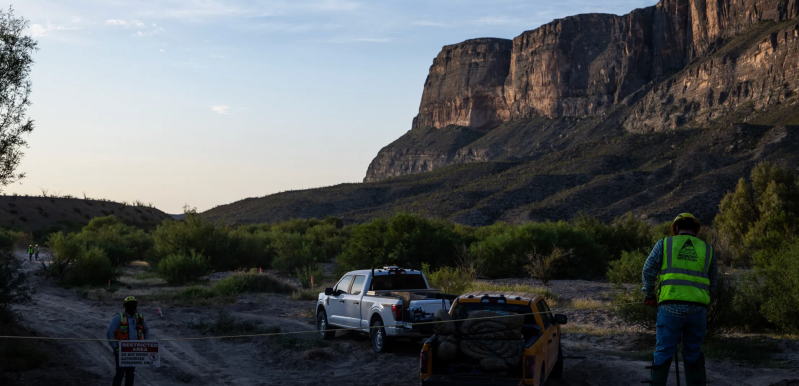
The source of all the anger are plans from the Trump administration to build an access road and vehicle barriers in Big Bend National Park and 30-foot tall barriers on private land outside the park.
Adding to the furor, the plans — consistently shrouded in secrecy — have changed repeatedly with little communication, as some residents and ranchers learned of developments through a government website or when they received letters from U.S. Customs and Border Protection threatening to take their land via eminent domain.
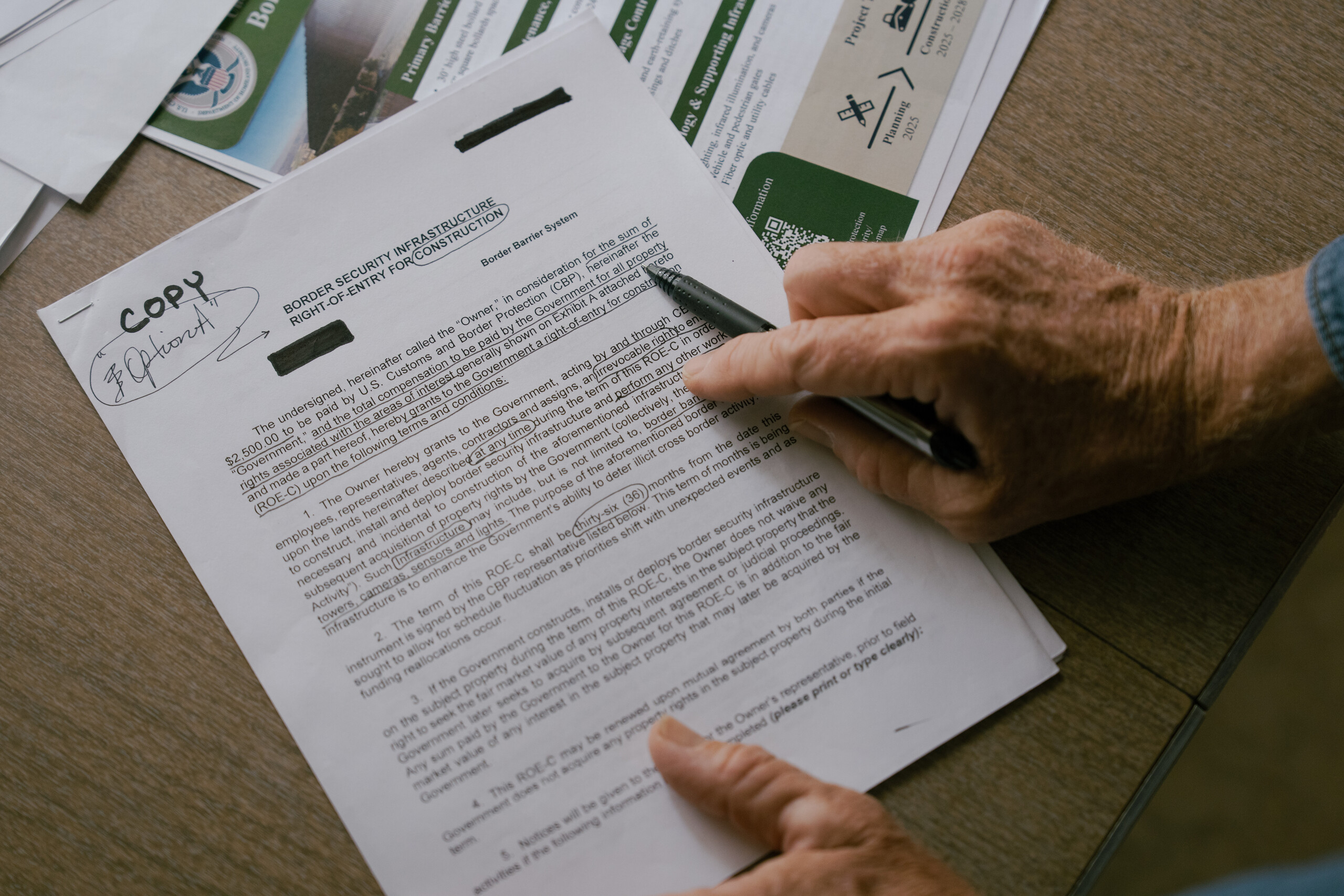
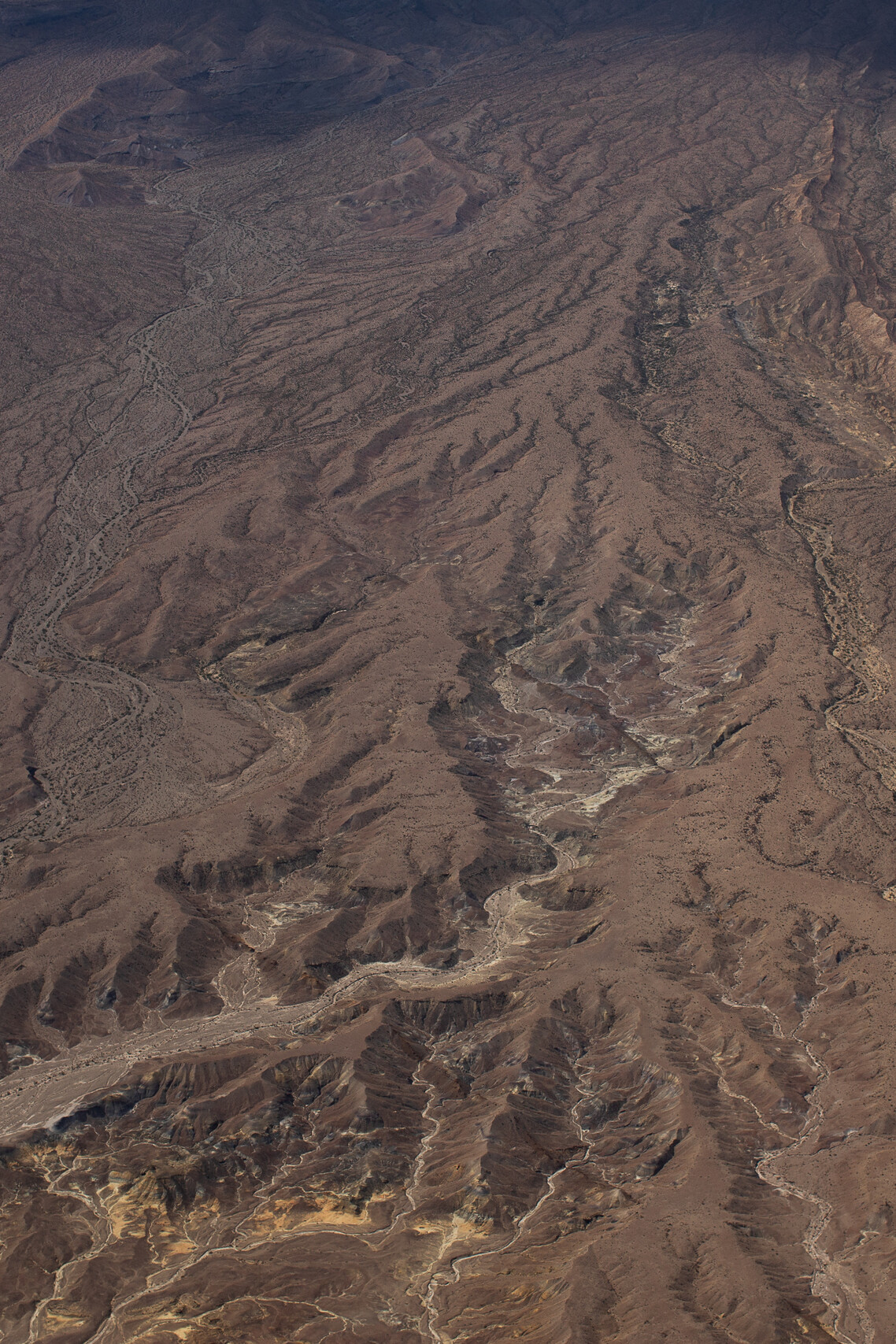
Republicans and Democrats alike in West Texas say there is no need for a physical barrier in the area the administration is eyeing out there.
Border Patrol agents are divided by geographic regions called sectors. The Big Bend sector is the largest and quietest. It covers 77 Texas counties and 517 miles of the 1,954-mile-long U.S.-Mexico border. That area accounted for just 1.3% of the 237,538 apprehensions recorded across the entire border last fiscal year.
“In other words, we don’t have a problem,” Patterson, the Republican who held statewide office for 12 years until 2015, said. “And we’ve got, so far, a $7.5 billion fix in no-bid contracts.”
Republicans break silence, carefully

In Congress, Texas’ Democrats have been banging the Big Bend drum for months.
The state’s Democratic delegation held a news conference in April to decry U.S. Customs and Border Protection’s wall plans, and signed onto letters to Homeland Security Secretary Markwayne Mullin opposing the border construction plans in March and again in July. In all cases, the Democrats stood alone.
When U.S. Reps. Henry Cuellar, D-Laredo, and Veronica Escobar, D-El Paso, attempted to block construction in the park via an amendment to the annual homeland security funding bill, Republicans — including the Texans on the committee — voted in lockstep to block it.
Texas Republicans had opportunities to respond to locals’ concerns, but did not do so — for the most part — until last week, when photos and videos of construction crews arriving in West Texas drew even more attention to the issue.


Now that Republicans are speaking out, their responses have varied from calculated to pointed to misleading. And two of the president’s most loyal allies in the state have remained quiet: Lt. Gov. Dan Patrick and Agriculture Commissioner Sid Miller. House Speaker Dustin Burrows also has not publicly commented. Spokespersons for all three did not respond to inquiries from the Tribune.

Some Republicans have backed the pause in construction announced this week by CBP Commissioner Rodney Scott while he visits with local officials. Among them are Cruz, who broke his silence in a statement to the Tribune, as well as U.S. Reps. Chip Roy, R-Austin, who thanked Scott for the pause, and August Pfluger, R-San Angelo, whose district includes a large swath of West Texas.
Pfluger wrote on social media that “security and conservation are not mutually exclusive” and encouraged CBP to work with local leaders, communities and ranchers regarding new border infrastructure in the region.
Other Republicans have been more explicit in their opposition.

Last month, Dawn Buckingham, who leads the General Land Office, sent a cease and desist letter to CBP and a federal contractor she said had illegally cleared GLO-owned land in Presidio County. In a statement to the Tribune, she said her agency was working with a contractor to “remediate” the land. She said all construction the GLO had identified has since ended.
Buckingham’s office is now surveying state tracts in the area and “conducting a thorough review of relevant titles and deeds to better determine the location and extent of any potential trespass,” she added.
“Our process concerning wall construction will ensure all factors, including our conservation obligations, are carefully considered,” Buckingham said.
CBP officials have repeatedly said there are no plans for a wall in the park. Some Republicans are talking about one, anyway.
Robert Garza, the GOP candidate for House District 74 — which includes the Big Bend region —told the Tribune he opposed a wall there. He will face state Rep. Eddie Morales Jr., a Democrat who has emerged as a leader of the opposition to the project.
“I’m for strong border security, but not a wall through Big Bend,” Garza said. “Big Bend is one of the most beautiful and rugged stretches of the border and its terrain is already one of the toughest natural barriers we have. Technology and manpower will do more there than a physical barrier.”
Comptroller Don Huffines said in a statement that “building a permanent wall through Big Bend National Park is one of the dumbest ideas I’ve heard in a long time.” He also added that he was pleased with the drastic reduction in illegal border crossings.
Gov. Greg Abbott has similarly focused on a wall and took credit for stopping it. Earlier this week, he told reporters that he had spoken with Mullin, who “committed to me that they will not be building a wall or a fence in Big Bend National Park.”
Most of the comments from Republican state leaders are far from a full-throated rebuke of what those in the region see as federal overreach of precious land that will be disrupted by heavy trucks and equipment to install infrastructure meant to address a problem many believe is nonexistent.
And CBP’s pause — lauded by Republicans — has done little to quell worries that eventual construction of any new roads and surveillance technology will destroy the tranquility and land many cherish in the region.
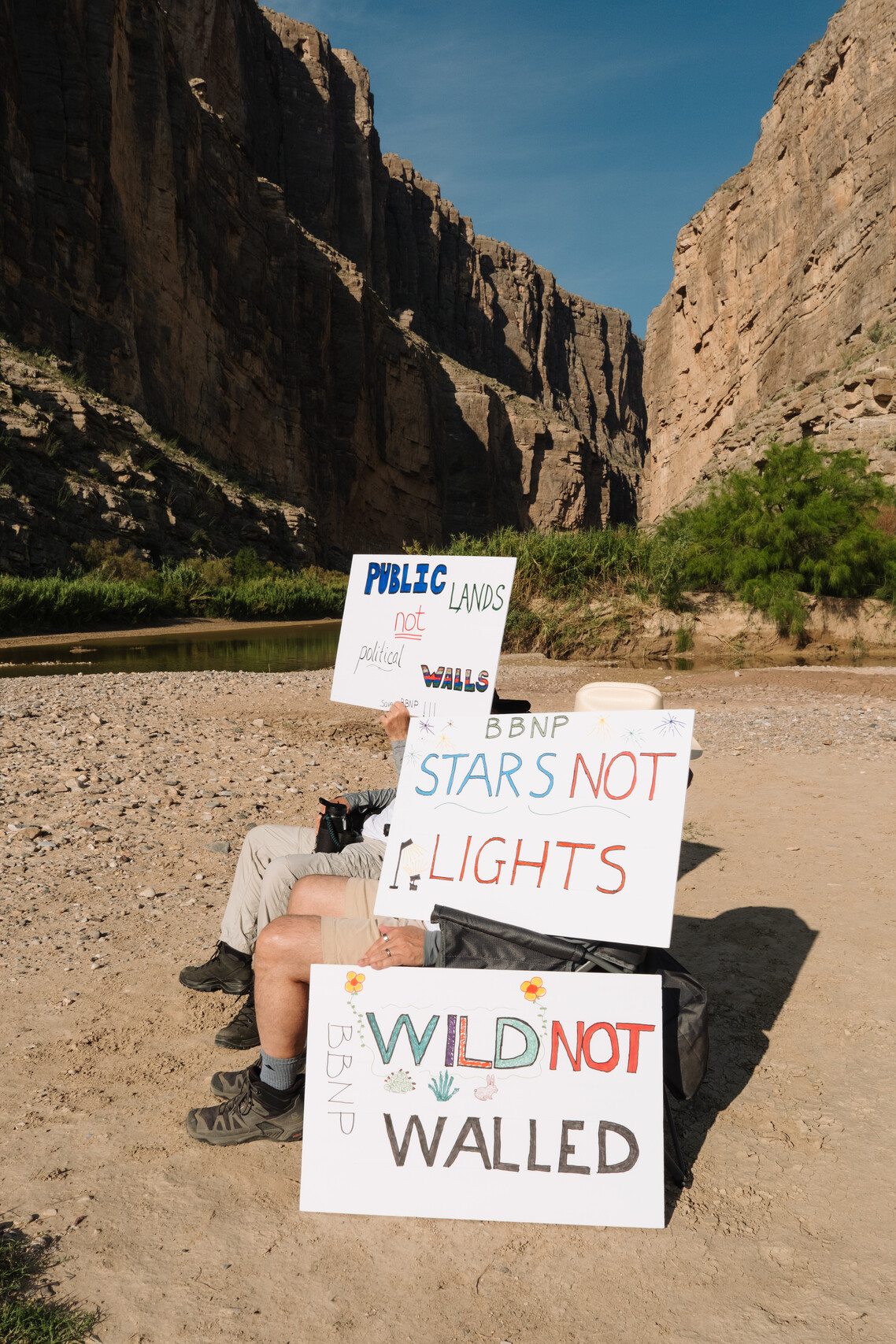
On Tuesday afternoon, Scott, the CBP head, met with one group of local officials — hailing from West Texas to Del Rio — for an hour and a half.
Democratic state Sen. César Blanco, whose district includes the area, told the Tribune after the meeting that Scott acknowledged a need to hear input from locals before proceeding.
Scott told those at the meeting that federal officials hope to make a decision in the coming weeks regarding the temporary pause of construction, according to Blanco. Local electeds suggested to Scott that the administration consider technology — like infrared surveillance — instead of building physical and permanent structures. Blanco said he felt that Scott made a sincere effort to listen.
But the administration’s plans to build on private land, the senator said, “was somewhat not negotiable.”
This article first appeared on The Texas Tribune.