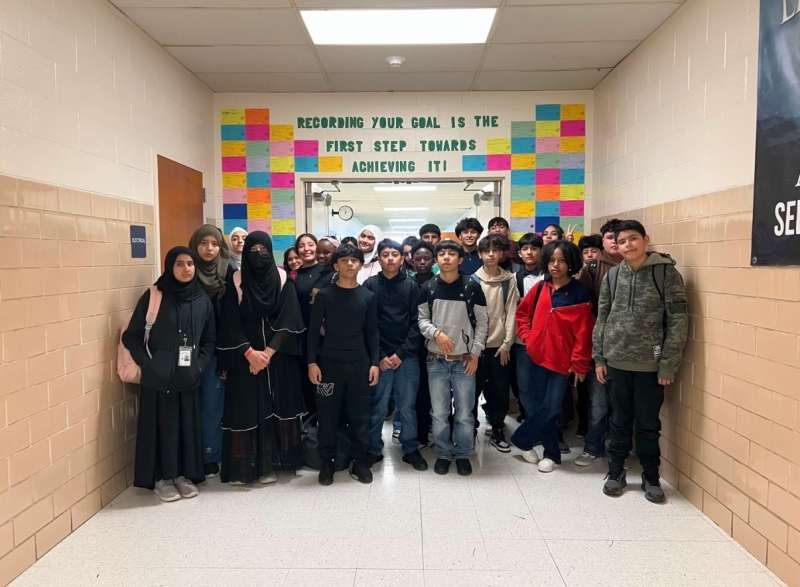
At 6:30 a.m. in October of 2022, Bryan Mendoza got on a big, yellow school bus for the first time. This was the first day of a new school in a completely different country. For 13 years, home was Guanajuato, Mexico, where he went to school and only ever spoke Spanish—but in Fort Worth and at the International Newcomer Academy, the scene was different.
“I had never been in a school that had children of so many different races,” said Mendoza. “It was such a big impression to think that in such a big world so many cultures coincided in the same place.”
The school served students, ranging from ages 11 to 15, from more than 30 countries who spoke a dozen different languages.They were newly arrived immigrants and refugees enrolling in the district.
After 33 years of INA supporting these students, the Fort Worth Independent School District’s newly appointed board of managers voted to close it in a unanimous decision on April 28, 2026.
David Duong, a senior at Texas Christian University immigrated from Vietnam 2016. He recalls the process required to enroll at INA.
“I remember I went to this building where they assessed my English speaking skills,” he said. “I remember they took out a picture book and they would point at different objects trying to tell me to say the name in English.”
Duong said he awkwardly sat there, unable to identify the objects in English.
In order for a student to enroll in Fort Worth ISD, they’re required to take a language assessment at a student placement center. This is used to identify if a student is in need of English as a second language support. There was no way Duong would be able to successfully matriculate through the district without a better mastery of English.
When he first started INA, Duong felt uncomfortable in a completely new environment, different from what he was used to in Vietnam, but that slowly began to change as he soon met another Vietnamese student. His teacher, Vivian Tran also helped him navigate his new social environment.
Students usually study on the campus for a year with the goal of learning enough English to transition into a typical district school and be successful.
“A lot of students came into the school not only not speaking English, but not even being able to read or write in their own language,” said Daniel Henkel, former INA student.
Henkel, now 26, immigrated from Mexico when he was 16. The change for him was very abrupt. This made him confused, because although he didn’t know English, he was expecting to be enrolled in a typical school.
Henkel said he was able to become conversational in English within two months of being at International Newcomer Academy.
“When I started at INA I realized the amount of work these teachers put in.” Henkel said. “They weren’t just teaching us the subjects, but they were actively teaching us how to speak English.”
At his loneliest times, he remembers how Susan Alcala, his Algebra 1 teacher, would constantly check in on him making sure he was doing well.
“INA really held your hand a lot, which is what I really needed at the time when I first arrived in America,” Duong said.
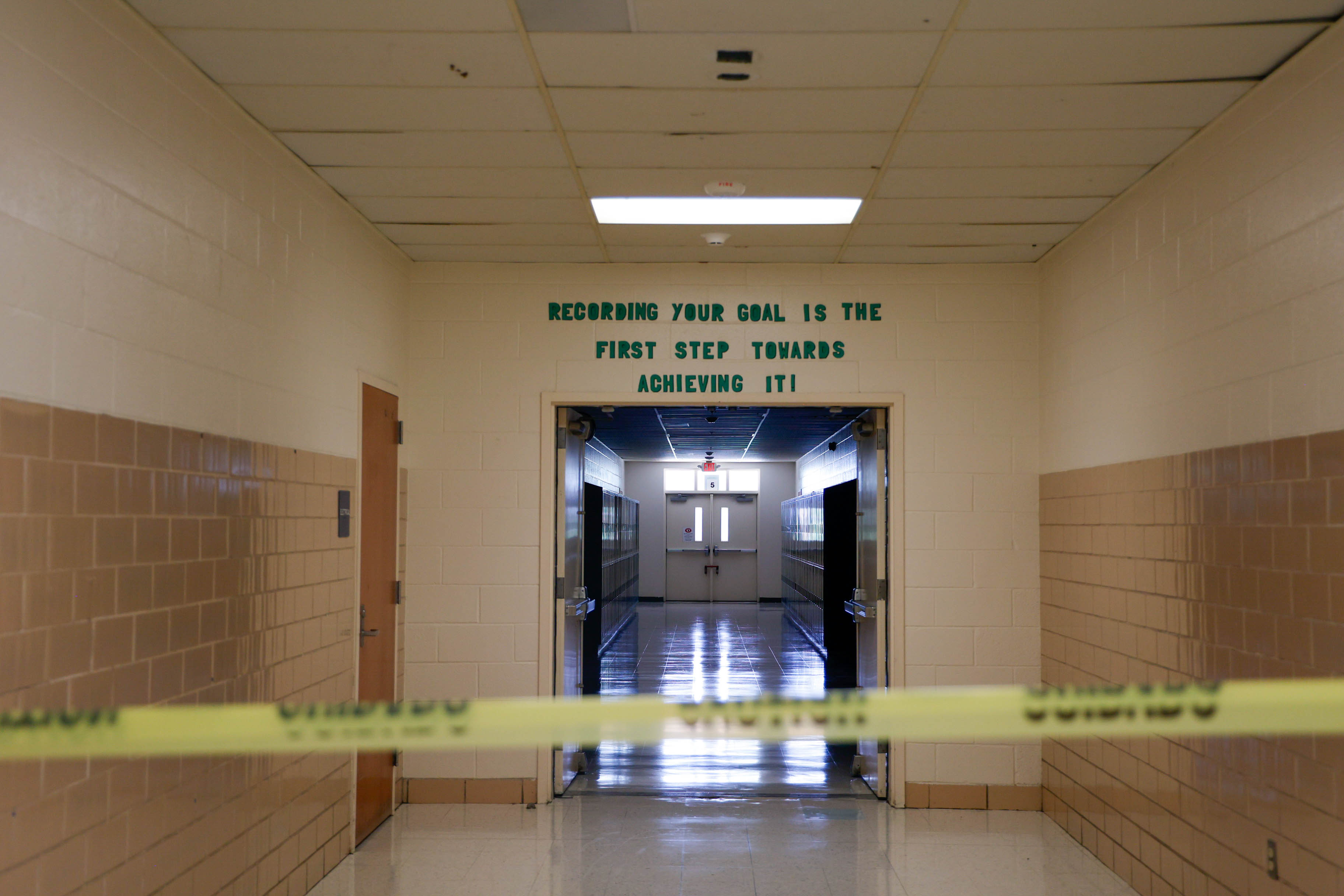
What happens now for the district’s most vulnerable
Duong, Henkel, and Mendoza all agreed that they wouldn’t be where they are today if they had been thrown into a typical district school instead of easing into their new lives at INA.
“In INA, we did not feel segregated, we felt included because we all went through the exact same thing,” Henkel said. “We were willing to help each other out.”
But now, the safe haven for the district’s most vulnerable students is gone, and it’ll take time to assess the full impact of the closure.
“I hate that the system is built in a way that grades are what people are looking at and that they prioritize that rather than the students being able to progress,” Duong said.
Students take the State of Texas Assessments of Academic Readiness (STAAR) and Measures of Academic Progress (MAP). The data is then analyzed at both the state and local level.
Low academic performance including a “D” rating from the Texas Education Agency last school year was one of the reasons the district voted to close International Newcomer Academy.
Mendoza said the district didn’t care to see INA for what it was, they only looked at data that was unjust towards students who were learning a new language.
Now, Duong and Henkel, worry students will receive even less help on a campus where the support is not solely dedicated to students new to the country.
“In a regular classroom, the teacher even if they want to help, they just won’t have enough time or enough resources to support a student who is speaking another language,” Duong said.
INA class sizes were 15 to 18 students per teacher. This is smaller than the average classroom of 20 to 30 students in Fort Worth ISD and research shows smaller classrooms are ideal for students learning a new language to have individualized attention.
“Closing INA is taking away so many opportunities from so many students and also taking away jobs from educators that cared,” said Mendoza.
The Fort Worth ISD has assured students will be successful at a typical school and continue to receive the necessary support.
“Newcomer students will receive targeted support as they enter the system while attending their neighborhood schools from day one—there will be no separate transition pathway,” a newsletter from Fort Worth ISD said. “Students will have access to the full suite of services, programs, and grade-level instruction alongside their peers, ensuring consistent, high-quality support every day.”
Those who would have returned to INA will now also be placed in their prospective neighborhood schools.
Mendoza, Duong and Henkel all urge people and educators to continue advocating for new immigrant and refugee students as they are the ones who will need a helping hand the most.
“For any students who just arrived and are feeling lost or discouraged, I want them to know that there are people here for them that will support them,” Duong said. “Don’t be afraid to ask questions and to reach out for help.”