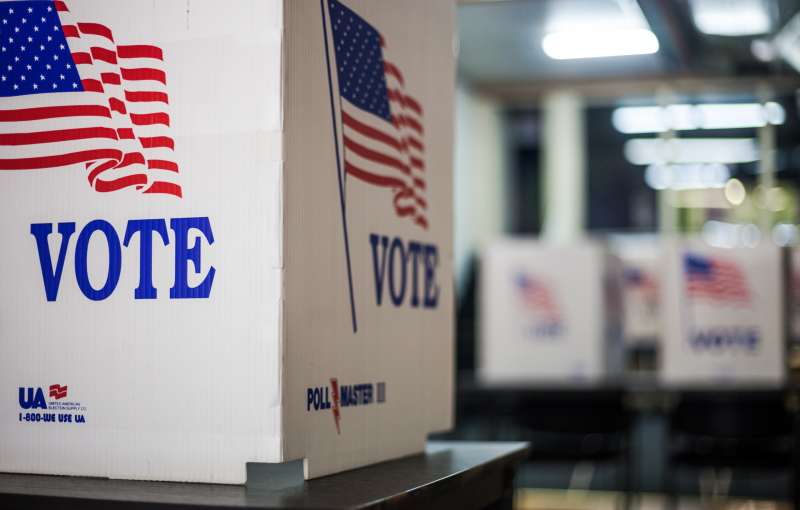
Early voting for the Nov. 3 general election begins in less than two months, and many Americans still have concerns about election integrity. But election tampering and widespread fraud is incredibly rare, and Texas election officials work to ensure a safe and secure voting process.
Here’s what to know.
In July, the Texas Secretary of State office launched its Election Security Assessments, which includes reviewing security protocols for each of Texas’ 254 counties and storage facilities, polling locations, and central counting stations, in addition to information technology security.
Secure voting equipment and polling stations
Texas voting machines go through multiple tests, and don’t have the capability to connect to the internet to protect against hacking.
Only poll book devices, which are used to check voter registrations during the check-in process at polling locations and are certified by the secretary of state, can connect to the internet to ensure a person doesn’t vote twice.
Texas machines are tested twice before each election, including one that is open to the public, and then tested again immediately after the election. The tests consist of a deck of ballots being voted on the machines and then tabulated to ensure that the machine results are correct and match the test stack of ballots. The machines can’t be used or deployed until the test is 100% successful.
Throughout early voting and Election Day after the polls close, election judges must ensure the number of counted ballots matches the number of people who showed up to vote. Voting machines are then shut down and locked to prevent any other votes from being cast. Then, election officers must print at least three copies of the election results from each machine, according to the Texas Secretary of State office. All Texas voting systems are also sealed with locks and a unique serial number each day.
In 2021, a new Texas election law took effect and required a 24-hour video live stream and recording of all areas containing voted ballots in counties with populations of 100,000 people or more.
Always double check your selections
Contrary to some conspiracies, electronic voting machines aren’t switching your votes from Democratic to Republican or vice versa. Election officials warn voters to double check their selections, however, as touch-sensitive screens on voting machines can be tricky to use for some.
How is my vote counted?
Under Texas Election Code §66.053, counties are required to count results from each polling location within 24 hours of the polls closing on Election Day.
On election night, most counties have early voting results tabulated and will post them shortly after polls close at 7 p.m. This includes mail-in ballots turned in early.
As early voting and Election Day votes are tabulated, they are added in increments to the secretary of state’s results page for state, district, and federal elections. It’s normal for this to take time, as eligible voters in line by 7 p.m. on Election Day must be given the opportunity to cast their ballot.
Once all eligible ballots have been counted, county commissioners courts conduct a local canvass by reviewing records and finalizing the tally of votes. This must be completed by Nov. 17. Then, a statewide canvass that involves the governor certifying the results with the secretary of state as a witness must take place by Dec. 7.
Paper ballots provide an independent record
Texas elections using electronic voting systems are subject to a post-election hand-count audit. For example, after the March 2026 primary, officials were required to hand-count ballots from at least three Election Day locations and three early-voting locations in order to compare a manual count against the electronic tabulation.
Bipartisan oversight of elections
Both parties are entitled to have certified poll watchers and monitors present at polling places, ballot counting, and audits, adding an additional layer of transparency to the process from Election Day through certification.
What else to know
- Voting system workers undergo background checks, and election workers receive training.
- Voter rolls are regularly updated in Texas, with state and county officials reviewing records.
- Federal law protects eligible voters from improper removal from a voter roll close to an election.
- Whether you voted is public information, but your ballot is private. Who you voted for remains anonymous.
Problems while voting?
If you do run into any issues at the polls, the from the way the voting center is operating to getting turned away, the Legal Defense Fund urges voters to take advantage of their Election Protection Hotline at 866-OUR-VOTE, or 866-687-8683, to get help with questions or concerns.