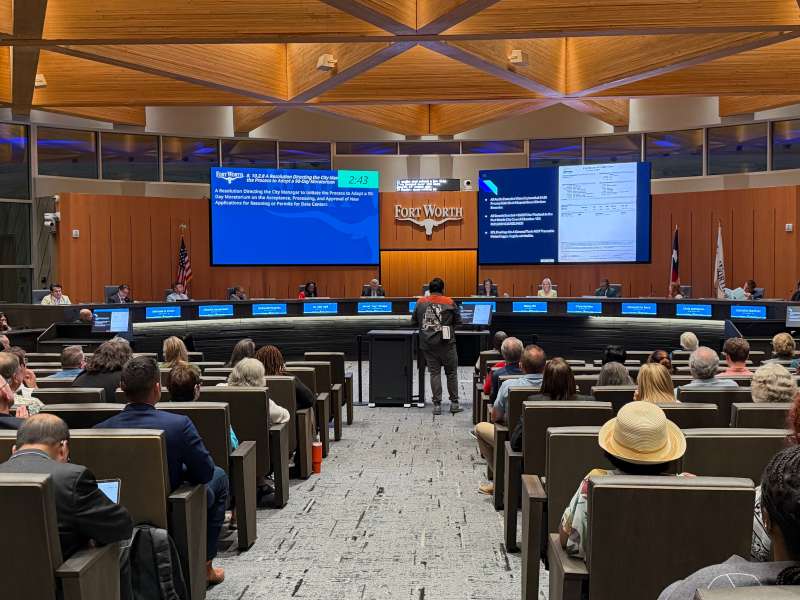
After several hours of public comment—and several months of community pushback—the Fort Worth city council unanimously approved a 90-day moratorium on the construction of data centers on Tuesday night. The pause can be extended to a 180-day maximum, and will go into effect by early next year.
While residents are happy the council is listening to their concerns, some say this is just the first step.
“The moratorium is important because Fort Worth has to take a stand against big business,” Caleb Roberts, the executive director of Downwinders at Risk, told Courier Texas. “They can’t just lay over and lay down every time big business comes and flashes some money in front of their faces. Residents have really been upset, and it’s taken too long for the city council to get involved. But we are happy that they are taking some notes, even if there’s more steps to go to protect residents and business owners from what’s happening here in the city.”
Fort Worth resident Sue Weston owns a historic garden, and a $10 billion data center is planned within 300 feet of it. She has frequented meetings since last September, and has been a vocal advocate for a moratorium.
”This is just a step to show that they are going in the right direction, but we have to continue on,” she said. “A lot of the people here tonight are fairly angry. I’ve always found out that the people that are the most angry, it’s because they care the most. That’s it. So that’s why people need to listen.”
What does the timeline for a moratorium look like?
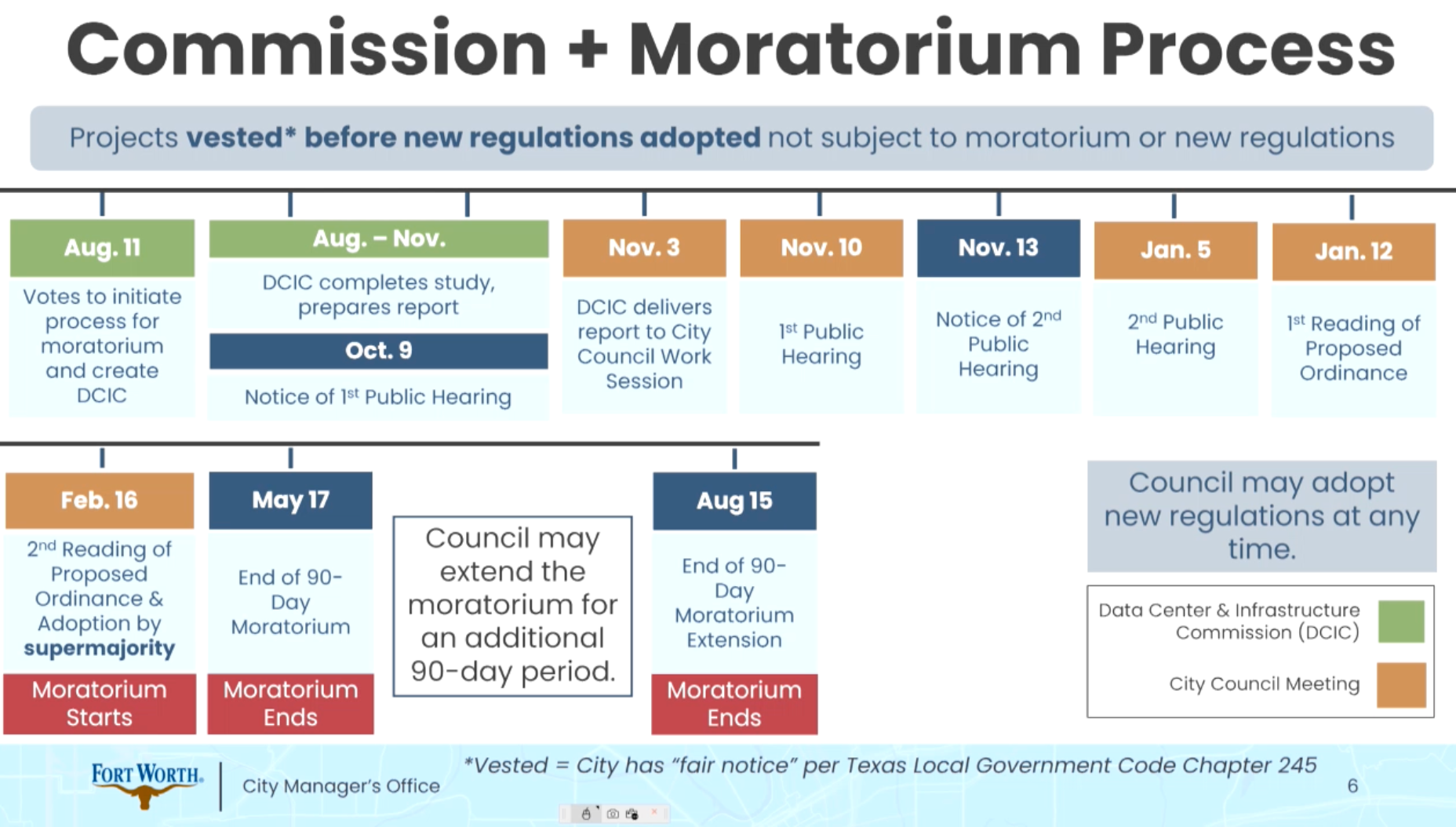
The 90-day pause and the regulations that come out of the review process don’t apply to projects whose zoning applications have already been submitted or approved, according to the city.
In 10-1 votes, the council also approved new rules that data center developers will have to follow in their applications, and approved the creation of a Data Center & Infrastructure Committee.
The advisory committee will be made up of community members and industry experts, and provide evidence-based recommendations to the city to guide their development of data center regulations. Anyone interested in joining can reach out to the city via email.
The committee is charged with delivering a report of recommendations to the council at their next Nov. 3 work session—a timeframe residents say is too short.
“ I think the timeframe for the data center committee, as it’s currently being proposed, is way too short,” Fort Worth resident Lauren Ivy Chiong told Courier Texas. “If we can have the data center moratorium extended for 180 days, I think the data center task force should have more time to be able to research, discuss, and create a really valuable report.
“ But I believe this will all be helpful, and will show the community that they have listened and would like to take a moment to step back and thoughtfully reflect on all of the concerns that the community has brought to the council at this point,” she added.
Fort Worth’s fight against data centers has also caught the attention of statewide candidates this midterm election year.
State Rep. Vikki Goodwin (D-Austin), who is running for lieutenant governor, testified at the meeting and shared her thoughts on the importance of a local government taking action against data centers.
“A moratorium passed by the Fort Worth City Council would send a signal to the state legislature,” she told the council. “Maybe even to the governor or lieutenant governor. I have been hearing from so many people about all the issues and concerns around data centers. Originally, I thought it was mainly about water and electricity, but it’s so much more. I think it behooves the legislature to put in place some regulation.”
Once in effect, the moratorium requires city staff to evaluate the noise produced by data centers, their impact on local water supplies, and their compatibility with land uses. The moratorium is meant to conclude with the creation of long-term ordinances designed to regulate the facilities.
“When we talk about moratoriums, it allows for so much more of the nuance that’s involved in political commentary, not just from the top down, but from the bottom up,” Fort Worth resident Naomi Espinoza told Courier Texas prior to the vote. “When we talk about what’s important to the community, we are the masses, and we should be represented in government at every level with considerations that take as long as possible to make informed decisions that represent all people and all communities.”
DFW Intern Noemi Castanon contributed to this story.