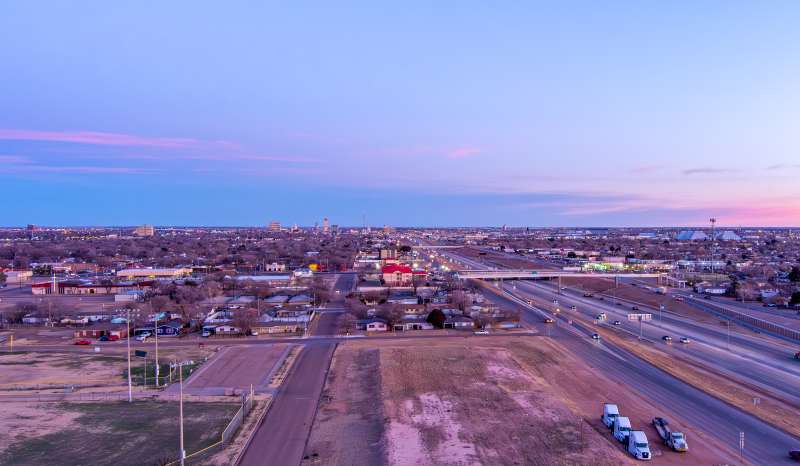
In West Texas, the weather keeps its own counsel. A clear morning often gives way to a wall of red dust by afternoon, the wind rarely rests, and rain comes late or not at all.
Brad Proctor learned long ago not to count on any of it. But what he can count on, on the farm just north of Lubbock that his family has worked for more than a century, is the squeeze. It was there when his grandfather plowed the fields decades ago, and it’s there now, as he raises cattle, hay, and three children on that same dusty ground.
“My granddad used to tell me, ‘It’s got to get better, son,’” Proctor said. “I’m 47 and I ain’t never seen it get better.”
Proctor knows what it costs to keep the herd fed, fenced, and moving. Lately, that number keeps climbing.
This fall, that number is on the ballot.
With early voting underway, the cost of living has become the defining fight in the US Senate race between Republican Attorney General Ken Paxton and Democratic state Rep. James Talarico, a contest that has already drawn more than $440 million in advertising.
For Proctor, the stakes are not abstract. In August, President Donald Trump cleared the way for 300,000 metric tons of imported ground beef at reduced tariffs, a move meant to bring down grocery prices. Proctor said it knocked $30,000-$50,000 off the value of the calves he has on the ground.
“That extra $50,000 would have went a long way to help me pay for my healthcare that’s going through the roof, the fuel that’s going through the roof, for the three kids that I got,” he said.
Paxton, one of Trump’s closest allies in Texas, has not publicly criticized the deal, Courier Texas previously reported. Talarico spoke out against it.
Proctor, a lifelong Democrat in a county where nearly 7 in 10 voters backed Trump in 2024, does not expect any one senator to fix life for struggling farmers across the country. But he knows which way he is voting, and why.
“Do I think he’s going to go up there and wave his magic wand and make DC start making agriculture better? No,” Proctor said of Talarico. But he hopes Talarico could be a step in the right direction.
His objection to Paxton is more personal. “There’s no way in hell that I can look at my three kids and point at Ken Paxton or Donald Trump or the Republican Party and say you should strive to be like that.”
Tariffs, rising costs, and the pressures facing Texas ranchers
Two of President Trump’s signature causes, tariffs and the war with Iran, sit behind much of why Proctor is paying more. The Federal Reserve Bank of Minneapolis estimated that as of July, tariffs had added between 0.2 and 0.4 percentage points to inflation.
In private, Paxton has acknowledged what fuel prices are doing to voters. In audio published by Axios, he told donors his campaign’s troubles come down to “the war, it’s the gas prices, it’s diesel.” But in public, he has not broken with Trump.
Six days after Trump announced clearing the way for beef imports, he flew to Houston to headline a fundraiser for Paxton, with tickets running from $10,000 to nearly $500,000.
Courier Texas also reported that Paxton cheered the Department of Government Efficiency (DOGE). Federal cuts during that push ended about $382 million for United Nations agriculture programs, among them efforts to monitor and contain the New World screwworm as it moved north through Central America.
The screwworm is a fly whose larvae feed on the living tissue of cattle, wildlife, pets, and, in rare cases, humans. In June, USDA confirmed the first US case since the parasite was eradicated in the 1960s, in a three-week-old calf in Zavala County. Gov. Greg Abbott issued a disaster proclamation, with quarantines and movement restrictions in parts of South and West Texas.
The Federal Reserve Bank of Dallas has estimated that an outbreak on the scale of past infestations could cost the Southwest $2.5 billion and the nation $8 billion. The pest has also kept Texas crossings closed to Mexican cattle, tightening the supply that ranchers need to rebuild herds already at their smallest in 75 years. While Proctor has watched the spread, he’s grateful his herd has yet to be affected.
What Paxton and Talarico are proposing to lower costs
Paxton’s answer to high costs is tax relief. His “Protecting the Texas Promise” plan offers a $25,000 deduction for out-of-pocket medical expenses and $50,000 for first-time homebuyers. He backs a permanent repeal of the federal gas tax and has applauded Trump’s pledge of $5,000 checks if Republicans hold Congress. The deductions would require new legislation, and families would not see them until tax time.
Proctor is skeptical. “Why would I trust a party that has taken away?”
The Texas Farm Bureau endorsed Paxton, saying he has used the courts to defend farmers and ranchers.
Talarico has called for repealing tariffs, pausing federal fuel taxes, and ending the war. He dismissed the $5,000 checks as an “election year stunt.”
A recent New York Times/Siena poll found Talarico ahead of Paxton by 51% to 45%. The poll showed that voters prefer him 52% to 42% on cost of living and 52% to 43% on tariffs.
For West Texas farmers, there’s little left to cut
Cattle prices aren’t killing Proctor’s bottom line. Instead, it’s everything that keeps his farm running: electricity, feed, healthcare, and fuel.
Diesel averaged $5.79 a gallon in Texas in early October, $2.57 more than a year earlier, according to AAA. The spike followed the US war with Iran and the closing of the Strait of Hormuz. Gov. Greg Abbott declared a disaster over diesel prices in late September.
Farmers have spent decades becoming more efficient to survive thinning margins, Proctor said. But at this point, he lamented, there is nothing left to trim.
“Somebody said to me the other day, ‘You know how to squeeze blood out of a turnip,’” Proctor said. “I said, that turnip’s out of blood. There’s no more left in it.”
The pressure is reshaping the land around him. Farmers are telling the next generation not to rely on the family business. Proctor said the next generation was told to leave, and they did.
“Mom and Dad told the kids when they graduated high school, ‘Go get you an education,’” Proctor said. “’There’s nothing here for you. There’s no future.’”
When farmer parents retire or die, the land goes to whoever pays most: developers, wind and solar companies, or, increasingly, data centers. Proctor said he passes one near Abernathy and does not blame neighbors who sell.
For a century, Proctor’s land has yielded everything from cattle to cotton and watermelon to wheat. While he’d like his children to keep the family legacy alive on the West Texas plains for generations to come, he doesn’t want them to live paycheck-to-paycheck at the farm’s expense.
“It barely sustains itself,” he said.
Decades ago, Proctor’s granddad hoped it would get better for farmers. On Nov. 3, Brad will cast a vote, hoping the next six years will finally prove his family’s patriarch was right.