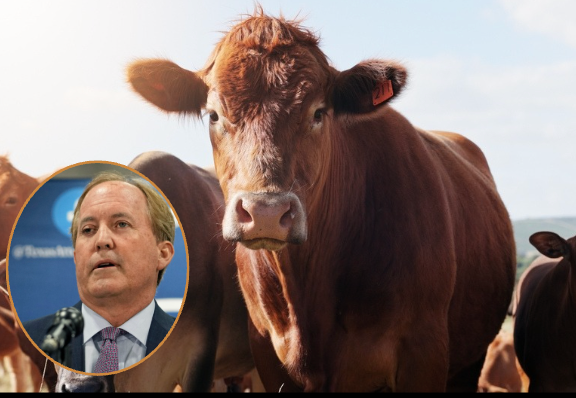
Texas cattle ranchers are bracing for a hit to their herds and their bottom lines after President Donald Trump announced the US will allow 300,000 metric tons of foreign ground beef into the country tariff-free over the next 90 days. Attorney General Ken Paxton, Trump’s closest Texas ally and a man whose job is explicitly to protect the state’s interests, has said nothing critical about the deal—even as he shared a stage with the president in Houston last week to raise campaign cash.
Trump announced the plan on Truth Social on Aug. 21, saying the imported beef would be sold at 25% below current market prices to bring down grocery bills for American families, who have watched ground beef prices climb toward record highs. But the announcement landed like a gut punch in cattle country. Cooper Little, executive director of the Independent Cattlemen’s Association of Texas, called the move a mistake: “We’re very disappointed in that decision by the president. Whoever seems to be advising him… we disagree.”
The backlash wasn’t limited to Texas. Republican senators from farm states pushed back hard, with Nebraska’s Deb Fischer calling herself “extremely disappointed” and warning “flooding the market with foreign beef hurts our livestock industry.” Montana Sen. Tim Sheehy agreed, warning the move “will make it more difficult for American ranchers to rebuild our herd.”
On the ground in Texas, ranchers describe an industry already stretched thin. In Weatherford, outside Fort Worth, Molly Mirassou has been building her 85-head herd since 2013. Due to Trump’s tariffs and war with Iran, she’s watched fertilizer costs nearly triple and fuel and feed prices climb, all while now facing lower prices for her cattle. “It’s already affected my business because I’m at the point where I’m having to go and look for another job to support the ranch myself,” she told CBS Texas.
In Houston, rancher Anthony Thomas told Spectrum News the real fix isn’t imports—it’s helping ranchers rebuild herds that have shrunk during years of drought. “What we really need is for ranchers, cattle producers, to have the ability to expand their herds,” he said.
Compounding that pressure is a threat Paxton himself helped enable. Paxton was an enthusiastic booster of Elon Musk’s short-lived and disastrous Department of Government Efficiency, at one point calling Musk and the DOGE team “incredible” and dismissing criticism of the initiative’s cuts as “crazy.” As Courier Texas reported in early June, among the programs DOGE eliminated was roughly $382 million in funding for United Nations Food and Agriculture Organization initiatives—including programs that monitored and helped contain the New World screwworm, a flesh-eating livestock parasite, as it spread through Central America.
On June 3, the USDA confirmed the first Texas screwworm case in nearly 60 years, in a calf in Zavala County. Researchers at the Federal Reserve Bank of Dallas have estimated a modern outbreak on the scale of past infestations could cost the Southwest $2.5 billion and $8 billion nationwide.
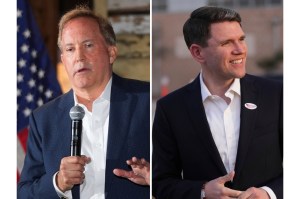
Yet as Texas ranchers sound alarms, Paxton has not publicly pushed back on the beef deal or broader tariff policy hurting Texas industries. On Aug. 27, Trump flew to Houston to headline a Republican National Committee fundraiser for Paxton’s US Senate campaign, with tickets ranging from $10,000 to nearly $500,000. Paxton has trailed Democratic state Rep. James Talarico in fundraising for months, and entered the fall with just $1.75 million left in his campaign account after a costly primary fight against incumbent Republican Sen. John Cornyn.
Talarico’s campaign has sought to make the contrast a central argument in the race, framing Paxton’s silence on tariffs and the beef deal as evidence he’s more focused on currying favor with Trump than protecting Texans’ pocketbooks.
For ranchers like Mirassou, the politics matter less than the math. Cattle futures dropped sharply on the day of Trump’s announcement, and industry groups have warned the 300,000-metric-ton figure represents roughly half of all US beef exports so far this year—a volume shift they say is too large to absorb carefully or safely on a 90-day timeline.