Hey y’all 👋
I’m thrilled to welcome you to the first edition of The TexEd Report, a new education-focused newsletter from COURIER Texas that’s here to breakdown how policies and decisions made at the Capitol are impacting classrooms throughout our state.
You’ll find The TexEd Report in your inbox every Wednesday, authored by me, Katie Serrano. I’ve lived in Texas for 20 years and have experienced our state’s education systems firsthand. I’ve been a part of the COURIER Texas team as the DFW Political Correspondent for about a year now, and know how much our audience values quality education coverage.
If you’ve ever needed a breakdown of what a private school voucher is, have opinions about the new cell phone ban in public schools, questioned how effective the STAAR test is, or wondered what the US Education Department does—this newsletter is for you.
I’ll be covering education in a digestible, accessible way. Whether you’re a parent, student, teacher, or just a concerned Texan, I hope that you’ll find this newsletter insightful.
I’d love it if you gave us a shot, but if you’re truly not interested, no worries. Just scroll to the bottom of this email to update your preferences on which COURIER Texas newsletters you receive.
|
|
|
‘More stressed, more unsure’: Texas educators start school year under new DEI ban
|
School is back in session in Texas, and teachers walked into classrooms that look a lot different than the ones they walked out of last school year.
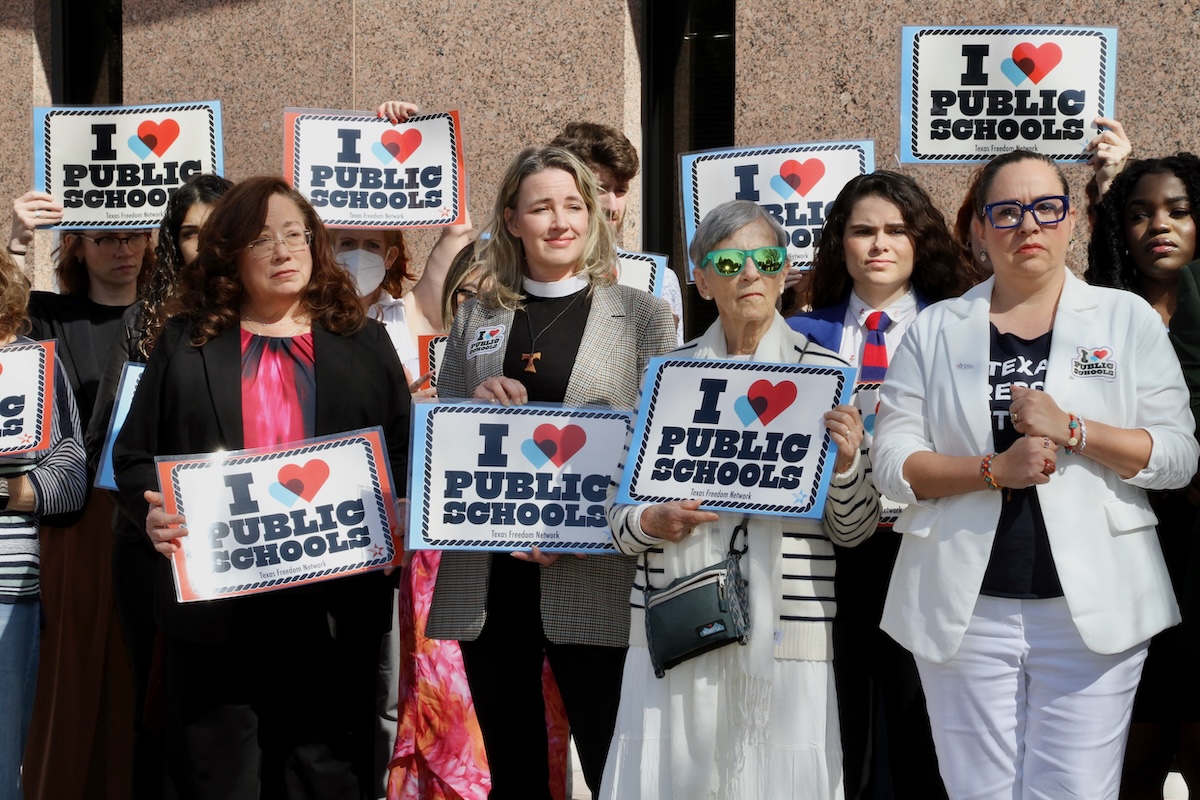
Over the summer, lawmakers drastically reshaped public education by passing a slew of bills impacting Texas schools—leaving teachers to navigate new rules and policies with little help or guidance.
“ I’ve started this year more stressed and more unsure than I ever have in my 10 years of teaching,” April Jones, who teaches Algebra 1 at Northeast ISD in San Antonio, told COURIER Texas. “I have not seen—from any of these bills—some kind of positive impact where educators are thinking, ‘This is going to make my classroom better or safer.’”
The new school year started as Senate Bill 12 took effect on Sept. 1. The bill bans diversity, equity, and inclusion (DEI) measures in K-12 public schools and creates a “Parental Bill of Rights,” a broad directive backed by Republican Gov. Greg Abbott that makes it easier for conservatives to challenge school curriculum, library materials, and move students to other schools.
SB 12 prevents schools from developing or using policies that reference race, ethnicity, gender identity, or sexual orientation, bans them from using DEI as a factor in hiring decisions, creates an avenue for parents to file complaints about violations, and requires districts to create policies for disciplining employees who engage in DEI-related tasks.
“There’s a real concern about students’ mental health,” said Andrew Kirk, a ninth grade World Geography teacher in Dallas ISD. “We have teachers and students who are nonbinary or transitioning, and we’ve only had one meeting where we directly addressed any of these laws, but there was pushback because of concerns over mental health and bullying and what this will mean for those students.”
|
|
|
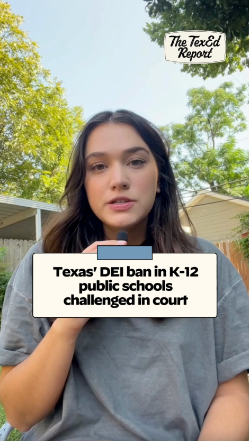
Although SB 12 is currently in effect, the American Civil Liberties Union of Texas, the Transgender Law Center, and a group of student rights organizations are suing to block its enforcement.
The civil rights groups claim the new law is unconstitutional.
“Senate Bill 12 is a blatant attempt to erase students’ identities and silence the stories that make Texas strong,” said Brian Klosterboer, a senior staff attorney at the ACLU of Texas. “Every student—no matter their race, gender, or background—deserves to feel seen, safe, and supported in school.”
The plaintiffs also asked for a preliminary injunction to block enforcement of the law while the case makes its way through court.
|
🎥 Learn more about the lawsuit 🎥
|
|
|
Should Texas public schools have a designated prayer and religious reading time?
|
Senate Bill 11 took effect on Sept. 1 and allows schools to create a designated time for prayer and reading religious texts in public schools.
The bill requires that school boards for every Texas ISD vote on whether to adopt a policy implementing the prayer period by February. Student participation is voluntary and requires parental consent, and the period can’t replace normal instructional time.
Despite the bill prohibiting the promotion of one religion over the other, Attorney General Ken Paxton recently released a statement urging students to use the time to recite the Lord’s Prayer.
I want to hear from you. Do you think public schools should adopt this policy? Let me know below:
|
|
|
Did you know that over 500 books have been banned in Texas public schools? That’s why I’m excited to share the Texas Banned Book Club with you all.
At the start of every month, we’ll choose a book that’s been banned in Texas public schools to read together. We’ll discuss …
📖 Where, when, and why it was banned
📖 The educational value the book brings to students
📖 Guided prompts and questions about the material
📖 And more!
Which book would you like to read first? Click on a book to vote below, and we’ll get started on Oct. 1:
|
|
|
In the meantime, check out this rundown of just a handful of banned books that Sierra Rozen, our HTX Newsletter Editor and resident bookworm, put together!
|
|
|
Would you recommend this newsletter to your friends and family?
|
|
|
Do you or your company want to support The TexEd Report’s mission and reach your audience in Texas?
Contact advertise@couriernewsroom.com for more information.
|
|
|
Thanks for reading. This newsletter was written by Katie Serrano. The TexEd Report is happily free to read for everyone. Your financial support means a lot to us. Donate here.
Was this email forwarded to you? Sign up now to get upcoming newsletters in your inbox.
Send your feedback and news tips to katieserrano@couriernewsroom.com.
|
|
|
Our mailing address is:
COURIER DFW / COURIER Newsroom
611 Pennsylvania Ave. SE
Washington, DC 20003-4303
|
|
|
|