Hey y’all!
We’re celebrating Banned Books Week—a week that highlights efforts to fight censorship in our school libraries and celebrates literary works. Below you’ll find a breakdown on all things banned books in Texas.
We’ll also take a look at more schools adopting Bluebonnet Learning—the controversial religion-infused curriculum that was approved by the Texas State Board of Education—and dive into President Donald Trump’s new initiative to get college campuses to follow his conservative agenda.
Finally, we’ll explore how a new Texas law had unintended consequences on students at the start of this school year.
If you missed last week’s edition, you can check it out here.
|
|
|
Texas ranks second in the US for book bans
|
|
|
We’re pausing our regularly scheduled Texas Banned Book Club (but don’t worry, we’ll hop back into our discussion on “The Kite Runner” next week) because it’s Banned Books Week, which means PEN America—a nonprofit that fights censorship—has updated its index of banned books in public schools throughout the country.
The organization warns that the number of books challenged or banned in public schools throughout the country continues to rise.
More than 6,800 books were banned in the 2024-25 school year in 87 public school districts across 23 states. Florida has the most, with 2,304 instances of bans, followed by Texas, with 1,781 bans, and Tennessee, with 1,622.
Read more to find out:
📘How Banned Books Week started
📘What constitutes a banned book
📘What types of books are targeted
📘What the most banned books are in the country
📘What the most banned books are in Texas
|
|
|
Fort Worth ISD adopts Bible-infused curriculum
|
|
|
Fort Worth Independent School District recently adopted Bluebonnet Learning for its reading language arts curriculum for students in kindergarten through fifth grade.
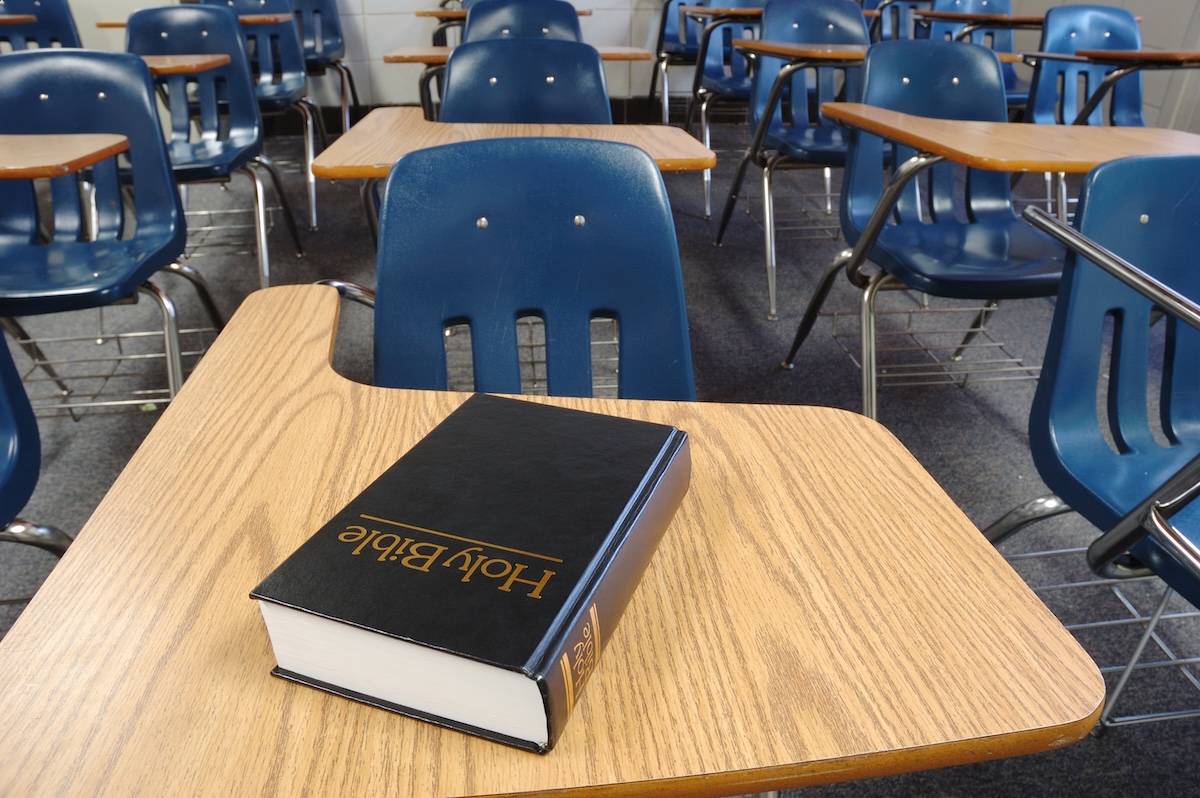
The learning materials were created by the Texas Education Agency (TEA) and approved by the Texas State Board of Education last November. The Bluebonnet curriculum covers kindergarten through eighth grade math, and a kindergarten through fifth grade reading language arts program that uses Christian stories from the Bible in reading materials.
School districts that adopt Bluebonnet Learning receive $60 per student from the state, which means Fort Worth ISD will get a windfall for using the religion-infused reading curriculum.
The financial incentive could help the district, which has about 70,000 students and a $43 million budget deficit.
Fort Worth ISD is also at risk of a state takeover by the TEA, and residents at a Sept. 23 school board meeting questioned if the district was adopting the new materials to avoid that looming threat, but Superintendent Karen Molinar rejected the implication.
|
|
|
Trump wants UT to commit to his political agenda to get more federal funds
|
|
|
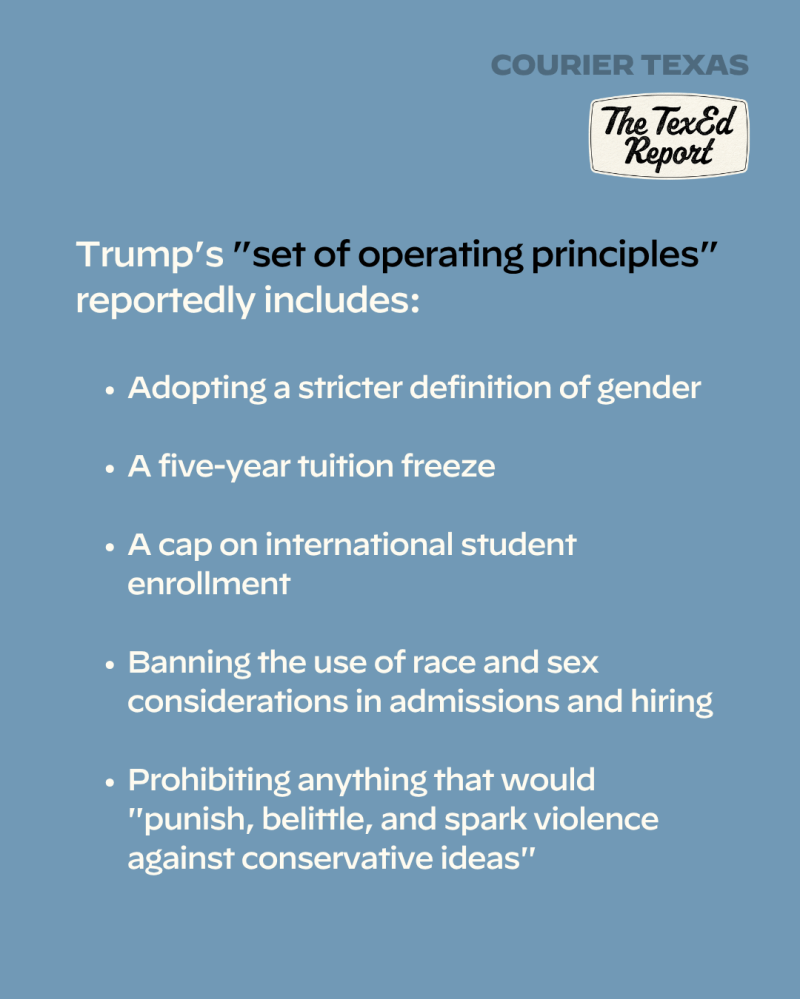
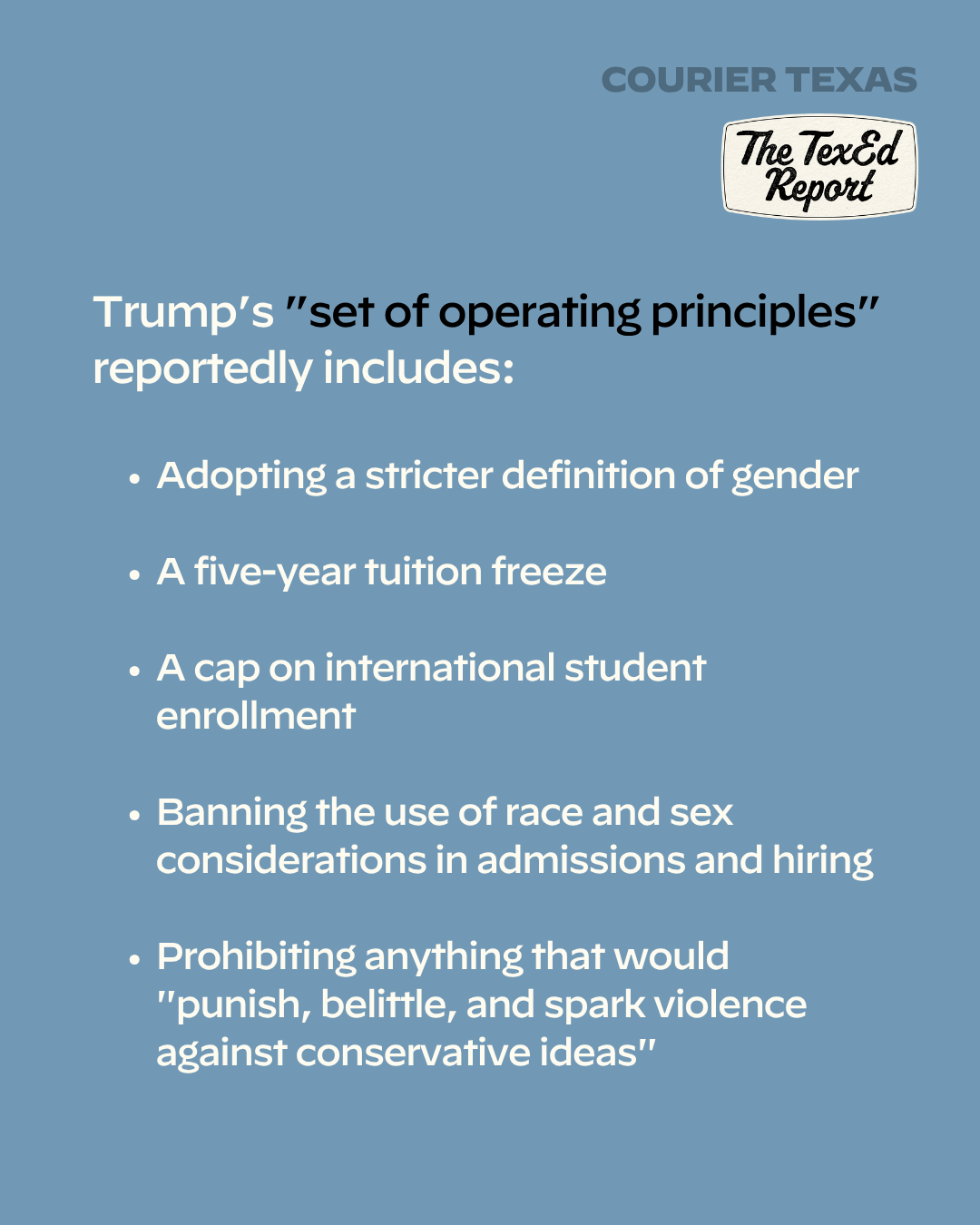
Last week, President Donald Trump sent letters to nine public and private universities—including the University of Texas at Austin—urging their leaders to sign a “compact” that includes a “set of operating principles” and pledges support for his political agenda to ensure preferential access to federal research funds.
Despite the University of Texas losing $47 million in federal grants earlier this year amid research funding cuts by the Trump administration, the university’s board of regents said they were “honored” to be included in the proposed compact.
|
|
|
|
“The University of Texas system is honored that our flagship—the University of Texas at Austin—has been named as one of only nine institutions in the US selected by the Trump administration for potential funding advantage,” Kevin Eltife, chair of the UT system board of regents, said in a statement. “We enthusiastically look forward to engaging with university officials and reviewing the compact immediately.”
The University of Arizona, Brown University, Dartmouth College, Massachusetts Institute of Technology, University of Pennsylvania, University of Southern California, University of Virginia, and Vanderbilt University all received the same letter.
The letter states that Trump is aiming to have signed agreements no later than Nov. 21.
|
|
|
New Texas law resulted in unintended consequences
|
Senate Bill 12, which went into effect on Sept. 1 and bans diversity, equity, and inclusion initiatives and targets LGBTQ+ students in public schools, also gives parents more power to file complaints against teachers.
The new law additionally impacts how schools are able to administer health care to students, requiring parental consent before care can be given. The new rules, which were overly vague, had unintended consequences at the start of the school year: School nurses and staff in some districts across the state overcomplied and wouldn’t give bandages, temperature checks, or icepacks to students without parental consent, for fear of being accused of violating the new rules.
In response, lawmakers called on the Texas Education Agency to “provide clear and consistent guidance” on what kind of health care can be provided without consent, so schools can avoid any further confusion. You can learn more about the TEA’s new guidance here.
This isn’t the first time SB 12 has caused stress and confusion since the start of the school year. Do you think SB 12 is having a positive or negative effect on our classrooms?
|
|
|
🧪North Texas school gets a STEM education boost: Crowley ISD, located south of Fort Worth, recently received a $3,000 stipend from the Society for Science, which the district will use to support students in STEM research and competitions. (CBS News)
🎒Austin ISD announces school closures: Austin ISD has proposed closing 13 campuses in the 2026-27 school year after seven schools received three consecutive F ratings from the Texas Education Agency. (Community Impact)
🏆5 North Texas schools recognized for “outstanding academic performance”: St. Rita Catholic School in Dallas, Kent Elementary and Rosemeade Elementary Schools in Carrollton-Farmers Branch ISD, Harmony Science Academy in Euless, and Dodd Elementary in Wylie were all recently named Lone Star Ribbon Schools by the Texas Education Agency. (Dallas Observer)
|
|
|
Would you recommend this newsletter to your friends and family?
|
|
|
Do you or your company want to support The TexEd Report’s mission and reach your audience in Texas?
Contact advertise@couriernewsroom.com for more information.
|
|
|
Thanks for reading. This newsletter was written by Katie Serrano. The TexEd Report is happily free to read for everyone. Your financial support means a lot to us. Donate here.
Was this email forwarded to you? Sign up now to get upcoming newsletters in your inbox.
Send your feedback and news tips to katieserrano@couriernewsroom.com.
|
|
|
Our mailing address is:
COURIER DFW / COURIER Newsroom
611 Pennsylvania Ave. SE
Washington, DC 20003-4303
|
|
|
|