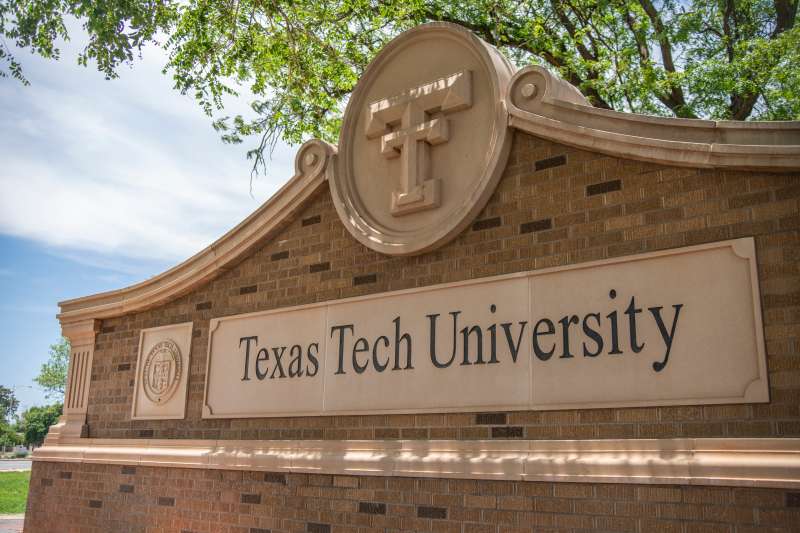
The American Association of University Professors (AAUP) and their Texas affiliate are suing Texas Tech University System Chancellor Brandon Creighton and the system’s board of regents over sweeping policy changes that censor and restrict what professors can teach about race, gender identity, and sexual orientation.
The lawsuit accuses Creighton of “imposing a strait jacket” on intellectual thought leaders, and alleges the “vague” policy changes violate the First Amendment and the Fourteenth Amendment.
In December 2025, he told faculty they could face discipline if they did not comply with new limits on course content involving race, sex, gender identity, and sexual orientation. His order required faculty to submit course material related to those topics for regents to review and approve. In April 2026, he ordered all academic programs “centered on” sexual orientation and gender identity at Texas Tech University’s five campuses, which includes Texas Tech University in Lubbock, two health sciences centers, Angelo State University and Midwestern State University, to shut down.
The second order gave faculty and staff until June 15 to identify the targeted programs, freeze admissions, and halt students from declaring majors in the cancelled programs. It also forced professors to only recognize “two human sexes” and prohibited teaching gender identity as a spectrum or more than two genders as fact.
If a course was flagged, the instructor had to stop teaching the material until the board of regents ruled on it, leading to Plato getting banned in philosophy courses, prohibiting first year law students from receiving information about race related to Dred Scott v. Sandford, and barring students at Texas Tech’s health science center campuses from receiving medical education on treating racial and sexual minorities.
According to the AAAUP, an AI tool was also used to scan syllabi and reading lists for flagged content before any human review took place.
“This isn’t academic oversight; it’s a chilling, top-down attack on the freedom to teach designed to intimidate faculty into silence,” Todd Wolfson, president of the AAUP, said in a statement. “By imposing vague, arbitrary, and AI-driven censorship, the administration is replacing academic judgment with bureaucratic surveillance, undermining constitutionally protected speech and reducing higher education to a compliance exercise. That’s not education—it’s ideological control.”
Dr. Teresa Klein, president of the Texas AAUP-AFT, said that for over a year higher education institutions across Texas have gone “above and beyond” what Texas and federal law requires amid the curriculum crackdowns.
The new policies sparked protest in the form of a mock funeral at the university, hosted by student advocacy groups that claimed “after prolonged death by a thousand cuts, the university and its spirit of academic freedom have passed away.”
Creighton took over the system in November after serving as a Republican state senator for over a decade. During his tenure as a lawmaker, he authored several bills attacking higher education, including Senate Bill 17, which passed in 2023 and bans all diversity, equity, and inclusion programs on public university and college campuses.
The changes at Texas Tech University came after decision-making power at Texas universities shifted from faculty to political boards appointed by Republican Gov. Greg Abbott with the passing of Senate Bill 37 last year.
Texas Tech isn’t the only university that’s been impacted by the new law. The University of Texas at Arlington, the University of North Texas, the University of Texas, Texas A&M University, and Texas State University have all faced policy changes that censor how and what professors teach.
The changes have created what educators are calling a “brain drain” in Texas, with one journalism professor at the University of North Texas leaving her post amid the ongoing censorship, which includes AI crawling her syllabi to identify targeted keywords.
“The legal battle for the soul of higher education in Texas starts today,” Dr. Leonard Bright, an Ethics and Public Policy professor at Texas A&M whose course was canceled because of similar censorship policies, said in a social media post following news of the lawsuit.
“We didn’t choose this fight, but it is one we will wage—for higher education, for our students, for our society, and for the truth,” his post stated. “Academic freedom belongs to everyone. And it is worth defending.”
The organizations are asking a federal court to block the enforcement of Creighton’s two orders and rule them unconstitutional.