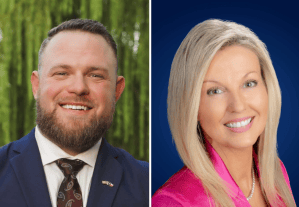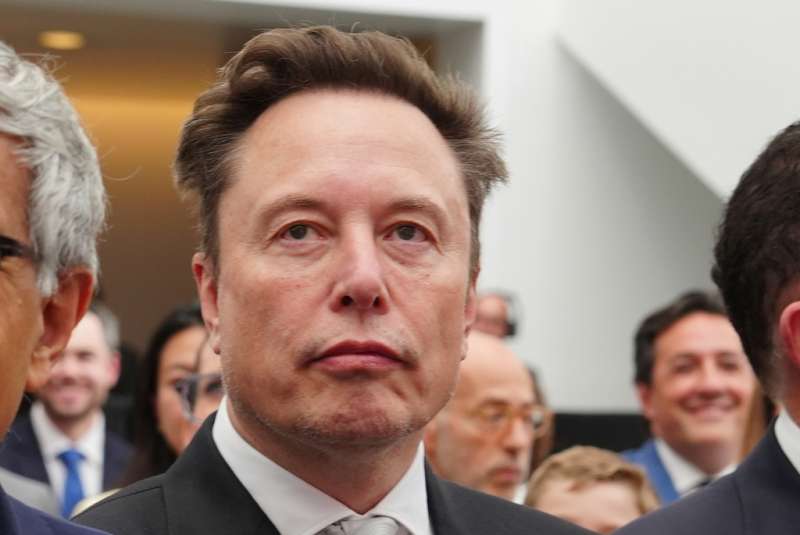
Ken Paxton’s Senate campaign spent the summer short on cash, falling behind James Talarico on the airwaves while its main super PAC sat nearly empty. Then the world’s richest man stepped in.
Elon Musk has poured nearly $190 million into Texas’ US Senate race, according to new federal filings first reported by The Texas Tribune. That makes him the main force behind the more than $200 million Republican groups have spent since September to keep the seat. It’s the latest example of a pattern that has defined Paxton’s political career: when he’s in trouble, wealthy donors have been there to bail him out.
Elon Musk’s Money
Musk gave $75 million to the Senate Leadership Fund, the Senate GOP’s main super PAC, on Sept. 9, the first day of the Republican midterm convention in Dallas. The next day, the group moved $75 million into a new entity called Texas PAC, which was soon on the air with ads boosting Paxton and attacking Talarico. Two weeks later, Musk gave another $83 million, and the next day it went to Texas PAC too, according to Federal Election Commission filings, first reported by The Texas Tribune.
The Senate Leadership Fund, using Texas PAC to book airtime, has since spent more than $159 million on TV, radio, and digital ads, double what Talarico’s campaign has spent, according to the Tribune, citing media tracking firm AdImpact.
The group, which backed John Cornyn in the primary, warned at the time that keeping the seat with Paxton (whose reputation has been sullied by a long list of offenses) could cost $150 million to $200 million. Its executive director now says the group will spend nearly $200 million in the race.
Musk’s operation had already helped revive Lone Star Liberty PAC, the main outside group backing Paxton, which had just $35,000 in the bank at the end of June. Musk’s America PAC has also spent $18.8 million on the race, more than 80% of it on messaging against Talarico.
The money arrived as Talarico kept breaking records. He raised $64 million from July through September, the most of any Senate candidate in a single quarter, and has led in averages of nonpartisan polls for months.
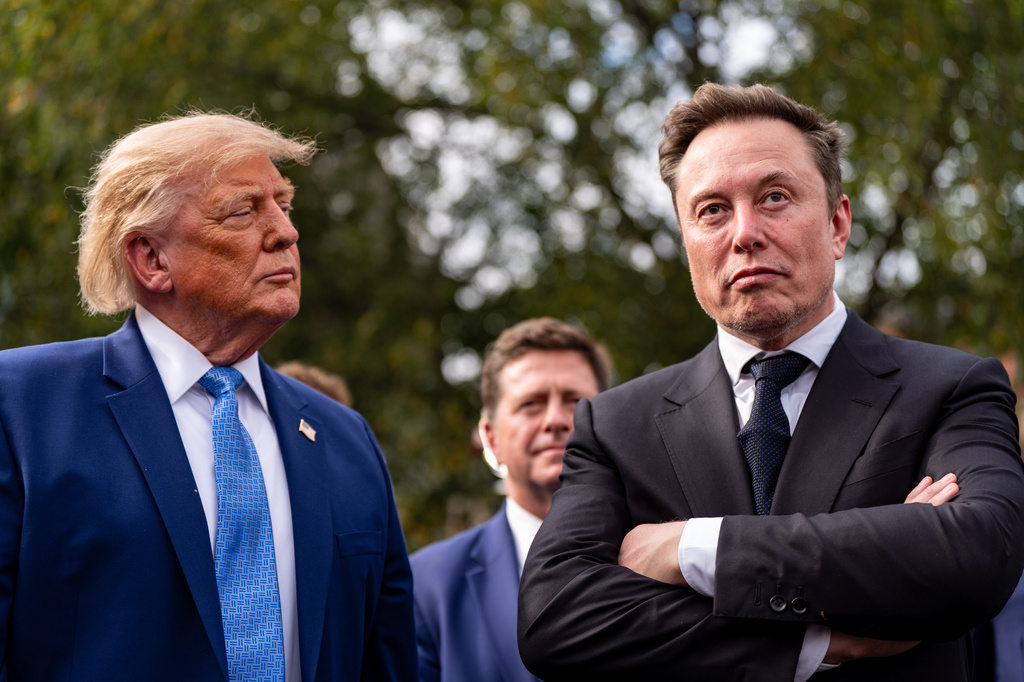
Elon Musk: ‘I think I’ve done enough’
Musk spent more than $290 million in the 2024 election cycle, mostly to help elect President Donald Trump. In May 2025, he told an audience at the Qatar Economic Forum he planned to pull back.
“In terms of political spending, I’m going to do a lot less in the future,” CNN reported Musk as saying. “I think I’ve done enough.”
Instead, Musk has given more than $276 million to Republican groups since July alone, making him the biggest known donor of the midterms. That brings his federal political giving for the 2025-26 cycle to about $366 million, according to CNBC, well past what he spent in 2024. Texas has been the biggest focus of his operation, according to the Tribune.
Musk has significant business interests in Texas, where Tesla, SpaceX, X, and the Boring Company are now based. Paxton, who has made suing tech companies a centerpiece of his campaign, has largely steered clear of scrutinizing Musk’s businesses. When attorneys general from across the country wrote to Musk’s company this year demanding it address child sexual abuse material created by its AI chatbot, Grok, Paxton didn’t sign the letter.
Paxton hasn’t commented publicly on Musk’s support.
How are Musk’s donations legal?
Musk can give unlimited amounts because of two 2010 court rulings. In Citizens United v. FEC, the US Supreme Court ruled the government can’t limit independent political spending by corporations and unions. Months later, a federal appeals court relied on that decision in SpeechNow.org v. FEC to allow unlimited contributions to groups that spend independently of candidates. Those groups became known as super PACs.
Super PACs can’t coordinate directly with campaigns, but they can raise and spend without limit.
Talarico has made that system a campaign issue. He says he hasn’t taken corporate PAC money since his first race in 2017, and his platform calls for reversing the effects of Citizens United, including banning super PACs. “I don’t care if they’re Democratic super PACs or Republican super PACs, I think we got to ban them all because there’s way too much influence from big money in our politics,” he said at a CNN town hall this week.
Why Elon Musk is choosin’ Texas
The stakes extend well beyond the state. Republicans hold the Senate 53-47, so Democrats need a net gain of four seats to win control. Flipping Texas would make that math far easier.
It would also break a streak, and deal Republicans a psychological blow. Republicans haven’t lost a statewide race in Texas in more than 30 years, and no Democrat has won a Senate seat here since 1988.
Texas is Republicans’ cornerstone in the Electoral College, the counterweight to Democrats’ California, and a Talarico win could put the state in play in a way it hasn’t been in decades, The Boston Globe reported. University of Texas at San Antonio political scientist Jon Taylor called the prospect “a nightmare scenario for Republicans,” according to Texas Public Radio.
Texas also matters for what the GOP exports. For more than a decade, the state has served as a testing ground for conservative policies that get copied around the country. The enforcement mechanism behind Texas’ 2021 abortion law, Senate Bill 8, which lets private citizens sue anyone who helps provide an abortion, quickly became a template for other states. After Texas made illegal entry a state crime in 2023, Oklahoma and Iowa passed similar immigration laws.
Early voting begins Monday, Oct. 19. Election Day is Nov. 3.