
Fort Worth residents are unified in their fight against data centers. From petitions, to city council meetings, to public comment, they’re are voicing concerns over the environmental and economic impact the developments will have on their community.
While data centers are known for consuming a vast amount of water, creating pollution, driving up electric prices, and emitting loud noises, a silent threat that may be going undetected has caught the attention of one North Texan.
Esme Zuñiga, a graduate student at the University of Texas at Arlington and a community organizer at Downwinders at Risk, is studying the impact of infrasound emitted from data centers on communities.
“Everybody is talking about the pollution, noise pollution, about water, the air, and those are all very valid concerns,” Zuñiga told Courier Texas. “But what nobody’s talking about is what infrasound exposure does to the human body and to mental health.”
Infrasound, or low frequency sound, are sound waves with a frequency below the lower limit of human hearing, and data centers create constant infrasound due to the vibrating frequencies of the cooling systems and fans used to keep them running all day and night.
Audible sounds from a data center can be heard for up to three miles, but infrasound can travel for thousands of miles, go through buildings and water, and bypass traditional noise mitigation methods. And according to a study by the American Journal of Life Sciences, it can negatively impact the central nervous system.
“ I’m studying the correlation between infrasound and mental health,” Zuñiga said. “It increases anxiety, depression, headaches, nosebleeds, along with structural damage. Studies are showing that the infrasound equivalent to what is released by data centers has caused cardiovascular changes in mice and has caused cellular degradation in plants. The pressure emitted from the infrasound, we’ll feel it.”
Data centers emit humming from cooling systems, rumbling from generators, and whirring from fans. But instead of audibly hearing these extremely low frequencies, people physically feel them as pressure fluctuations, like feeling vibrations from a bass at a concert, according to the Acoustical Society of America.
Zuñiga said the sound waves can cause dizziness, nausea, vertigo, and insomnia, and can increase anxiety. Other studies show it can cause increased brain fog and irritability, headache, and memory issues.
”There’s no regulatory ways to measure infrasound. That’s something that needs to be looked into, ” she said. “We need to have a moratorium, see what actual research is out there, and assemble a panel of experts instead of assigning all of this to somebody in the city manager’s office.”
“It just all really worries me,” she added. “Infrasound can travel a great distance, and you don’t hear it, but your body feels it.”
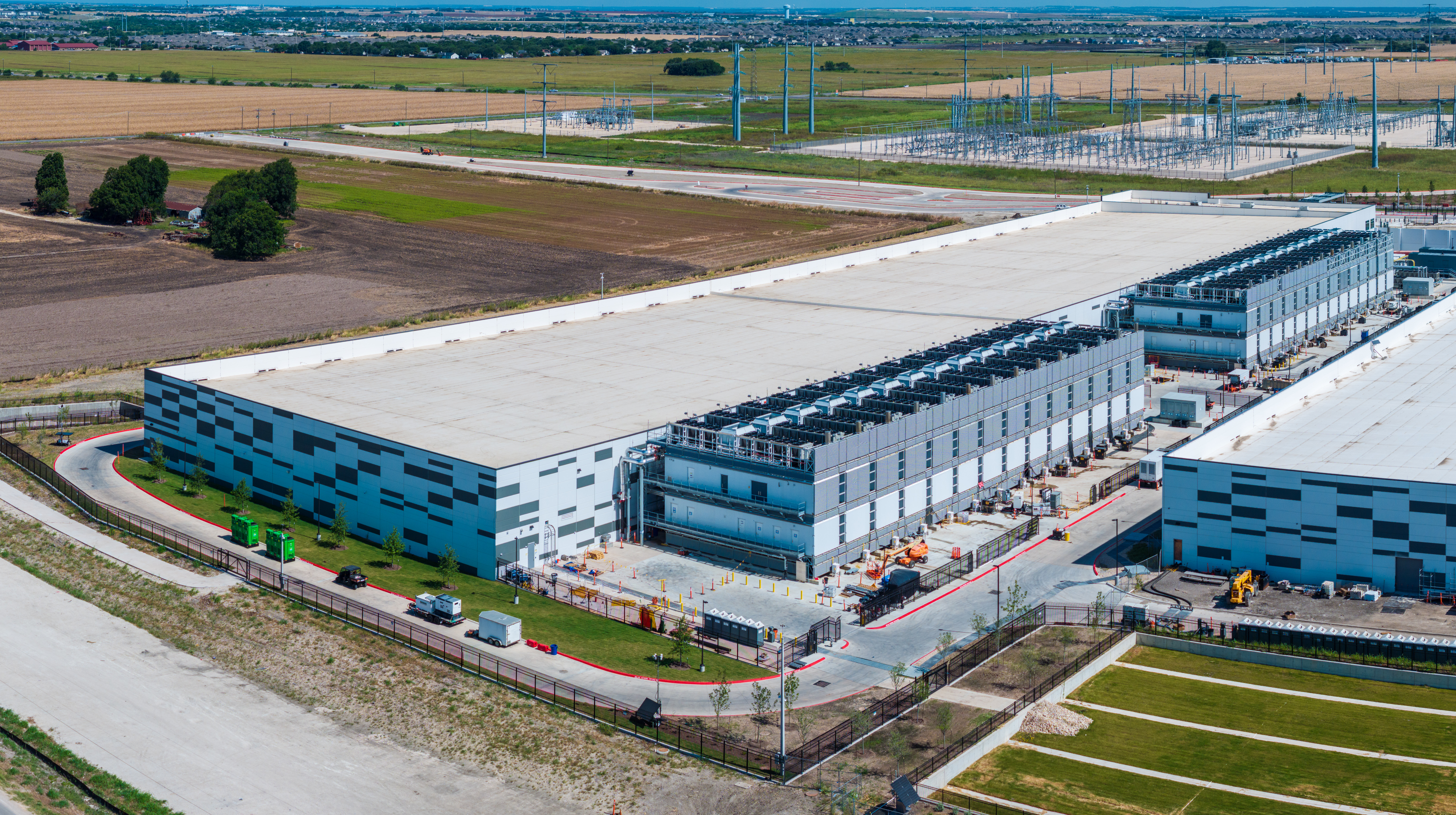
On Thursday, five Fort Worth City Council members expressed their support in a press release for a temporary moratorium on data center developments to give the council time to discuss and refine regulations.
The city has four existing data centers, with plans to build at least four more. One proposed data center would take up to 5 million gallons of water a day from Cedar Creek Lake in Henderson County—the reservoir that provides most of Fort Worth’s drinking water. Another would be built within 300 feet of a historical garden.
The data centers currently operating in the region were built 20 years ago, and are different from data centers today, according to Zuñiga, who said the city is trying to convince residents that because there are already developments in the region that “everything is fine.”
Before the artificial intelligence boom, data centers were filled with CPUs, or a central processing unit, aka the brain of the computer. Now, AI tools such as OpenAI or Claude use GPUs, or a graphics processing unit, which is a specialized electronic circuit designed to rapidly process and render images, videos, and animations.
But GPUs use exponentially more energy than CPUs, and produce significantly more heat—the equivalent of up to 40 hairdryers per server, according to one source.
“I think what’s happening in Fort Worth is a microcosm of what’s happening around the nation—that there are these mass amounts of land that aren’t being used for agriculture anymore that are being sold to make data centers, and the big problem that communities and myself and organizations are having is that the city is trying to spin this into a good thing but we know a data center is a data center is a data center, they’re all going to cause damage,” Zuñiga said.
The Fort Worth City Council is expected to continue their deliberation on several newly proposed data center regulations on Aug. 11.