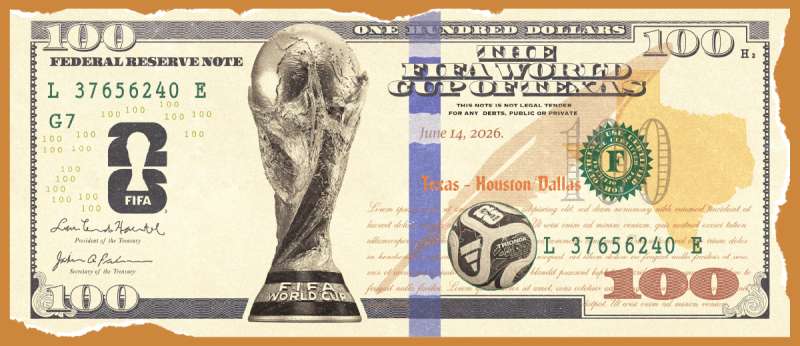
When FIFA sold Texas on the World Cup, it came wrapped in the language of transformation. FIFA president Gianni Infantino has famously called the economic impact of the event equal to “three Super Bowls a day.” Dallas boosters projected up to $2.1 billion flowing into the region. Houston organizers dangled $1.5 billion more. Together, they promised, the tournament would inject $3.5 billion into the state’s economy—a once-in-a-generation windfall for a soccer-skeptical state now hosting some of the sport’s biggest games.
But as the opening whistle draws near, a harder question is cutting through the hype: How much of that money will actually land in Texas, and how much will taxpayers be left paying for the privilege of hosting?
The Dallas-Fort Worth area will host nine matches, including four knockout games, culminating in a semifinal on July 14 at AT&T Stadium. Houston will host seven matches at NRG Stadium. FIFA estimates more than half of all attendees will come from outside the US.
The early data is mixed—and depends heavily on which city, and which neighborhood, you’re looking at. According to data provided to Courier Texas by Visit Dallas—the city’s marketing organization—hotel revenue in Dallas city limits is pacing up 24% for June and 58% for July compared to last year, while short-term rentals are up 40% in June and 28% in July. International flight bookings into DFW and Love Field are running 78% ahead of last year for the same period, with “significant” pace increases in bookings from every country whose team is playing in Dallas—Argentina, England, Croatia, the Netherlands, Austria, Jordan, Japan, the Czech Republic, and Sweden. “Conveniently for those travelers, we offer direct flights to a majority of those countries,” Zane Harrington, director of communications for Visit Dallas, told Courier Texas.
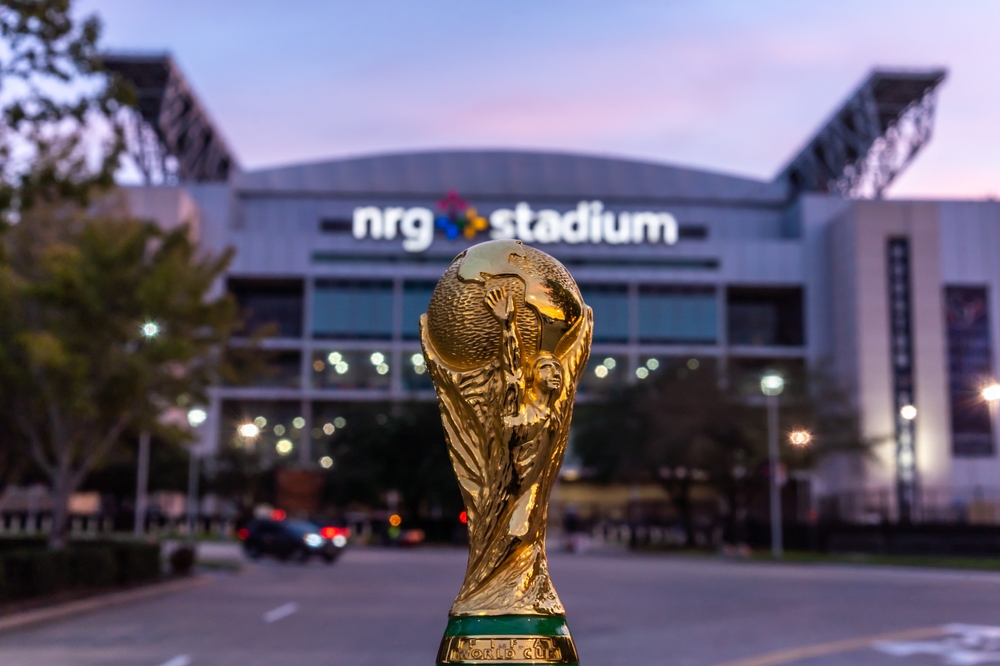
Houston’s picture is more uneven. Downtown hotel bookings are pacing up 26% in June and 54% in July year-over-year, according to Houston First, the city’s convention and visitors bureau. But the NRG Stadium submarket—where matches will actually be played—is down 34% in June and 5% in July. Short-term rentals across the Houston market are up 16% over the same period last year, and air bookings through Bush Intercontinental and Hobby airports are up 17.3% for June. Houston First cautions that year-over-year percentage changes are expected to narrow as match dates approach.
About 70% of Dallas and Houston hotels say bookings are coming in slower than expected, according to survey data collected by the American Hotel & Lodging Association (AHLA), which did not include what areas the hoteliers in the survey were from or the basis on which those expectations were measured.
Part of the perceived underperformance captured in the AHLA survey lies with FIFA itself. In March, FIFA exercised an opt-out clause in its contract and canceled thousands of hotel rooms in many host cities, including Dallas, flooding the market with inventory just as demand was supposed to build. The AHLA called it an “artificial early demand signal.”
Whether full stadiums translate into the economic boost cities anticipated may depend on who ultimately makes the trip. High ticket prices, visa delays, and heightened reluctance among international travelers to visit the US amid geopolitical tensions—the so-called “Trump Slump”—could all dampen foreign attendance. Hotel rates in some host cities have fallen by a third from initial projections, according to the World Economic Forum in late April.
Tourism aside, there’s a structural problem baked into how Texas cities agreed to host: They bear virtually all the costs while FIFA captures most of the revenue.
Houston and Dallas are among 11 US cities that agreed to shoulder hundreds of millions in costs for the tournament, subsidizing a World Cup expected to generate $11 billion in profits for FIFA. Host cities pay for security at the matches, retrofitting their stadiums for soccer, and operating fan festivals. In return, they receive no slice of game-day revenues from ticket sales, concessions, merchandise, or parking.
“Everybody signed an agreement that was very, very one-sided,” Alan Rothenberg, who is on the Los Angeles host committee and was president of US Soccer the last time the country hosted the tournament in 1994, told the Houston Chronicle. At least one city, Chicago, withdrew during the bidding after reviewing the terms. “At this point, I think a lot of people are looking at Chicago and thinking they were the smart ones,” Rothenberg said. Both cities declined to make its FIFA contract public.
Federal and state money is helping offset some costs. Republican Gov. Greg Abbott announced $116 million in state public safety grants for Texas host cities, part of a broader $625 million federal program established for all US host cities. Infrastructure work has been extensive: Houston’s preparations include 150 miles of resurfaced roads, nearly 30 miles of improved sidewalks, cooling stations designed to lower sidewalk temperatures, and 120 blocks of downtown roadway repairs.

Even when tourists arrive and spend freely, economists warn gross spending figures are misleading—one professor who has studied the economics of big sporting events for decades even called the projections “insanity.”
Mega events typically underperform the gains forecasted by organizers. Much of the revenue often ends up in the coffers of the business putting on the event, while tourist dollars largely serve to replace sales that would have happened anyway in major cities during the busy summertime season. Add leakage—the share of spending that flows to FIFA and other non-local entities—and the net benefit to Texas narrows considerably.
Texas has been here before. When the state dedicated $22 million to host the 2017 Super Bowl in Houston, officials expected a return on their investment. A post-event state analysis said it was “impossible” to tell if taxpayers broke even—and suggested Texas may have come up $14 million short.
But officials aren’t without reasons for optimism. North Texas leaders estimate 3.8 million people will visit the region for games and related events, and Dallas City Council member Chad West told Spectrum News the city can “still anticipate a big bump in sales tax revenue for the summer,” even if it falls short of early projections. Last-minute booking surges are common for major events, and the AHLA noted meaningful demand could still materialize in the weeks a
Those infrastructure investments—resurfaced roads, improved transit, expanded pedestrian corridors—will outlast the tournament. Airbnb projects 31,000 guests will use short-term rentals in Houston alone during the World Cup, generating an estimated $372 million in visitor spending.
But for Texas taxpayers, the gap between the promise and the fine print is murky. FIFA is set to pocket billions. Texas is covering security, infrastructure, and fan festivals—under contracts it won’t let the public read. Whether the economic impact resembles a Super Bowl or a busy summer weekend in Houston may not be known until the final accounting. And if 2017 is any guide, that accounting may never come at all.