What if living longer and healthier in the Rio Grande Valley had less to do with willpower, but more to do with the neighborhoods we live in?
That’s the idea behind a sweeping Blue Zones initiative expanding across South Texas. Popularized by National Geographic Fellow Dan Buettner and later a Netflix documentary series, “Blue Zones” refers to places around the world, including Okinawa, Japan, and Loma Linda, California, where people routinely reach the age of 100.
For generations, high rates of Type 2 diabetes, heart disease, and systemic poverty forced the RGV into a reactive cycle that treated illness rather than preventing it. Rather than telling residents to diet harder or buy expensive gym memberships, the Blue Zones model focuses on changing the environments that shape everyday choices—from safer places to walk and more green spaces to better access to healthy foods.
The effort began earlier this year when organizers launched a readiness assessment to determine whether the Blue Zones model could work across the region. Initially, McAllen, Mission, Pharr, and Edinburg were chosen, but now it’s expanding to Weslaco, Harlingen, and Brownsville— that’s nearly one million South Texans. And the Valley could become the model for large scale implementation.
“If all seven cities are selected to go forward in this, this would be the largest Blue Zones program that’s ever been attempted,” Jaime Wesolowski, president and CEO of Methodist Healthcare Ministries, told the Rio Grande Guardian.
How it’s going to happen
Methodist Healthcare Ministries says the seven cities and surrounding communities could ultimately reach nearly one million people. Dan Buettner Jr., chief development officer for Blue Zones, has described the Valley as an unusually promising place to put the model to the test.
“America needs the RGV to be this next big demonstration,” Buettner told MyRGV.com.
Why? Because according to the National Library of Medicine the region has long struggled with chronic health challenges, including high rates of obesity and diabetes nearly 1 in 3 adults in the RGV live with diabetes, nearly three times the national average, while the region’s adult obesity rate sits at nearly 47%, significantly outpacing both Texas (36%) and the US overall (34%).
While the Valley faces significant chronic health headwinds, it also offers what Beuttner calls “low-hanging fruit”, which are immediate opportunities to transform local streets, food systems, and public policy that can serve as a national model for health equity.
Furthermore, Blue Zones leaders pointed to strengths already deeply embedded in Valley culture that could help the model work, including close-knit, multigenerational families, strong faith communities, and social connection.
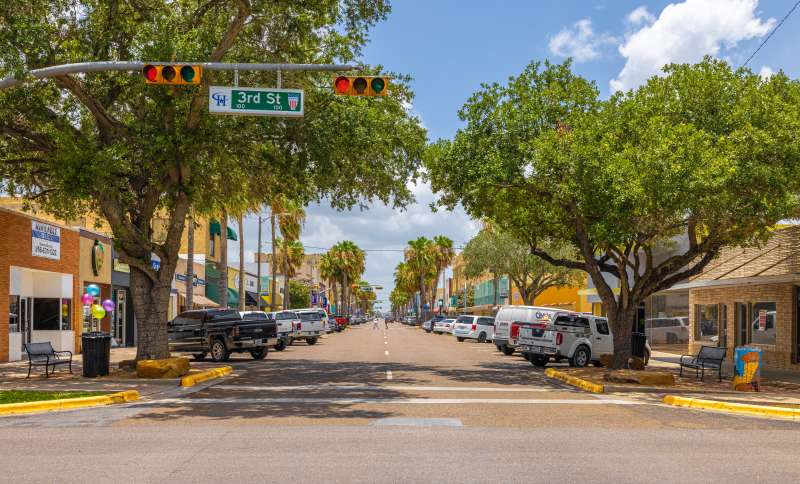
Still, community enthusiasm comes with practical questions. Residents took to social media to praise the initiative, but also pointed out potential challenges, like extreme summer heat limiting outdoor activity and street designs more focused on automobiles than making it safe for walkers. Residents also mentioned the very few sidewalks and city parks that lack regular maintenance. Others questioned whether a large institutional health initiative can translate into meaningful changes for the average South Texan.
That’s precisely what the next phase is designed to determine.
Methodist Healthcare Ministries, and regional nonprofits, will be assessing what will be needed to make a meaningful impact on the selected cities. Blue Zones experts will also evaluate each community’s readiness, identify local strengths and barriers, engage residents and leaders, and develop recommendations for what implementation could look like.
Residents of these communities have a chance to be a part of that conversation by commenting at one of the upcoming forums.
- Harlingen: Thursday, Aug. 27 | 4:30 p.m. | HCISD Performing Arts Center
- Weslaco: Tuesday, Sept. 1 | 9:30 a.m. | 700 Knapp Medical Blvd.
- Brownsville: Wednesday, Sept. 2 | 5:30 p.m. | Brownsville Events Center
Improved diet and exercise is what many Americans strive for, but can this project redesign everyday life so healthier choices become easier? South Texans may create the blueprint.