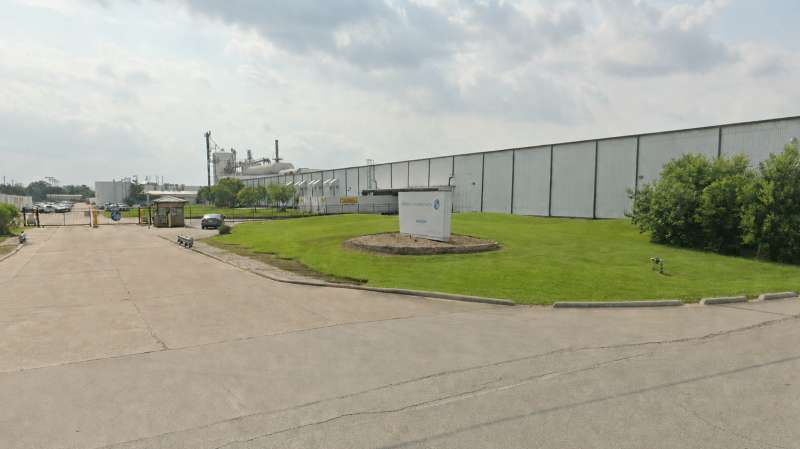
A proposed data center at the site of a former glass bottling plant has sparked swift opposition in Jacinto City, a community of fewer than 10,000 residents just east of Houston, where locals and officials say the project could reshape the small city and strain critical infrastructure.
City Manager Lon Squyres said the shift toward a data‑center development caught leaders off guard after months of negotiations with a different company planning a graphite‑processing facility.
“We were ready to announce it as a big win,” Squyres told Courier Texas “Then we were told that’s not going to happen. They want a data center instead.”
The proposed facility, tied to a company called Raeden, would occupy the long‑standing industrial site off Fidelity and Turkey Run Gully, a location Squyres said is attractive because of its “stranded power,” with heavy electrical infrastructure left behind from decades of glass manufacturing for companies like Budweiser.
Resident Alexis Moreno says the project threatens the character and livability of the city.
Moreno helped launch a petition that has gathered nearly800 signatures, urging officials to block the development or relocate it. Moreno, warned that data centers in other communities have brought noise, traffic, environmental concerns and declining property values.
“Let us preserve the residential charm, clean air, and water sources that define our city,” the petition reads. “We cannot let this happen to our Jacinto City.”
The petition cites examples from cities such as Granbury, Dowagiac, Vineland and Southaven, where residents have reported pollution, resource strain and quality‑of‑life impacts linked to large‑scale computing facilities.
Squyres says he shares many of those concerns particularly around noise, air quality, and power reliability. Squyres said the 2021 winter storm, which left his 95‑year‑old mother without heat for 36 hours, shaped his view of the risks.
“If we’re going to have that kind of generation sitting down the block from our city, you’ve got to be a good neighbor,” he said.
In response, the City Council this week adopted an emergency ordinance requiring any data‑center project to obtain a Specific Use Permit, triggering individualized review and strict performance standards. The ordinance defines data centers as a distinct land‑use category and imposes rules on electrical demand, water consumption, noise, generators, landscaping, screening, emergency access, stormwater impacts and ongoing monitoring.
The measure also lowers allowable noise limits from 75 decibels to 55 during the day and 50 at night, and requires third‑party air and sound monitoring, a model borrowed from Colorado Springs, where officials negotiated similar conditions with the same developer.
Squyres said the city is coordinating with state Rep. Ana Hernandez (D-Houston), state Sen. Carol Alvarado (D-Houston), US Rep. Sylvia Garcia (D-Houston), and Harris County Attorney Abbie Kamin as it evaluates legal options and potential protections.
“All the oars are paddling in the same direction,” he said. “But we don’t have anything clearly defined yet that can stop this.”
Residents at a Sept. 11 town hall pressed Raeden president Jason Green for answers during the three‑hour meeting, but Squyres said few left satisfied.
“I don’t think he made anybody happy,” he said. “But he gave his side of the story.”
For now, the city is racing to finalize its permit process before any formal application is filed, a step Squyres says is critical to avoiding costly litigation.
“We’re a small city,” Squyres said. “We do not have the funding to fight a large federal lawsuit.”
“We are not against progress,” Moreno wrote in the petition. “But it should not come at the cost of our community’s well‑being.”