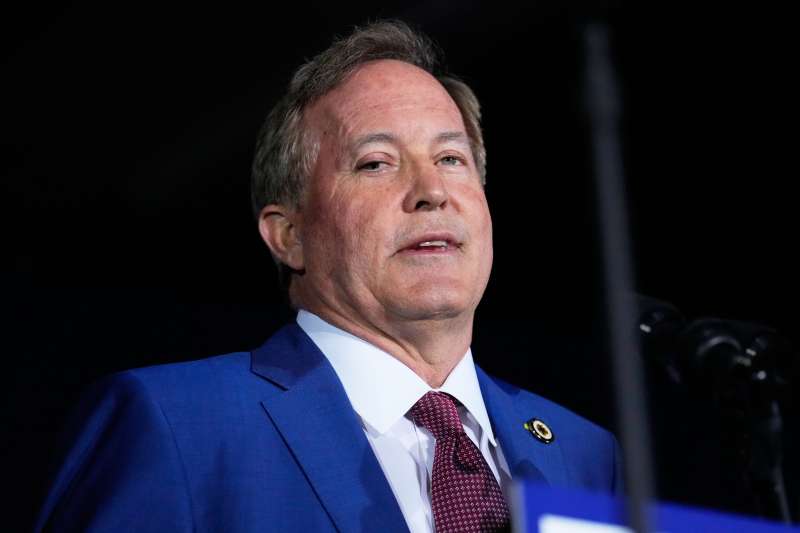
Texas Attorney General Ken Paxton built his political brand on election integrity. He prosecuted voter fraud cases, issued stern warnings, and declared that anyone who attempts to defraud Texas voters would be “penalized to the fullest extent of the law.” Voting while ineligible, under Texas law, is a second-degree felony punishable by up to 20 years in prison.
Now as he runs for the US Senate, Paxton is the one facing the allegations.
A joint investigation by ProPublica and the Texas Tribune this week found Paxton appears to have voted in up to six elections using an address where he no longer lived—the same violation his office has used to attempt to prosecute others. Paxton has not answered questions about the findings. His campaign called the reporting “baseless” but did not identify a single specific inaccuracy when asked twice.
In a statement to Courier Texas, the Paxton campaign’s deputy director of communications Madison Cercy said he is “a lawful, registered Texas voter in full compliance with the law,” but failed to provide a quote from the Texas Republican Senate hopeful.
Paxton’s own words make the silence more difficult to maintain.
“Vote-fraudsters should be subject to the max penalty,” Paxton said in 2023. “Election integrity is no place for a soft-on-crime approach.”
As recently as two weeks ago, he said: “I fought voter fraud in Texas for a long time, almost my entire time in office. It’s a real thing that we had to deal with.”
The record behind that rhetoric tells a more complicated story. Since 2005, the Texas attorney general’s office has successfully prosecuted 155 individuals for election fraud. But between January 2020 and September 2022, Paxton’s office opened at least 390 cases into potential election crimes and secured only five election convictions. In 2020, his office spent more than 22,000 staff hours on voter fraud cases, but resolved only 16 prosecutions—half as many as two years prior. None of those defendants served jail time. Of the cases Paxton’s office chose to pursue, 72% were against people of color.
The most directly relevant precedent: in 2018, Paxton’s voter fraud unit arrested nine people in Edinburg for voting at addresses where they did not live—the same allegation Paxton now faces himself, according to Texas Tribune. County prosecutors later dismissed all charges after failing to secure a conviction.
Three election lawyers told ProPublica and the Tribune that Paxton may have violated the same statutes his office enforced against others. Attorney Clark Birdsall, who once defended a client Paxton prosecuted for illegal voting, called it “especially egregious that someone such as Ken Paxton appears he’s not conforming to the law.”