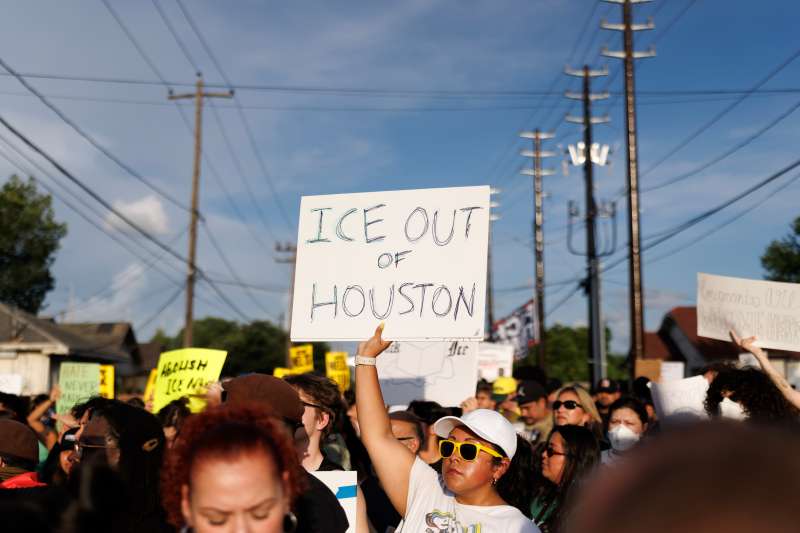
Lorenzo Salgado Araujo woke up before sunrise on July 7 to pick up his construction crew in Houston’s Magnolia Park. He never made it to his job site.
ICE agents in unmarked black vehicles stopped his van, and within moments, an agent fired through the passenger window, striking Salgado Araujo in the side. He was not the person ICE was looking for. He bled out on the pavement while his crew was zip-tied nearby.
Salgado Araujo had no criminal record, three American-born sons, and was working toward a legal work permit.
On Monday morning, ICE fatally shot another man. This time, in Biddeford, Maine.
This is not a coincidence of timing. It is the predictable result of a deliberate escalation.
ICE arrested 10,000 people across the United States over a five-day period at the end of June, part of a Trump administration push to double daily arrest numbers after the White House called for an increase to 2,000 ICE arrests per day. The number of people held in ICE detention nationwide has jumped by nearly 4,000 in recent days, with more than 63,000 people now in detention centers. Tom Homan, Trump’s border czar, has bragged openly about the surge, telling reporters ICE has “turned the heat up.”
The surge is being bankrolled at a historic scale. Republicans in Congress used the budget reconciliation process—which requires only a simple majority of votes—to approve $70 billion in new funding for immigration enforcement last month. That’s on top of the $170 billion the Department of Homeland Security (DHS) received last year as part of Trump’s “One Big Beautiful Bill.”
This money is funding the agents, the vehicles, the detention beds, and the operations that put ICE agents in unmarked cars on the streets of Houston’s east end before 7 a.m.
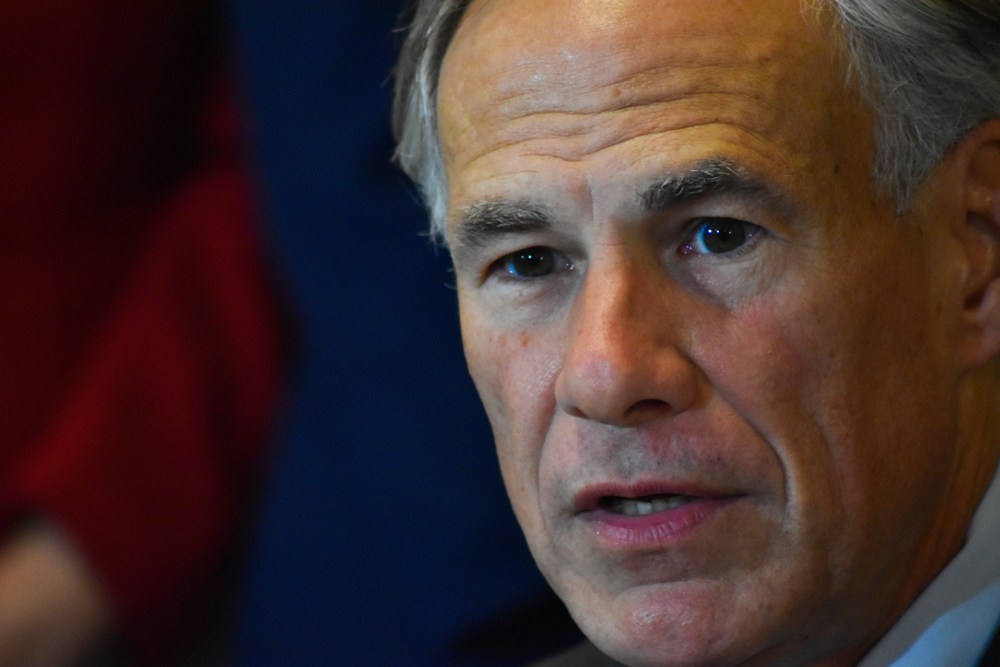
Inevitably, Texas has been at the center of the ICE storm. Gov. Greg Abbott (R) has made the state one of the most open to federal immigration enforcement in the country. Early in Trump’s second term, Abbott directed the Texas Department of Public Safety to support ICE operations statewide. He has signed 287(g) agreements that allow local and state law enforcement to carry out some functions of federal immigration agents, furthering Texas’ deep integration with ICE.
Abbott has long made immigration enforcement a centerpiece of his brand, launching Operation Lone Star in 2021 at a cost of billions of dollars, deploying state troopers and National Guard troops to the border, and busing migrants to northern cities in what he called a protest of federal immigration policy.
While many Texas Democrats have been outspoken in their criticism of ICE, Houston Mayor John Whitmire has been more reluctant and inconsistent in his opposition. Earlier this year, Houston had an ordinance on the books directing local officers not to prolong traffic stops or other encounters to give federal agents time to respond to suspected undocumented individuals. That ordinance was far from aggressive, but it was something.
Then Abbott threatened to pull $110 million in public safety grants from Houston, Dallas, and Austin unless they fully cooperated with ICE. Whitmire folded. The city council subsequently gutted the ordinance. Whitmire, who has positioned himself as a tough-on-crime Democrat, has struggled to articulate a coherent position on ICE cooperation—at times expressing discomfort with federal tactics, at others deferring to Abbott’s threats. After days of waffling following Araujo’s killing, Whitmire finally called for an independent investigation, but has yet to take any concrete steps toward limiting ICE’s footprint in Houston.
Texas is also where the myth of “worst of the worst” enforcement has been most thoroughly dismantled.
A Houston Chronicle analysis of federal immigration records obtained through the Deportation Data Project and the Freedom of Information Act found that between February 2025 and February 2026, more than 38,000 people in Texas with neither a criminal conviction nor an open criminal case were taken into immigration custody—outnumbering both people with criminal convictions and people facing pending charges combined.
Texas accounted for roughly 24% of all national ICE arrests in 2025, more than any other state. Monthly arrests in Texas peaked in December 2025 at 11,220.
Many of those arrested without criminal records were not hiding. They were showing up voluntarily—to check-in appointments, asylum hearings, and immigration offices.
“A lot of folks that they are arresting with no charges, they’re showing up to check in,” Houston Chronicle reporter Julián Aguilar told Texas Standard. “They have an asylum claim that came in during the Biden administration, or maybe even during the first Trump administration. Why would these people turn themselves into ICE if they had a criminal charge in the country they came from?”
During the most recent surge, there’s been a shift from appointment- and “jail-based” arrests to street arrests, which is where the danger lies.
Texas has become a particular focus because of its scale. The state has the second-largest undocumented population in the country—more than 1.6 million of the estimated 13.7 million undocumented immigrants nationwide reside in Texas. Harris County alone is estimated to have more than 600,000 undocumented residents, second only to Los Angeles County.
With $70 billion in new federal funding locked in through the end of Trump’s term, no meaningful congressional oversight attached, and a governor who has made his state a model of cooperation with federal enforcement, the structural conditions that produced the surge in Texas show no signs of changing.